
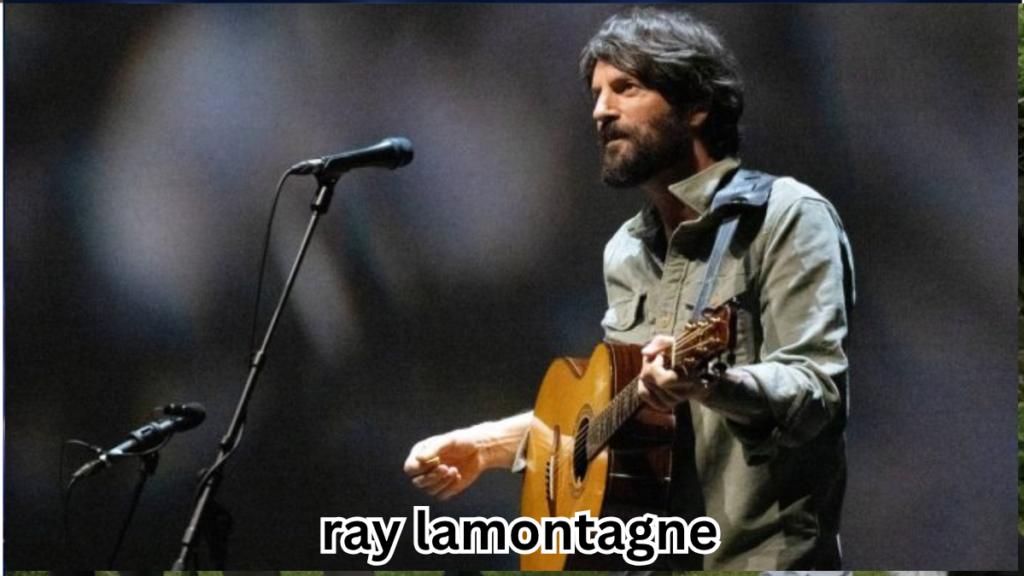
Ray LaMontagne has built a career around something increasingly rare in popular music: emotional honesty without unnecessary spectacle. His songs often feel as though they were discovered rather than manufactured, with weathered vocals, acoustic textures, intimate arrangements, and lyrics that linger on love, regret, freedom, memory, loneliness, and the passing of time. Across more than two decades, he has developed a catalog that can move comfortably between folk, soul, blues, Americana, roots rock, and atmospheric singer-songwriter music while still sounding unmistakably personal.
What makes his work particularly compelling is the contrast between his private nature and the emotional openness of his recordings. He has never seemed interested in behaving like a conventional celebrity. Instead, the music does most of the talking. That approach has allowed songs such as “Trouble,” “Jolene,” “Hold You in My Arms,” “You Are the Best Thing,” “Beg Steal or Borrow,” and “Such a Simple Thing” to develop lives of their own, reaching listeners who value songwriting over spectacle and atmosphere over trends.
His career began with a striking change of direction. Before becoming a professional musician, he worked at a shoe factory in Maine. The story of how music altered that path has become part of his mythology, but the important point is what followed: a demo, a record deal, the release of Trouble in 2004, and a career that steadily expanded without requiring him to abandon the understated personality that attracted listeners in the first place. His official catalog now spans albums released from 2004 through Long Way Home in 2024, alongside subsequent anniversary editions and touring activity.
There is also a useful distinction between popularity and influence. Some artists dominate charts for a few years and disappear from cultural memory. Others develop a body of work that listeners repeatedly return to because it seems to deepen with age. His music belongs strongly to the second category. A song can sound different when heard at twenty than it does at forty, because the listener changes even when the recording remains exactly the same.
Early Life and the Road Toward Music
Born in Nashua, New Hampshire, in 1973, LaMontagne grew up in a musical environment that helped expose him to older American songwriting traditions. His childhood was not presented as the beginning of a carefully planned entertainment career. Instead, music gradually became something more personal, eventually turning into a creative language through which he could understand his own experiences.
That distinction matters because his later career has rarely felt like a calculated attempt to occupy a particular market. His early songs carry the imperfections and emotional directness of someone discovering what his voice could communicate. The roughness was not a marketing strategy. It was part of the character of the performer and songwriter.
As a young adult, he spent time working outside the music industry, including at a shoe factory in Lewiston, Maine. According to the commonly told account of his career, hearing Stephen Stills perform “Treetop Flyer” became an important turning point. The song reportedly inspired him to reconsider the direction of his life and pursue music more seriously. A ten-song demo eventually circulated among music executives, leading to the opportunity to record what became his debut album.
The story has an almost cinematic quality, but its significance goes beyond biography. Many singer-songwriters talk about following a calling, yet his career provides a particularly clear example of someone moving from ordinary employment into professional music without first becoming part of an established pop machine. His early development was rooted in listening, writing, performing, and gradually finding the confidence to trust his own material.
That trust would become one of the defining features of his artistic identity. Even as his production became more ambitious, the central attraction remained the voice and the songs. The recordings could become richer, stranger, louder, or more atmospheric, but the emotional center remained human-scale.
The Breakthrough of Trouble
Trouble, released in 2004, introduced a songwriter whose voice immediately sounded older than his years. The album carried a dusty, blues-influenced character, combining acoustic guitar, understated rhythm sections, soul references, and a vocal performance that seemed to emerge from another era. Rather than trying to imitate contemporary radio trends, the record sounded as though it had its own weather system.
The title track became one of the defining songs of his career. Its strength comes from simplicity. The arrangement leaves room around the vocal, allowing the emotional tension in the performance to remain central. There is vulnerability in the recording, but it is not sentimental. The narrator sounds tired, reflective, and self-aware rather than dramatically broken.
Other songs on Trouble established the qualities that would remain important throughout his catalog. “Jolene” brought a darker, more pleading emotional tone, while “Hold You in My Arms” showed his ability to make romantic material feel earthy rather than glossy. These songs helped demonstrate that his appeal was broader than a single hit.
The album also became a major commercial and critical success, particularly in the United Kingdom. Official Charts records the album among his strongest UK performers, with the physical album reaching No. 5 and the title track becoming his highest-charting UK single.
The success of Trouble created an interesting situation. LaMontagne had suddenly become commercially visible without becoming a conventional pop personality. He could appear on major stages while maintaining an artistic identity that felt deliberately removed from the celebrity-centered side of the music business.
That tension would continue throughout his career. He became recognizable because of the music, but the music itself resisted the idea that recognition should become the primary goal.
Why the Voice Became Such a Defining Feature
The first thing many listeners notice is the voice. It is husky, grainy, warm, and emotionally exposed. Yet describing it simply as “raspy” misses much of what makes it effective. There is a combination of restraint and force in his delivery. He can sing quietly without sounding weak and push into a rougher register without losing the melody.
His voice also carries an unusual sense of age. Even early recordings could sound as though they came from someone who had spent decades listening to blues, gospel, soul, and folk records. That quality helped distinguish him from the polished singer-songwriter sound common in mainstream music during the early 2000s.
The voice works because it is connected to phrasing. He often lets words arrive slightly behind or around the beat, giving lines a conversational quality. Instead of treating the lyric as something that must be delivered with mechanical precision, he allows the vocal to breathe.
That approach creates intimacy. A technically perfect vocal can sometimes feel distant, while a vocal with texture and small imperfections can sound physically close to the listener. In his recordings, breath, grit, pauses, and changes in intensity become part of the storytelling.
There is also a soulful quality that connects his work to older American traditions. His official description of God Willin’ & The Creek Don’t Rise, for example, has been associated with rootsy storytelling and a vocal character influenced by soul and classic roots music.
This is one reason his music works across genre boundaries. Folk listeners can hear the acoustic songwriting, blues listeners can recognize the vocal grain, soul listeners can appreciate the phrasing, and Americana audiences can connect with the storytelling. He does not need to fit neatly into one category.
Till the Sun Turns Black and a More Expansive Sound
The second studio album, Till the Sun Turns Black, arrived in 2006 and demonstrated that the success of the debut would not force LaMontagne into a formula. Instead of simply recreating Trouble, he expanded the arrangements and allowed the songs to occupy a more spacious sonic environment.
The album is often remembered for its richer instrumentation and more atmospheric presentation. Strings, layered arrangements, and carefully shaped dynamics gave the material a cinematic quality. Yet the songs still retained the emotional intimacy that had defined the debut.
This was an important artistic decision. A less adventurous follow-up could have delivered another collection of acoustic folk songs designed to satisfy existing listeners. Instead, the album showed an artist willing to move forward even when the previous sound had already worked.
The title itself suggests the poetic atmosphere of the record. Images of darkness, weather, time, faith, memory, and emotional uncertainty appear throughout the songwriting. Rather than presenting clear answers, the songs often live in unresolved spaces.
The official album page highlights how critics responded to the evolution of the arrangements, describing a progression toward greater boldness, color, and sweep.
One of the record’s strengths is its patience. The arrangements do not always rush toward obvious hooks. Instead, they allow mood to accumulate. That makes the album especially rewarding for listeners who enjoy records as complete emotional environments rather than collections of individual singles.
In a broader career context, Till the Sun Turns Black established a pattern that would recur repeatedly: each new album could retain recognizable elements of his identity while exploring a different production philosophy.
Gossip in the Grain and the Return of Roots
By the time Gossip in the Grain appeared in 2008, the songwriter had demonstrated that his career was not built around one particular sonic template. The album moved back toward a more earthy, roots-oriented character while retaining the broader musical instincts developed on the previous record.
The songs could be playful, romantic, melancholy, rough-edged, or quietly spiritual. That range helped reveal another important quality: he was not simply a “sad singer-songwriter.” His music could carry humor, sensuality, warmth, restlessness, and even swagger.
The record’s production gives the songs a physical quality. Instruments occupy recognizable spaces, and the arrangements often feel like a group of musicians playing together rather than layers assembled solely for technical perfection.
That sense of human presence has become an important part of his appeal. In an era increasingly dominated by highly processed recordings, his music often emphasizes texture. Listeners can hear the room, the instrument, the breath, and the movement of a performance.
The album also helped reinforce his standing internationally. Official Charts data shows Gossip in the Grain reaching the UK download chart and continuing his pattern of charting albums across multiple releases.
Its importance is not simply numerical, however. The album demonstrated that a singer-songwriter could become more commercially established without smoothing away the qualities that made the music distinctive in the first place.
God Willin’ & The Creek Don’t Rise and Grammy Recognition
God Willin’ & The Creek Don’t Rise, released in 2010, marked another significant stage in the career. It was his fourth studio album and notably his first self-produced record, as well as the first recorded with a band. The album was recorded at his farmhouse in Western Massachusetts, a setting that helped reinforce the homespun atmosphere of the project.
The album earned substantial recognition. At the 53rd Annual Grammy Awards, it won Best Contemporary Folk Album, while “Beg Steal or Borrow” was nominated for Song of the Year. The Recording Academy currently lists him with one Grammy win and two nominations.
The Grammy recognition mattered because it confirmed that his songwriting and production instincts had achieved a level of critical respect beyond commercial success. More importantly, the award came for a project that represented his artistic independence rather than a move toward mainstream pop conventions.
“Beg Steal or Borrow” became particularly representative of his storytelling style. The song is about dissatisfaction, escape, ambition, and the desire to leave behind a life that feels predetermined. Those themes connect naturally with the larger story of his own career, although the song should not be reduced to autobiography.
The phrase “beg, steal or borrow” carries a restless energy. It suggests someone willing to improvise in order to create a different future. That idea has long resonated with listeners who hear his songs as reflections on ordinary lives rather than celebrity experiences.
The album’s success also confirmed that roots music could be commercially meaningful without sacrificing complexity. Its emotional language remained direct, but its musical world was sophisticated.
The Evolution of the Songwriting
One of the most interesting aspects of the catalog is the gradual expansion of its emotional vocabulary. Early songs often focused intensely on love, longing, uncertainty, and escape. Later work became more reflective, philosophical, and interested in perception itself.
That evolution is natural for a songwriter who has been recording for more than twenty years. Early-career material tends to focus on immediate emotional experiences, while later work can consider time, identity, mortality, parenthood, memory, and the meaning of a life already lived.
His writing also relies heavily on images rather than abstract declarations. A road, a house, a season, a window, a river, a fire, or a changing sky can carry emotional meaning without the songwriter explicitly explaining it.
That technique makes the songs adaptable to different listeners. One person can hear a song as a love story, another as a meditation on aging, and another as a reflection on leaving home. The lyric does not always close the door on interpretation.
This is one reason his strongest material remains useful over time. Songs that tell listeners exactly what to feel can become tied to a particular moment. Songs that create an emotional landscape can change meaning as the listener changes.
His writing is also notable for its avoidance of excessive cleverness. The goal is rarely to impress through complicated wordplay. Instead, he tends to pursue emotional weight through repetition, image, melody, and vocal delivery.
That simplicity is harder to achieve than it looks. A straightforward line only works when the performance gives it enough emotional credibility to carry its weight.
Supernova and a Shift Toward Modern Production
Supernova, released in 2014, introduced another variation on the established sound. Produced by Dan Auerbach of The Black Keys, the album brought a more polished psychedelic and roots-rock sensibility to the songwriting.
The collaboration made sense because both artists shared an appreciation for vintage textures while remaining comfortable with modern studio production. Auerbach’s influence helped give the album a warmer, more muscular sonic character.
The title track and songs such as “Lavender” demonstrated how the familiar voice could operate within a more contemporary arrangement. The music remained rooted in guitar-based songwriting, but the production was more deliberate and colorful.
This period also showed how flexible the songwriting could be. The underlying material did not depend on one specific recording aesthetic. Acoustic, orchestral, rootsy, psychedelic, and more spacious arrangements could all support the same central voice.
That flexibility is one of the clearest indicators of a mature songwriter. If a song only works under one arrangement, the production may be doing most of the work. If a song can survive different treatments while retaining its emotional identity, the writing itself is strong.
Supernova continued his international chart presence, reaching the UK album charts in 2014.
The record therefore occupies an important position between his earlier roots material and the more exploratory albums that followed.
Ouroboros and the Importance of Risk
In 2016, Ouroboros represented one of the boldest departures in his catalog. The album was conceived as a continuous musical journey rather than simply a conventional collection of separate tracks.
The title refers to the ancient symbol of a serpent consuming its own tail, an image associated with cycles, renewal, eternity, and self-containment. That concept fits the record’s structure and its interest in movement.
Musically, the album is more atmospheric and expansive than the straightforward folk-rock of his early work. It rewards attentive listening because its sequencing creates a sense of progression.
The project demonstrated that commercial expectations were not the only consideration guiding his career. At a point when he could have safely repeated earlier formulas, he chose a more ambitious structure.
That willingness to take risks is crucial to understanding his longevity. His albums do not always provide the same immediate accessibility, but they continue to reveal a musician interested in discovery.
For listeners who prefer the simplicity of Trouble, Ouroboros can initially feel distant. For others, its layered arrangements and conceptual structure reveal a deeper side of his musicianship.
The album reached the UK charts, continuing his record of international visibility while maintaining an experimental identity.
Part of the Light and the Search for Perspective
Part of the Light, released in 2018, continued the reflective direction of the later catalog. Its songs often explore perception, inner life, relationships, and the complicated boundary between darkness and illumination.
The title itself is revealing. Light in this context does not necessarily mean happiness. It can mean awareness, consciousness, truth, or the possibility of seeing something differently.
The songwriting frequently works through contrast. Love exists alongside fear. Hope appears beside uncertainty. Memory can be comforting and painful at the same time.
This emotional balance has always been one of his strengths. He rarely treats life as purely tragic or purely uplifting. Instead, his songs tend to recognize that joy and sorrow frequently occupy the same room.
The album also continued his interest in visual and sonic atmosphere. Rather than pushing every song toward a traditional radio structure, the production gives the material space.
The official catalog places Part of the Light among the central albums of his later career, and the UK charts show it reaching the Top 20 on the album chart.
For long-term listeners, the album demonstrates how far the original songwriter from Trouble had traveled without abandoning the emotional foundation of his music.
Monovision and the Sound of Self-Reliance
Monovision, released in 2020, arrived during a period when many musicians were reconsidering how music could be recorded and presented. The album carries a strong sense of intimacy and self-contained musicianship.
The record reflects his continued interest in creating a personal sonic world rather than chasing whatever sound might currently dominate radio. That approach has become almost a signature.
“Such a Simple Thing” is one of the songs most closely associated with the later catalog. Its emotional directness recalls the romantic vulnerability of earlier work while using a more mature perspective.
There is a calmness to much of the material. The songs feel less concerned with proving something and more interested in observing it.
That shift is important. A young songwriter often writes from inside an experience. A mature songwriter can write from both inside and outside it, recognizing the immediate emotion while also seeing the larger pattern.
Monovision reached the UK charts in 2020, further demonstrating the continuing international audience for his work.
The album’s appeal lies partly in its refusal to sound rushed. In a culture built around constant novelty, music that allows itself to breathe can feel almost radical.
Long Way Home and a Mature Artistic Perspective
Long Way Home, released in 2024, continued the evolution while reconnecting strongly with themes of resilience, self-acceptance, purpose, and reflection.
The title suggests movement, but not necessarily a physical journey. It can describe the emotional process of becoming comfortable with who you are after years of experience.
One of the album’s recurring ideas is personal agency. The official lyrics for “Step Into Your Power,” for example, emphasize the idea that people already possess something valuable within themselves and should not be afraid to move toward their potential.
That perspective feels especially meaningful when placed beside the story of his career. A person who once worked at a shoe factory eventually became a Grammy-winning songwriter with an extensive international catalog. The journey was not instant, and it was not built around a conventional celebrity trajectory.
Another song from the album, “I Wouldn’t Change a Thing,” reflects on hardship and experience with an unusually accepting attitude. Its central emotional idea is that difficult periods can become part of the value of a life rather than simply mistakes to erase.
That theme connects with a broader maturity in his songwriting. Earlier records frequently ask how to escape pain. Later work is more willing to acknowledge that pain can shape character.
The album reached the UK charts as well, showing that his audience continued to follow the music into a fifth decade of life.
A Career Built on Albums Rather Than Hype
A useful way to understand his career is to look at the album as the central unit of artistic expression. He has certainly had individual songs that became especially popular, but his reputation rests heavily on complete records.
That distinction separates him from artists whose careers depend primarily on singles. His albums often have internal personalities. Trouble sounds different from Till the Sun Turns Black, which sounds different from Gossip in the Grain, which sounds different from Ouroboros.
This variety encourages listeners to explore the catalog chronologically. Someone who discovers the music through “You Are the Best Thing” may eventually encounter God Willin’ & The Creek Don’t Rise. Someone who starts with Trouble may later discover the conceptual ambition of Ouroboros.
The official website describes the catalog as spanning the last two decades and highlights both career favorites and deeper cuts.
That phrase, “deep cuts,” is particularly relevant. His audience is not limited to listeners who know the biggest singles. Many fans build personal relationships with album tracks that were never major radio hits.
This is one of the strongest signs of a durable musical career. When listeners argue about favorite songs beyond the obvious hits, the artist has created a catalog rather than merely a brand.
Essential Songs and What Makes Them Endure
“Trouble” remains an obvious starting point because it captures the central qualities of the early sound: intimacy, emotional uncertainty, earthy production, and an unforgettable vocal.
“Jolene” is equally important, although its emotional atmosphere is darker. The song demonstrates his ability to create tension through repetition and direct address. It sounds like a private plea made public.
“Hold You in My Arms” represents another side of the early catalog. It is romantic without becoming overly polished, showing how his vocal grain can make a love song feel physical and immediate.
“You Are the Best Thing” became one of his most recognizable songs and has had a life beyond the original album. Its warmth and celebratory character make it a natural choice for romantic settings, while the vocal performance keeps it grounded in soul and roots traditions.
“Beg Steal or Borrow” belongs to a different emotional category. It is about movement, ambition, frustration, and the desire to build a different life. Its Grammy nomination for Song of the Year reflects the strength of the songwriting.
“Such a Simple Thing” offers a later-career perspective. Its appeal comes from the way emotional complexity is expressed through seemingly uncomplicated language.
The remarkable thing about these songs is that they do not all sound alike. They share a personality, but not a formula.
Essential Albums for New Listeners
| Album | Year | Central Character | Why It Matters |
|---|---|---|---|
| Trouble | 2004 | Intimate folk, blues, soul | Landmark debut and career foundation |
| Till the Sun Turns Black | 2006 | Orchestral, atmospheric folk | Expands the sonic palette |
| Gossip in the Grain | 2008 | Roots, blues, Americana | Shows warmth, humor, and variety |
| God Willin’ & The Creek Don’t Rise | 2010 | Rustic band-driven folk | Grammy-winning album |
| Supernova | 2014 | Psychedelic roots rock | Adds modern production colors |
| Ouroboros | 2016 | Expansive, conceptual | One of his boldest artistic experiments |
| Part of the Light | 2018 | Reflective, atmospheric | Deepens his philosophical songwriting |
| Monovision | 2020 | Intimate, self-contained | Strong late-career songwriting |
| Long Way Home | 2024 | Reflective, resilient, soulful | Mature statement on experience and purpose |
The table reveals a career that is unusually varied for an artist with such a recognizable voice. Each album carries a distinct production identity, but the songwriting remains connected by recurring themes of love, freedom, uncertainty, nature, memory, and self-discovery.
For listeners who want the clearest introduction, Trouble provides the essential beginning, while God Willin’ & The Creek Don’t Rise demonstrates how much the artistic vision had expanded. Ouroboros is best approached when a listener is ready for something more conceptual, and Long Way Home offers a mature view of where the songwriting has ultimately arrived.
Folk, Americana, Soul, Blues, and the Question of Genre
Trying to place his music inside one genre can be misleading. Folk is an obvious description because the songwriting is central and acoustic instruments frequently play important roles. Americana also fits because of the roots-oriented storytelling and blend of American musical traditions.
Yet soul is just as important. His vocal phrasing and emotional intensity owe something to classic soul singers, even when the arrangements are stripped down.
Blues also appears throughout the catalog, particularly in the way songs use repetition, vocal grain, and emotional tension. There is often a blues sensibility beneath the folk surface.
Rock enters the picture through electric guitars, fuller rhythm sections, and more expansive arrangements on certain albums. Psychedelic influences become especially apparent in Supernova and Ouroboros.
The result is music that behaves less like a genre product and more like a personal ecosystem. Instead of asking which category comes first, it is more useful to ask which traditions the songwriter is drawing from at a given moment.
That flexibility helps explain why his music has remained attractive to audiences with different musical backgrounds.
The Role of Nature, Place, and the American Landscape
Place is an important part of the emotional vocabulary. Roads, countryside, mountains, weather, homes, cities, and open spaces frequently appear as more than simple settings.
A city can represent pressure, noise, alienation, or ambition. The countryside can represent freedom, memory, or the possibility of returning to something authentic.
These contrasts are deeply rooted in American songwriting traditions. Country, folk, blues, and roots music have long used geography as emotional metaphor.
His music continues that tradition without sounding like a historical reenactment. The settings remain accessible because they represent feelings most people understand even if they live in completely different environments.
This is another reason the songs can feel cinematic. A listener can imagine the landscape while also projecting personal memories onto it.
The farmhouse setting associated with God Willin’ & The Creek Don’t Rise is particularly fitting. Recording in a personal rural environment reinforces the sense that the music belongs to a place rather than being created solely inside an anonymous commercial studio.
Love Songs Without Excessive Sentimentality
Romantic songwriting can become difficult when it relies too heavily on predictable declarations. His best love songs avoid that trap by allowing vulnerability and uncertainty to remain present.
“Hold You in My Arms” works because it feels physical and imperfect rather than like a generic declaration of eternal happiness. “You Are the Best Thing” feels joyful, but its rootsy delivery keeps it grounded.
Later songs often treat relationships with greater complexity. Love is not presented as a permanent solution to every problem. It can coexist with fear, distance, memory, disappointment, and change.
This emotional honesty gives the songs unusual longevity. Relationships rarely remain exactly the same, so music that acknowledges complexity can remain relevant through different stages of a listener’s life.
The romantic side of the catalog is therefore not simply about romance. It is about attachment, vulnerability, trust, and the fear of losing something valuable.
Privacy, Personality, and the Anti-Celebrity Image
His relative privacy has become part of his public identity. While many performers build careers through constant interviews, social media updates, and personal exposure, his music has generally remained more important than his lifestyle.
That does not mean the audience knows nothing about him. His biography, career milestones, albums, and performances are well documented. But there has never been the same sense that the artist must continuously perform a public personality away from the stage.
That separation benefits the music. It encourages listeners to engage with the songs as works rather than simply as extensions of celebrity culture.
There is also something fitting about the approach. His songs are intimate, but the artist himself does not need to be constantly accessible. The emotional openness belongs to the work.
In an age when audiences can follow musicians throughout nearly every part of their lives, maintaining some distance can make an artist’s creative world feel more mysterious and more valuable.
Live Performance and the Power of Restraint
His live performances have long benefited from the same qualities that define the recordings: vocal character, emotional focus, and an emphasis on the songs.
A performer with a distinctive voice does not need elaborate choreography to hold attention. The audience can focus on phrasing, guitar, band dynamics, and the gradual development of a song.
This is particularly important for music built around atmosphere. If the performance becomes too busy, the emotional center can disappear. Restraint allows the audience to enter the song rather than simply observe the performer.
Live versions can also reveal how durable the compositions are. A strong song should survive changes in tempo, instrumentation, arrangement, and venue.
That durability is one reason his music works in theaters, festivals, intimate rooms, and large concert settings.
In 2026, his Trouble 20th Anniversary Tour has brought renewed attention to the debut era. The tour began in August and is scheduled to continue into October, including performances at New York’s Beacon Theatre.
The anniversary context is especially meaningful because it allows longtime listeners to revisit the beginning while introducing newer audiences to the album that established the career.
The 2026 Trouble Anniversary Era
The twentieth anniversary of Trouble has created a natural moment for reflection. Anniversary tours can sometimes feel like nostalgia exercises, but in this case the album has remained central to the catalog long enough to justify a return.
The official website currently promotes a Trouble 20th Anniversary Remaster LP, including enhanced packaging and a poster, alongside the broader catalog and Long Way Home.
That combination of old and new is significant. The artist is not simply looking backward. The anniversary material exists alongside a continuing catalog and current touring activity.
The 2026 tour also brought an unexpected health incident into the news. During a Nashville performance at the Ryman Auditorium, he collapsed while performing “Jolene.” Reports stated that he received local EMS care and was treated for heat-related dehydration, with his team indicating that he was recovering well.
The incident naturally attracted attention because it occurred during a major anniversary tour, but it should not overshadow the broader story. The important artistic point is that songs from 2004 continue to have enough emotional power to anchor performances more than two decades after their original release.
That is a meaningful measure of longevity. An anniversary matters because the underlying work still matters.
Awards, Recognition, and Critical Respect
Awards do not define a songwriter, but they provide useful evidence of how the broader music industry has evaluated the work.
The clearest example is the Grammy success of God Willin’ & The Creek Don’t Rise. The album won Best Contemporary Folk Album at the 2011 ceremony, while “Beg Steal or Borrow” received a Song of the Year nomination.
The distinction between those categories is interesting. One recognizes an entire body of recorded work, while the other recognizes songwriting itself.
His career therefore received acknowledgment on both levels. The album was respected as a complete artistic project, and an individual song was recognized for composition.
That combination supports the idea that his achievements are not simply the result of having a distinctive voice. The songwriting itself is the foundation.
Commercial statistics tell a similar but less complete story. His albums have repeatedly appeared on UK charts, with Trouble, Gossip in the Grain, Part of the Light, Monovision, Long Way Home, and other releases demonstrating sustained international interest.
The overall picture is therefore one of consistent rather than explosive success. He has not needed to remain permanently at the center of mainstream pop culture to maintain a substantial audience.
Influence on Modern Singer-Songwriters
His influence is not always obvious in the form of direct imitation. Few artists can reproduce the combination of voice, phrasing, songwriting, and production exactly.
The more important influence is philosophical. His career demonstrates that a singer-songwriter can build a substantial audience without becoming dependent on constant visibility.
He also demonstrates the value of emotional specificity. Songs do not have to contain complicated narratives to feel deep. A strong image, a convincing vocal, and an honest emotional premise can be enough.
Another influence lies in production choices. His albums show that acoustic music does not have to mean minimal music. Strings, psychedelic textures, electric guitars, band arrangements, and atmospheric sound design can coexist with intimate songwriting.
That lesson matters for contemporary artists who want to move beyond the false choice between stripped-down folk and highly produced pop.
His catalog also demonstrates that experimentation does not require abandoning identity. Ouroboros sounds dramatically different from Trouble, but the voice and songwriting perspective connect the two.
Why His Music Connects Across Generations
A younger listener discovering the catalog today can approach the songs without needing to understand the musical environment of 2004. That is a strong indication of timelessness.
The subjects remain universal: falling in love, losing love, wanting to escape, searching for purpose, remembering the past, confronting uncertainty, and trying to become comfortable with change.
The production also avoids becoming excessively tied to one technological moment. Analog-inspired instruments and organic arrangements can age more gracefully than recordings built around short-lived sonic trends.
His music therefore occupies an interesting middle ground. It feels rooted in older traditions while still sounding contemporary enough for modern listeners.
That cross-generational appeal is reinforced by the continued availability of his catalog through major streaming platforms and physical releases. His official site continues to promote vinyl and CD editions alongside digital listening options.
The result is a body of work that can move from one generation of listeners to another without requiring a cultural translation.
The Meaning of Authenticity in His Career
The word “authenticity” is used too easily in music criticism, but his career provides a useful case study in what it can actually mean.
Authenticity does not mean refusing to evolve. His albums clearly evolve. It does not mean recording everything live in a room or rejecting modern production. It means maintaining a recognizable artistic center while allowing the work to change.
That center can be heard in the vocal, the emotional honesty, and the recurring interest in freedom and connection.
The strongest evidence is the diversity of the catalog. If authenticity required sounding identical on every album, his career would not qualify. Instead, authenticity appears as continuity beneath change.
That is perhaps the most valuable lesson in his artistic journey. An artist can explore new sounds without losing the qualities that made listeners care in the first place.
The Lasting Importance of Trouble
Two decades after its original release, Trouble remains the natural entry point into the catalog because it captures the fundamental emotional ingredients in their clearest form.
The album is intimate but not fragile. It is bluesy but not trapped in the past. It is romantic but not overly polished. It is melancholic without becoming hopeless.
Its continued relevance also shows how strongly first impressions can shape a career. The songs established expectations that subsequent albums repeatedly challenged and expanded.
The 20th anniversary remaster gives the album another opportunity to reach listeners who were not alive or old enough to experience its original release. The official website currently highlights the remastered LP as a major part of the catalog.
Yet the most important anniversary is not the number of years. It is the fact that listeners still find emotional meaning in the songs.
A record becomes a classic not merely because critics declare it one, but because people continue to play it when they need something only that record can provide.
Ray LaMontagne’s Place in Contemporary Music
ray lamontagne occupies a distinctive place between traditional American songwriting and modern alternative music. He is too roots-oriented to be easily categorized as mainstream pop, yet too adventurous to be confined to traditional folk.
His career has also resisted the standard narrative of celebrity escalation. Instead of becoming increasingly visible as his success grew, the music often remained the main event.
That has allowed the songs to develop an unusually strong relationship with listeners. People do not simply associate the music with a particular celebrity image. They associate it with memories, relationships, journeys, homes, seasons, and personal moments.
The catalog also demonstrates the strength of album-oriented artistry in a singles-driven industry. Each record contributes another chapter rather than merely serving as a vehicle for the next hit.
His Grammy recognition, international chart history, extensive touring career, and continued releases all point toward the same conclusion: the work has achieved both commercial durability and artistic credibility.
That combination is difficult to sustain. Many artists achieve one without the other. His career has maintained a productive tension between accessibility and experimentation.
The Personal Meaning of the Long Way Home
The phrase “long way home” is a fitting description for a career that has unfolded gradually rather than according to a conventional plan.
A person who began working outside professional music eventually became an internationally recognized songwriter. The journey included commercial success, critical acclaim, experimentation, personal privacy, and more than two decades of recording.
The later songs often sound more comfortable with uncertainty than the early material. Instead of demanding that life provide simple answers, they acknowledge that experience itself can be meaningful.
That perspective is particularly clear in the official lyrics associated with Long Way Home, where resilience, self-belief, and acceptance repeatedly emerge as central themes.
It also creates a useful connection between biography and art without turning every song into autobiography. The artist’s journey provides context, but the songs remain open enough for listeners to bring their own experiences.
That openness may ultimately be one of the most important reasons the music has endured.
How to Listen to the Catalog as a Journey
The best way to explore the catalog is not necessarily to search for the single “best” album. Each record answers a different artistic need.
Start with Trouble to understand the foundation. Move to Till the Sun Turns Black to hear how the arrangements expanded. Continue through Gossip in the Grain and God Willin’ & The Creek Don’t Rise to experience the roots-oriented side of the work.
Then listen to Supernova and Ouroboros to understand the willingness to experiment. Follow with Part of the Light and Monovision for a more introspective period.
Finally, Long Way Home provides a mature perspective on the themes that have followed the songwriter throughout his career.
Listening this way reveals that the catalog is not a straight line. It is more like a series of circles, with old themes returning in new forms.
Love changes. Freedom changes. Memory changes. Even the meaning of home changes.
The songs change with them.
What Makes the Music Feel Human
The strongest quality in the music is not technical sophistication. It is emotional credibility.
A listener can believe the voice. That may sound like a small thing, but it is the foundation of the entire experience.
The vocal imperfections, pauses, grain, and dynamic shifts make the performances feel lived-in. The songs do not sound like emotional exercises completed according to a formula.
Production supports that feeling. Even when arrangements become elaborate, the voice remains connected to the center.
This is why the music works particularly well late at night, on long drives, during quiet mornings, or in moments when a listener wants something more reflective than background entertainment.
The songs ask for attention, but they do not demand it aggressively. They create an environment in which attention happens naturally.
The Continuing Legacy
The continuing legacy of ray lamontagne is best measured through the relationship between his oldest and newest material. The songs from the debut remain important, while the later albums demonstrate that he has never been satisfied simply repeating them.
That balance between continuity and change is difficult to maintain. Artists can become trapped by the expectations created by their first success, especially when listeners strongly identify with a particular sound.
Instead, his career has repeatedly chosen evolution. Some changes were subtle, while others were dramatic, but the willingness to explore remained consistent.
His Grammy-winning work, international chart history, anniversary releases, and continuing live audience all demonstrate that the catalog has substantial staying power.
The most compelling part of the legacy, however, is personal rather than statistical. His songs have become part of people’s lives.
A song played during a breakup can become a memory of the relationship. A love song can become part of a wedding. A song about leaving can accompany a move to a new city. A reflective album can become a companion during a difficult year.
That is the deepest form of musical success.
Frequently Asked Questions About ray lamontagne
What is ray lamontagne best known for?
ray lamontagne is best known for his distinctive raspy, soulful voice and emotionally direct singer-songwriter style. His breakthrough came with the 2004 album Trouble, which introduced songs including “Trouble,” “Jolene,” and “Hold You in My Arms.” His catalog later expanded into roots rock, Americana, folk, blues, soul, and more atmospheric forms of songwriting. He is also known for the Grammy-winning album God Willin’ & The Creek Don’t Rise and for maintaining a relatively private public profile while allowing the music to remain the central focus of his career.
When did ray lamontagne release his first album?
His debut album, Trouble, was released in 2004. The record became the foundation of his professional recording career and remains one of the most important releases in his catalog. Its mixture of folk, blues, soul, acoustic songwriting, and his weathered vocal style immediately established an identity that he would continue developing on subsequent albums. The album also achieved notable success in the United Kingdom, where its physical release reached No. 5 on the official album chart.
How many albums has ray lamontagne released?
His official website currently presents a catalog spanning studio releases from 2004 through Long Way Home in 2024, while later listings also include the Trouble 20th Anniversary Remaster. His principal studio-album sequence includes Trouble, Till the Sun Turns Black, Gossip in the Grain, God Willin’ & The Creek Don’t Rise, Supernova, Ouroboros, Part of the Light, Monovision, and Long Way Home.
Did ray lamontagne win a Grammy?
Yes. He won the Grammy for Best Contemporary Folk Album at the 53rd Annual Grammy Awards for God Willin’ & The Creek Don’t Rise. The same year, “Beg Steal or Borrow” was nominated for Song of the Year. The Recording Academy lists one win and two nominations for him.
What are the most popular ray lamontagne songs?
Among the songs most strongly associated with his career are “Trouble,” “Jolene,” “Hold You in My Arms,” “You Are the Best Thing,” “Beg Steal or Borrow,” and “Such a Simple Thing.” These songs represent different stages of his career, from the intimate blues-folk sound of the debut through the more mature and reflective songwriting of later albums. His official catalog also encourages listeners to explore deeper cuts rather than limiting the experience to the best-known singles.
What genre is ray lamontagne?
His music is most commonly associated with folk, Americana, singer-songwriter, roots rock, blues, and soul. However, no single genre completely describes his catalog. Different albums emphasize different traditions, with some recordings leaning toward acoustic folk and others incorporating orchestral arrangements, psychedelic textures, electric guitars, or band-driven roots music. This stylistic flexibility is one of the defining characteristics of his career.
What is the album Trouble about?
Trouble is not a traditional concept album with one continuous narrative. Instead, it explores emotional states involving love, loneliness, uncertainty, desire, vulnerability, and the search for stability. The title track is particularly representative of the album’s intimate emotional atmosphere, while songs such as “Jolene” and “Hold You in My Arms” demonstrate different dimensions of the songwriter’s early approach to relationships and longing.
What makes his voice distinctive?
His voice combines a natural rasp with soulful phrasing, controlled dynamics, and a strong sense of emotional vulnerability. Rather than sounding polished in the conventional pop sense, it carries texture and physical character. That quality makes even relatively simple melodies feel emotionally substantial. His voice also connects the music to older blues, soul, folk, and roots traditions while remaining recognizable as his own.
What is the significance of Long Way Home?
Long Way Home represents a mature stage of the songwriting career. Released in 2024, it explores themes such as resilience, self-belief, experience, acceptance, and the idea that hardship can contribute to personal growth. Songs associated with the album emphasize moving forward rather than simply escaping the past, making the record a natural continuation of themes that have appeared throughout the catalog.
Is ray lamontagne still performing?
Yes. His official website currently promotes touring activity, and in 2026 he has been performing as part of a Trouble 20th Anniversary Tour. The tour began in August and is scheduled to continue into October, including dates at New York’s Beacon Theatre. A Nashville performance in September 2026 was interrupted when he experienced heat-related dehydration and collapsed on stage, but reports stated that he received medical attention and was recovering.
Conclusion
ray lamontagne has created the kind of career that becomes more impressive when viewed as a whole. His story began far from the center of the music industry, with ordinary employment and a growing realization that songwriting might offer another direction. From that uncertain beginning came Trouble, an album that introduced a voice unlike most of its contemporaries and established a career that has now lasted more than two decades.
What followed was never simply a repetition of the debut. Till the Sun Turns Black expanded the arrangements. Gossip in the Grain deepened the roots-oriented character. God Willin’ & The Creek Don’t Rise brought Grammy recognition. Supernova introduced new production colors. Ouroboros demonstrated conceptual ambition. Part of the Light and Monovision explored increasingly reflective territory, while Long Way Home offered a mature meditation on resilience, identity, and experience.
The numbers tell part of the story, including international chart appearances and a Grammy win. But statistics cannot fully explain why listeners continue returning to these recordings.
The deeper explanation is emotional credibility. The songs sound lived in. The voice carries history. The arrangements leave room for memory. The lyrics often avoid telling listeners exactly what to think, allowing individual experiences to become part of the music.
That is why the anniversary of Trouble matters. It is not simply a celebration of an old album. It is a reminder that a song can survive its original moment and continue finding new listeners years later.
The enduring achievement is not that every album sounds the same. It is that every album sounds connected to the same artistic spirit. The work has changed, sometimes dramatically, but it has never lost its interest in truth, feeling, place, love, freedom, and the complicated process of becoming oneself.
In an industry that often rewards immediacy, his career has demonstrated the value of patience. In a culture obsessed with visibility, he has shown that music can remain more important than celebrity. And in a world filled with increasingly polished recordings, his weathered voice continues to remind listeners that sometimes the most powerful sound is simply a human being singing something he genuinely means.