
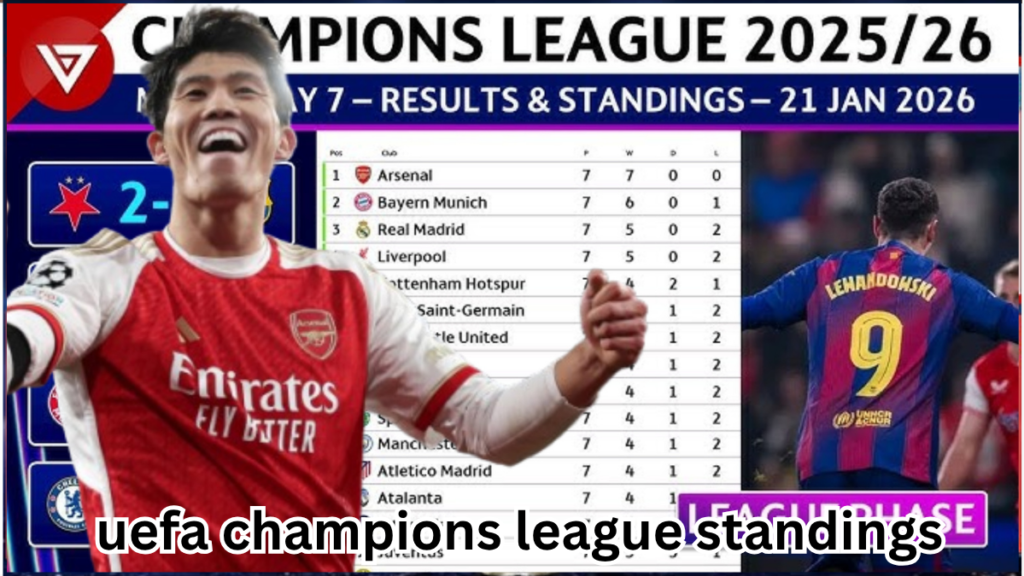
The uefa champions league standings are the clearest way to understand how Europe’s elite club competition is developing during the 2026/27 season. Unlike the old group-stage system, the modern competition uses one 36-team league phase, with every club playing eight different opponents and accumulating points in a single overall table. That means every result can influence qualification, the knockout phase play-off picture, seeding, and the race for the top positions.
The 2026/27 UEFA Champions League begins its league phase on September 8, 2026, with Matchday 1 spread across September 8, 9, and 10. UEFA confirms that this is the third season using the 36-team single-league format. The league phase will conclude with 18 matches being played simultaneously on January 27, 2027, creating a final matchday in which the table can change dramatically.
At the time the 2026/27 league phase begins, there are no completed league-phase matches to create meaningful points differences. Every team enters Matchday 1 with zero points and zero games played. The official UEFA standings page is therefore the authoritative place to follow the table as results begin arriving.
That starting point is worth emphasizing because the new system can initially look confusing to supporters accustomed to four-team groups. There are no traditional Group A, Group B, or Group C tables in the league phase. Instead, all 36 participating clubs occupy one overall ranking.
The competition also has a fascinating mixture of established giants and ambitious newcomers. Real Madrid, Barcelona, Bayern München, Liverpool, Manchester City, Paris Saint-Germain, Arsenal, Inter, and Atlético de Madrid headline a field that also includes clubs such as Como, Bodø/Glimt, Viking, Sabah, AEK Athens, Lens, and Slavia Praha. UEFA’s official team list confirms 36 league-phase participants for the 2026/27 campaign.
Understanding the table is therefore about more than knowing who is first. The positions determine different paths through the competition, and the difference between finishing eighth, 12th, 16th, 24th, or 25th can completely change a club’s European future.
How the 2026/27 Champions League League Phase Works
The biggest change to understand is the move away from the traditional group stage. UEFA now places 36 clubs into one league table, with each club playing eight matches against eight different opponents. Each team receives four home fixtures and four away fixtures, creating a broader schedule than the old six-match group phase. UEFA’s official draw information confirms that each club plays eight opponents in single-leg ties.
The draw is designed to produce a balanced mixture of opponents. The 36 clubs are divided into four pots, and each team is drawn against two clubs from every pot, with one home and one away fixture from each pot. Teams cannot face clubs from their own national association during the league phase, and a club can face a maximum of two opponents from another individual association.
This creates an interesting competitive structure. A club cannot simply dominate a small group and guarantee progression. Instead, it has to accumulate points across eight matches while dealing with opponents of different strengths.
The table consequently rewards consistency. A club that wins its first three games is in a strong position, but it still has five matches remaining. Conversely, a team that starts slowly has opportunities to recover because there are more fixtures than in the previous group-stage system.
The league phase also creates more high-profile matchups earlier in the tournament. Real Madrid face Inter on Matchday 1, Napoli host Arsenal, Liverpool meet Atlético de Madrid, Paris Saint-Germain host Slovan Bratislava, and Bayern München play Bodø/Glimt.
Those fixtures demonstrate why the new table can become fascinating very quickly. A difficult draw can produce major points swings from the opening week, while a favorable sequence can allow an ambitious club to build momentum.
The format also means that every club’s schedule is unique. There is no requirement for two teams to play the same six opponents in a conventional group. This makes direct comparisons more complicated and increases the importance of goal difference and other ranking criteria when clubs finish level on points.
What the Champions League Table Looks Like Before Matchday 1
Because the 2026/27 league phase begins on September 8, the initial table is effectively a blank slate. All 36 clubs enter with zero points, no wins, no draws, no defeats, and no goals recorded in league-phase competition.
The official UEFA standings page is already available for the competition, but meaningful rankings will only develop after matches are completed.
| Position Range | Status After League Phase | What It Means |
|---|---|---|
| 1st–8th | Direct qualification | Advances directly to the round of 16 |
| 9th–24th | Knockout phase play-offs | Must win a two-leg play-off to reach the round of 16 |
| 25th–36th | Eliminated | Leaves the Champions League |
| 1st–8th | Also important for seeding | Receives a direct route and benefits from league-phase position |
The table becomes particularly important from the middle of the rankings downward. The difference between 24th and 25th is enormous because 24th place remains alive in the competition while 25th place is eliminated.
Likewise, finishing eighth rather than ninth carries significant value. Both clubs remain in contention, but the eighth-place team skips the knockout phase play-offs and goes directly into the round of 16.
This creates several races within one table. There is a race for first place, a race for the top eight, a race to remain inside the top 24, and a battle to avoid finishing 25th or lower.
That multi-layered competition is one of the reasons the new format can produce meaningful matches throughout the league phase rather than concentrating all of the drama in a handful of groups.
Supporters therefore should not look only at the club sitting in first position. A team in 15th can have a successful campaign, while a team in ninth can be frustrated by narrowly missing direct qualification.
How Points Are Awarded
The basic points system remains familiar to football supporters. A win earns three points, a draw earns one point, and a defeat earns zero.
That simplicity is important because the table is ultimately a points race. Eight matches give every club a maximum possible total of 24 points before any additional ranking considerations are applied.
A perfect league phase would therefore produce 24 points. A club that wins six matches and loses two would finish with 18 points, while five wins, one draw, and two defeats would produce 16 points.
The mathematical possibilities are broad, which is part of what makes forecasting the final table difficult. A club can remain competitive after an imperfect start, while a strong team can lose ground rapidly if it suffers consecutive defeats.
A draw can also become valuable in the middle of the table. Against an elite opponent, one point away from home may be considered a useful result, particularly if rivals lose their corresponding matches.
However, teams targeting the top eight generally need more than simply avoiding defeat. Direct qualification rewards consistent winning, so dropping points repeatedly can push a club into the play-off positions even if it remains unbeaten.
This creates different strategic priorities depending on league position. A club chasing eighth place may approach a difficult away fixture differently from a team simply trying to remain above 24th.
The league phase therefore combines familiar football mathematics with a new competitive context.
Why Goal Difference Matters
Points are the first major ranking factor, but they are not always enough to separate teams. With 36 clubs playing different opponents, ties on points are inevitable, making UEFA’s ranking criteria essential.
Goal difference measures goals scored minus goals conceded. A team with 12 points and a +7 goal difference will generally be in a stronger ranking position than another team with 12 points and a lower goal difference when the relevant tie-breaking rules reach that criterion.
This makes the margin of victory meaningful. A 4-0 win does more than provide three points; it can improve a club’s goal difference significantly compared with a narrow 1-0 victory.
The reverse is also true. Heavy defeats can damage a club’s position later in the league phase. A team that loses 5-0 may collect no points and also suffer a significant negative movement in goal difference.
That does not mean clubs should chase goals recklessly. The primary objective remains winning matches. But once a game is under control, the ability to maintain intensity and protect or improve goal difference can become valuable.
The same principle applies to scoring late goals. A late 3-1 result instead of a 2-1 victory adds the same three points but creates a different goal-difference impact.
In a competition where several teams may finish within one or two points of each other, small statistical differences can ultimately determine who advances directly and who enters the play-offs.
Why the Top Eight Are So Important
The top eight positions are the most valuable places in the league phase because they provide direct passage to the round of 16.
A club finishing anywhere from first through eighth avoids the additional knockout phase play-offs. That means fewer matches, less fixture congestion, and an earlier place in the next knockout-stage draw.
This can be especially important for clubs competing domestically at the same time. European football already adds significant travel and preparation demands, and avoiding two additional knockout matches can make a meaningful difference during a crowded season.
The top eight also represent the clearest sign of league-phase success. A club has demonstrated enough consistency over eight matches to finish above most of the field and earn an automatic place in the round of 16.
The race for those positions could involve some of Europe’s most famous clubs. UEFA’s first pot contains Paris Saint-Germain, Bayern München, Real Madrid, Liverpool, Inter, Manchester City, Arsenal, Barcelona, and Atlético de Madrid.
That list immediately suggests how competitive the upper part of the table could become. Strong clubs will face one another, and some will inevitably lose points.
The top-eight battle is therefore not simply about avoiding weaker teams. Elite sides must perform in difficult fixtures against other established European powers.
For supporters, this is one of the most compelling features of the new system. The table provides a single measurement of performance across a diverse field, while the schedule creates enough difficult matches to prevent easy predictions.
The Importance of Finishing Between Ninth and 24th
The middle section of the table is where the knockout phase play-offs become central.
Clubs finishing ninth through 24th remain in the Champions League but do not advance directly to the round of 16. Instead, they enter a two-leg knockout phase play-off.
This creates a second level of pressure during the final weeks of the league phase. A club that cannot reach eighth still has a significant reason to finish as high as possible within the play-off range.
A team in ninth is theoretically much closer to the direct-qualification positions than a team in 24th, but both are still alive. The final league-phase rankings determine the structure and seeding of the subsequent knockout stage.
The play-off system also introduces additional matches at a point in the season when domestic competitions are becoming increasingly demanding.
For managers, that can make the difference between eighth and ninth particularly valuable. Two extra European fixtures can affect player rotation, travel, injuries, and preparation for domestic matches.
For clubs finishing toward the bottom of the qualifying section, the challenge is even greater. A narrow escape into 24th can keep an entire European campaign alive.
This is why supporters should resist the temptation to treat positions 9th through 24th as interchangeable. All of them qualify for the play-offs, but their exact positions can have meaningful consequences for the knockout draw.
Why 25th Place Can Be Devastating
The most brutal dividing line in the table is between 24th and 25th.
Both positions can look relatively low compared with a 36-team competition, but their outcomes are completely different. The club in 24th remains in the Champions League and receives another opportunity to reach the round of 16. The club in 25th is eliminated.
This creates enormous pressure during the final matchday. A team sitting 22nd may still be concerned because a defeat combined with favorable results for teams behind it could push it into danger.
The 36-team structure therefore ensures that the lower half of the table remains meaningful. There is no equivalent of finishing third in an old four-team group and dropping into another European competition under the current league-phase system.
Instead, teams below the qualifying line can simply be eliminated from the Champions League.
That changes the emotional experience for supporters. Every point can matter, and even a draw can become valuable if it protects a club from falling below the cut.
The final league-phase night is especially important because all 18 matches are scheduled simultaneously on January 27, 2027.
Simultaneous matches create the possibility of rapid table movement. A goal in one stadium can alter qualification calculations elsewhere, making the final round a potentially dramatic conclusion to the league phase.
The 2026/27 League Phase Schedule
The league phase consists of eight matchdays spread from September 2026 through January 2027.
| Matchday | Dates |
|---|---|
| Matchday 1 | September 8–10, 2026 |
| Matchday 2 | October 13–14, 2026 |
| Matchday 3 | October 20–21, 2026 |
| Matchday 4 | November 3–4, 2026 |
| Matchday 5 | November 24–25, 2026 |
| Matchday 6 | December 8–9, 2026 |
| Matchday 7 | January 19–20, 2027 |
| Matchday 8 | January 27, 2027 |
UEFA confirms these dates in its official competition guide and fixture information.
The schedule creates several distinct phases. September establishes the opening picture, October introduces the first substantial movement, November begins separating contenders, December provides a major checkpoint before the winter break, and January delivers the final two matchdays.
The long gap between some matchdays means teams have time to recover and prepare, but domestic commitments continue throughout the period. Managers must therefore balance European competition with their national leagues and cup competitions.
Matchday 8 is particularly unusual because all 18 matches take place simultaneously. This creates a true final-table scenario in which teams cannot simply wait for earlier results before determining their approach.
That format should make the final night one of the most important dates in the European football calendar.
The Opening Matchday and Major Fixtures
The first matchday of the 2026/27 league phase immediately provides several intriguing matchups.
Real Madrid host Inter, creating a meeting between two clubs with enormous European histories. Porto welcome Manchester City, while Lille face Real Betis. Borussia Dortmund host Villarreal, and Club Brugge welcome Aston Villa.
Wednesday brings another collection of major fixtures. Barcelona host Feyenoord, Liverpool meet Atlético de Madrid, Paris Saint-Germain face Slovan Bratislava, Sporting CP play Galatasaray, and Napoli host Arsenal.
Thursday completes the opening round with Bayern München hosting Bodø/Glimt, Fenerbahçe welcoming Roma, PSV Eindhoven playing Shakhtar Donetsk, and Manchester United facing Sabah.
These fixtures demonstrate the range of the competition. Some matches feature established European powers, while others bring clubs from different football traditions together for the first time in this format.
The opening results will not determine the final table, but they will establish the first points totals and can immediately influence confidence, expectations, and tactical decisions.
A strong start can also create breathing room. A club that wins its first two or three matches may gain a useful cushion over teams that begin with draws or defeats.
Conversely, an early losing streak creates pressure because every remaining fixture becomes more important.
The Biggest Clubs Entering the Competition
The 2026/27 field contains many of Europe’s most successful and commercially powerful clubs.
Real Madrid enter with perhaps the most recognizable Champions League identity of all. Bayern München, Barcelona, Liverpool, Inter, Manchester City, Arsenal, Paris Saint-Germain, and Atlético de Madrid also represent the highest tier of European club football.
Yet the league-phase format prevents reputation from automatically translating into points. Every club still has to perform across eight matches.
A famous club can lose away from home, draw against an opponent from a lower seeding pot, or struggle against a tactically disciplined side. The broader format creates more opportunities for unexpected results.
The presence of Aston Villa, Borussia Dortmund, Roma, Sporting CP, Porto, Manchester United, Real Betis, PSV, and Club Brugge in Pot 2 further demonstrates the depth of the field.
Pot 3 includes clubs such as Napoli, Leipzig, Villarreal, Feyenoord, Lille, Galatasaray, Fenerbahçe, Shakhtar Donetsk, and Bodø/Glimt, while Pot 4 contains teams including Como, Lens, Viking, Sabah, AEK Athens, LASK, Slavia Praha, and Stuttgart.
This creates a broad competitive landscape where traditional European hierarchy meets clubs with different ambitions.
For some teams, reaching the knockout stage is already a major achievement. For others, anything outside the top eight could be viewed as disappointing.
Dark Horses and Potential Surprises
One of the most enjoyable aspects of a large European competition is identifying clubs capable of exceeding expectations.
Bodø/Glimt are particularly interesting because their presence represents the continued international rise of Norwegian club football. Viking also enter the league phase from Norway, giving the country two representatives in the 36-team field.
Como are another fascinating participant. Their appearance gives the Italian club an opportunity to test itself against Europe’s strongest teams, including Barcelona, Paris Saint-Germain, Manchester United, and Bayern München through the league-phase schedule.
Sabah represent Azerbaijan, while AEK Athens bring Greek football into the competition. Lens provide another French presence alongside Paris Saint-Germain and Lille.
These clubs can influence the table even if they are not expected to challenge for the title. A single upset against a favorite could reshape the middle and upper portions of the rankings.
That is one reason the new format can be unpredictable. A lower-seeded team does not need to finish near the top to have an enormous impact on the competition.
A victory over a favorite can cost that club three points, improve the underdog’s own position, and potentially affect several teams competing for the same qualification range.
In a league table containing 36 clubs, individual surprises can have consequences far beyond one match.
How the Draw Influences the Table
The league-phase draw plays an important role in shaping expectations because not every club receives the same collection of opponents.
UEFA’s draw procedure distributes teams across four pots, with every club receiving two opponents from each pot. One opponent from each pot is played at home and one away.
This creates a schedule that combines elite opponents with more manageable fixtures. However, even a seemingly favorable draw can become difficult if a club suffers injuries, changes managers, or experiences poor domestic form.
Travel can also matter. Long-distance away matches may introduce different preparation challenges, particularly for clubs visiting unfamiliar environments.
Home advantage remains relevant as well. The league phase contains only one meeting between each pair of opponents, so a club cannot rely on a return fixture to recover from a bad result.
That makes every individual match more consequential than a two-leg league-phase matchup would be.
A team that loses at home has fewer opportunities to repair the damage against that same opponent. It must recover points elsewhere in the schedule.
This single-leg structure is a fundamental part of the new competition design and should be considered whenever the table is analyzed.
Reading the Table Like a Football Analyst
The uefa champions league standings should not be interpreted by position alone. A useful analysis considers points, goal difference, matches played, upcoming opponents, home and away balance, and the number of remaining fixtures.
A team in seventh place may have an excellent points total but face three difficult opponents in its final five matches. Another team in 13th may have fewer points but a relatively favorable remaining schedule.
This is where fixture analysis becomes important. Because each club plays only eight league-phase matches, the remaining schedule is small enough to examine closely.
Form also matters. Three consecutive wins can change the outlook dramatically, particularly if they come against direct competitors for qualification.
Injuries and squad depth should also be considered. European campaigns are long, and teams competing across multiple competitions need enough quality to rotate without suffering major performance drops.
Goal difference provides another clue. A high-scoring team may be better positioned in a tie on points, while a club conceding heavily may be vulnerable even if its points total looks respectable.
The best table analysis therefore combines numbers with context. Statistics show where a team stands, while fixtures and performance explain why it stands there.
Why Matchday 8 Could Be Historic
The final league-phase matchday has a structure unlike a traditional group-stage finale.
UEFA has scheduled all 18 matches for the same day, January 27, 2027.
That means teams cannot benefit from knowing exactly what rivals have already achieved before kicking off. Every club plays simultaneously, creating a genuine final-table environment.
A team entering the evening in eighth could potentially fall out of the top eight. A club in 25th could climb into the play-off zone. A side in 10th could theoretically finish among the direct qualifiers with a strong result and favorable movement elsewhere.
The simultaneous schedule also increases the importance of live score monitoring. A goal in Madrid can affect a club in London, while a late winner in Barcelona can influence the pressure on a team in Munich.
This is the kind of interconnected drama that a single 36-team table makes possible.
It also rewards fans who understand the qualification lines. Rather than simply celebrating a win, supporters will be watching the entire league table and calculating how other results affect their club.
The final night could therefore become one of the most memorable features of the modern Champions League format.
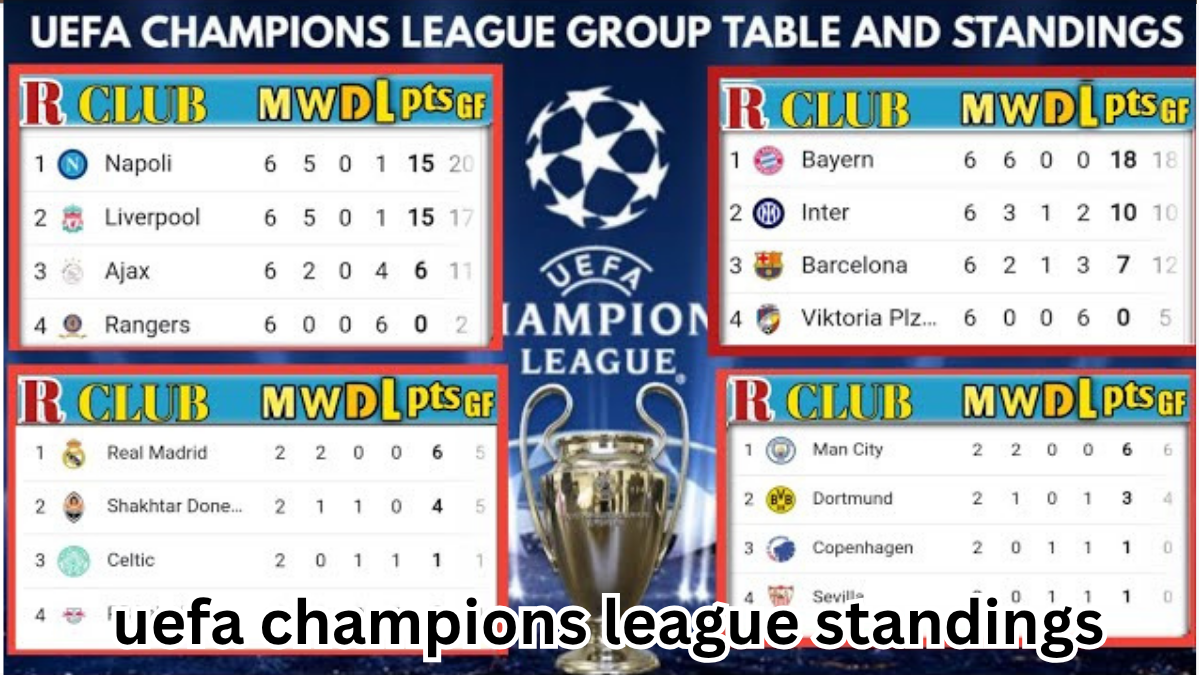
Knockout Phase Play-Offs and the Road to the Round of 16
After the league phase, the competition divides into different pathways.
The top eight teams advance directly to the round of 16. Teams finishing ninth through 24th enter the knockout phase play-offs, while clubs finishing 25th through 36th are eliminated from the Champions League. UEFA lists the play-offs for February 16/17 and February 23/24, 2027.
The play-offs are played over two legs, adding another layer of tactical complexity. A team that finished 10th might face a difficult opponent that finished 23rd, while a high-ranked play-off team may benefit from seeding advantages.
The direct qualifiers receive an important advantage by avoiding this stage altogether.
The round of 16 then takes place in March, followed by quarter-finals in April and semi-finals in late April and early May. The 2027 final is scheduled for June 5 at Madrid’s Estadio Metropolitano.
This creates a long path from September to June. Clubs must manage performance over an entire European season rather than simply peaking during a short group phase.
The league table is therefore the foundation for everything that follows.
A strong league phase can provide a smoother route through the knockout rounds, while a disappointing campaign can force a club into extra matches or eliminate it altogether.
The Importance of Home and Away Results
Home advantage continues to play a major role in European football.
Although the league phase removes the old home-and-away group matchups against the same opponents, every club still receives four home matches and four away matches.
Winning home games can provide a stable foundation. If a club takes maximum points from four home fixtures, it already has 12 points before considering its away results.
Away victories are arguably even more valuable because they provide three points while simultaneously denying the host any points.
However, away draws can also be useful, particularly against direct competitors.
Managers must therefore think about each fixture within the broader table. A draw away against a top opponent can be an excellent result if followed by home wins against other clubs.
The balance between home consistency and away competitiveness is likely to separate clubs near the qualification boundaries.
How Managers May Approach the League Phase
The new structure can influence squad rotation and tactical planning.
With eight matches instead of six, managers must think beyond immediate results. A squad cannot necessarily use its strongest possible lineup in every game, especially when domestic fixtures arrive between Champions League matchdays.
Rotation becomes particularly important for clubs competing for multiple trophies.
At the same time, the single-leg nature of each league-phase fixture increases the value of every match. There is no second meeting against the same opponent to correct tactical mistakes.
Managers therefore have to find a balance between immediate competitiveness and long-term squad management.
A strong bench can become a major advantage. Clubs with deep squads may be better positioned to handle injuries, suspensions, travel, and fixture congestion.
The league phase also rewards adaptability. Opponents vary considerably in style, from possession-heavy giants to compact defensive teams and aggressive pressing sides.
A manager who can adjust tactics effectively from one opponent to the next may gain a significant advantage.
What Supporters Should Watch During Each Matchday
Following the uefa champions league standings effectively means looking beyond your favorite club’s score.
The first thing to watch is the qualification zone. Positions one through eight represent direct progression, while ninth through 24th remain in the play-off area.
The next factor is points density. If many teams are separated by one or two points, a single result can create major movement.
Goal difference becomes particularly important when points totals are close.
Remaining fixtures should also be monitored. A club with a difficult schedule may need a larger points cushion than a team facing more manageable opponents.
Home and away form can reveal another layer of information. A team that has already collected several home wins but still has three difficult away fixtures may not be as secure as its current position suggests.
Finally, supporters should watch direct rivals. In a 36-team league, there are many clubs competing for the same qualification lines.
The table is therefore a living picture rather than a static ranking. Every matchday adds new information and changes the context surrounding previous results.
The Role of Goal Scoring in the New Format
Goals have always been central to football, but the expanded league phase gives attacking output another important dimension.
Scoring more goals can directly produce wins, while a healthy goal difference can become valuable in tight points races.
Clubs with elite attacking players may therefore have an advantage, particularly if they can turn narrow matches into comfortable victories.
However, defensive organization remains equally important. Conceding heavily can erase the benefit of scoring frequently.
A team that wins 4-3 collects the same three points as a team that wins 1-0, but its goal difference changes very differently.
Over eight matches, these margins can accumulate.
This is why tactical balance matters. The strongest league-phase teams will likely combine the ability to score consistently with the discipline to avoid damaging defeats.
The European Coefficient and Club Reputation
The draw pots are based largely on club coefficient rankings, with the Champions League titleholder receiving a specific top-seeding treatment. UEFA published the 2026/27 draw pots before the league-phase draw.
Coefficient rankings matter because they influence the opponents a club can receive.
However, once the draw is complete, reputation no longer earns points. A highly ranked club still has to perform against its assigned opponents.
This distinction is important for understanding the relationship between historical success and current standings.
A club can have decades of European achievement behind it but still struggle during one particular campaign.
Likewise, a lower-profile club can outperform its coefficient ranking and climb the table.
The league phase therefore creates a useful contrast between long-term reputation and current performance.
That contrast is one of the reasons European competition remains so compelling.
Why the New Format Creates More Competitive Drama
The uefa champions league standings now provide several qualification races simultaneously, rather than one small battle within each traditional group.
The top eight race rewards excellence. The ninth-to-24th race rewards survival and consistency. The 25th-to-36th battle determines elimination.
This structure means more clubs have something meaningful to play for during the later matchdays.
A team that would previously have been comfortably third in a group might now remain engaged in a race for a play-off position.
Similarly, a club near the top cannot become complacent because direct qualification provides a major advantage.
The expanded format also creates more cross-country matchups, giving fans a broader selection of fixtures.
There is a natural storytelling element to the table. A smaller club can climb unexpectedly, a giant can struggle, and a mid-table team can produce a late surge.
Those narratives develop throughout the season rather than being confined to one group.
The competition consequently becomes more like a full league championship while preserving the knockout intensity that has traditionally defined the Champions League.
The 2027 Final and the Ultimate Objective
Every table position ultimately leads toward one goal: winning the Champions League.
The 2026/27 final is scheduled for June 5, 2027, at the Estadio Metropolitano in Madrid. UEFA notes that the stadium previously hosted the 2019 final, when Liverpool defeated Tottenham 2-0.
The final location gives the season a clear endpoint, but the route there is long.
Clubs must navigate eight league-phase matches, potentially a knockout phase play-off, the round of 16, quarter-finals, semi-finals, and the final.
The top eight receive a valuable advantage because they avoid the play-off round.
That makes league-phase performance relevant even for clubs that ultimately care only about winning the trophy.
Every point can shape the path ahead.
The champion also earns a place in the league phase of the following Champions League if it has not already qualified through its domestic competition, according to UEFA’s competition guide.
The table therefore represents the first chapter in a much larger European journey.
Frequently Asked Questions
What are the UEFA Champions League standings?
The uefa champions league standings rank all 36 clubs competing in the 2026/27 league phase in one overall table. Teams earn three points for a win, one for a draw, and zero for a defeat. The final ranking determines whether a club advances directly to the round of 16, enters the knockout phase play-offs, or is eliminated.
How many teams qualify directly for the Champions League round of 16?
The top eight teams in the final league-phase table qualify directly for the round of 16. Clubs finishing ninth through 24th enter the knockout phase play-offs, while teams finishing 25th through 36th are eliminated from the Champions League. UEFA confirms this structure as part of the current league-phase format.
How many games does each team play in the Champions League league phase?
Each club plays eight league-phase matches against eight different opponents. Four matches are played at home and four away. UEFA’s draw procedure divides the 36 clubs into four pots and gives each club two opponents from each pot, with one home and one away fixture against teams from each pot.
When does the 2026/27 Champions League league phase begin?
The 2026/27 league phase begins on September 8, 2026, with Matchday 1 continuing through September 10. The final league-phase matchday is January 27, 2027, when all 18 matches are scheduled to take place simultaneously.
How are Champions League standings decided when teams have the same points?
When clubs finish level on points, UEFA applies its official ranking and tie-breaking criteria to determine their positions. Goal difference and other statistical factors can become important when points totals are identical. This is why goals scored, goals conceded, and the margin of victories and defeats can influence a team’s eventual ranking.
What happens to teams finishing 9th to 24th?
Teams finishing from ninth through 24th enter the knockout phase play-offs. These two-legged ties provide another route into the round of 16. Finishing higher within this range can be valuable because league-phase position influences the subsequent knockout structure and seeding.
What happens to teams finishing 25th or lower?
Teams finishing 25th through 36th are eliminated from the Champions League after the league phase. Unlike the previous group-stage system, there is no automatic drop into the UEFA Europa League simply because a club finishes outside the Champions League qualifying positions. This makes the 24th-place cutoff particularly important.
Which teams are in the 2026/27 Champions League league phase?
The 36 clubs include Arsenal, Aston Villa, Liverpool, Manchester City, Manchester United, Real Madrid, Barcelona, Atlético de Madrid, Real Betis, Villarreal, Bayern München, Borussia Dortmund, Leipzig, Stuttgart, Paris Saint-Germain, Lille, Lens, Inter, Napoli, Roma, Como, Porto, Sporting CP, PSV Eindhoven, Feyenoord, AEK Athens, Club Brugge, Slavia Praha, Slovan Bratislava, LASK, Sabah, Viking, Bodø/Glimt, Fenerbahçe, Galatasaray, and Shakhtar Donetsk. UEFA published the complete field ahead of Matchday 1.
When will the final Champions League table be decided?
The final league-phase table will be decided on January 27, 2027. All 18 matches on Matchday 8 are scheduled simultaneously, meaning clubs cannot rely on completed results from earlier games when beginning their own final fixtures.
Where will the 2027 Champions League final be played?
The 2026/27 Champions League final is scheduled for June 5, 2027, at the Estadio Metropolitano in Madrid, Spain. UEFA notes that the stadium previously hosted the 2019 final, when Liverpool defeated Tottenham 2-0.
Conclusion
The uefa champions league standings have become more than a simple ranking of Europe’s best football clubs. Under the 36-team league-phase system, the table determines several different competitive paths, from direct qualification for the round of 16 to the knockout phase play-offs and eventual elimination.
The 2026/27 season begins with all 36 clubs on equal points, but that balance will disappear as soon as Matchday 1 produces its first results. Real Madrid versus Inter, Porto versus Manchester City, Napoli versus Arsenal, Liverpool versus Atlético de Madrid, and Bayern München versus Bodø/Glimt are among the opening fixtures that will begin shaping the table.
The structure rewards consistency, but it also leaves room for surprises. A club does not need to win every match to qualify, and one disappointing result does not end a campaign. At the same time, the difference between eighth and ninth, or 24th and 25th, can have enormous consequences.
The most compelling part of the new format may be the number of races taking place at once. Supporters can follow the fight for first place, the battle for the top eight, the competition for play-off positions, and the struggle to remain above the elimination line.
With eight league-phase matchdays, a January finale featuring 18 simultaneous games, and a route toward the Madrid final in June 2027, the 2026/27 Champions League promises a season in which the table remains central from the opening whistle to the final league-phase night.
For anyone following European football, the standings are therefore the essential reference point. They turn individual results into a broader story of momentum, pressure, qualification, opportunity, and survival. As the season develops, every goal and every point will become part of that story.