
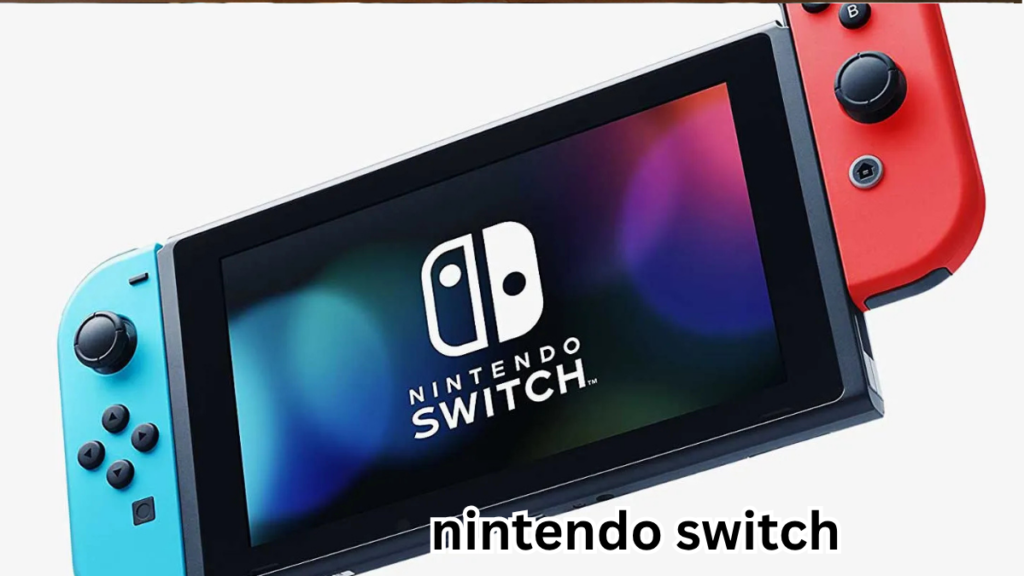
The nintendo switch changed the way people think about console gaming. Instead of forcing players to choose between a traditional living-room system and a dedicated handheld, Nintendo created a machine that could move between both worlds. A player could begin a game on a television, slide the console out of its dock, and continue playing on a train, airplane, sofa, bedroom, or hotel room. That simple idea became one of the most important hardware concepts of the modern gaming industry.
What made the system particularly successful was not just its ability to change modes. Nintendo surrounded the hardware with an enormous library of first-party adventures, multiplayer experiences, role-playing games, family titles, indie releases, sports games, racing experiences, and experimental software. The result was a platform that could appeal to children discovering gaming for the first time while also attracting longtime players who grew up with Mario, Zelda, Pokémon, Kirby, Metroid, and other Nintendo franchises.
The original system launched in 2017 alongside major releases such as The Legend of Zelda: Breath of the Wild and Super Mario Odyssey. Nintendo later expanded the family with the handheld-focused Switch Lite and the premium Switch OLED Model. Nintendo’s official history records the original launch in 2017, the Lite in 2019, and the OLED Model in 2021.
The arrival of Nintendo Switch 2 in 2025 also changed the conversation. The newer platform represents the next hardware generation, while the original family remains important because of its enormous software library and established user base. Nintendo says the newer machine can play compatible physical and digital games from the previous generation, although certain titles have compatibility limitations.
Understanding where the original system fits today requires looking beyond specifications. Its success came from a combination of portability, approachable design, exclusive games, multiplayer flexibility, strong intellectual property, and an ecosystem that encouraged people to play in different ways.
How the Console Changed the Meaning of Home Gaming
Traditional consoles historically followed a fairly straightforward formula. A machine sat beside the television, controllers were connected or paired with it, and gaming happened in one room. Handheld systems offered portability but usually sacrificed some of the technical capabilities and visual presentation associated with home consoles. Nintendo’s hybrid approach challenged that distinction.
The central idea was remarkably easy to understand. The console could operate as a portable gaming device with attached controllers, but it could also sit inside a dock connected to a television. Players did not have to buy separate versions of the same game for different environments. The same account, software library, save data, and core experience could travel with them, subject to individual game features.
That flexibility also changed how people used their gaming time. A player could enjoy a long adventure at home, then continue during a commute. Parents could play after children went to bed, students could take a system between classes, and families could bring multiplayer games on vacation without transporting a large home-console setup.
The design encouraged spontaneous gaming. Instead of thinking, “I need to sit down for two hours,” users could play for fifteen minutes while waiting somewhere and then return later. That quality helped the platform reach people who might not have considered themselves traditional console gamers.
The system also blurred the line between solo and social entertainment. A pair of detachable controllers could become multiplayer inputs, while the console could support more traditional controllers for longer sessions. Nintendo’s philosophy was less about imposing a single ideal method of play and more about providing several ways to interact with the same library.
This approach became one of the platform’s defining characteristics. The hardware was not merely a box that played software. It was a flexible gaming environment designed around changing circumstances.
The Evolution From the Original Model to Later Hardware
The original system established the core concept, but Nintendo did not leave the hardware unchanged. The Switch Lite arrived in 2019 as a smaller machine designed specifically for handheld play. Its controllers are built into the body, making it lighter and more compact than the standard design. Nintendo describes it as dedicated to handheld gaming and confirms compatibility with games that support handheld mode.
The Lite model appealed to players who did not need television output. Its simpler construction made it particularly attractive to younger players, travelers, and people who primarily wanted a portable console. The trade-off was obvious: it sacrificed some of the versatility of the standard system in exchange for a smaller and more integrated design.
In 2021, Nintendo introduced the OLED Model. This version retained the central hybrid concept while improving several hardware characteristics, including the display. Nintendo’s historical information identifies its 7-inch OLED screen, wider adjustable stand, 64 GB internal storage, wired LAN connection in the dock, and enhanced audio as key improvements.
The OLED Model demonstrated that the original hardware philosophy could be refined without being completely redesigned. The larger, more vibrant screen made handheld gaming feel more premium, while the improved stand and dock addressed practical concerns that had become apparent over years of use.
These variations created a useful product hierarchy. The standard model represented flexibility, the Lite emphasized portability, and the OLED Model emphasized a richer handheld experience. Rather than forcing every customer toward the same configuration, Nintendo allowed different types of players to choose the version that matched their habits.
That strategy was important because not every gamer values the same thing. Some people care about television play, others about portability, and others about screen quality. The hardware family reflected those differences.
Nintendo Switch 2 and the New Generation
The arrival of Nintendo Switch 2 did not erase the importance of the original platform. Instead, it created a transition between generations. Nintendo launched the newer system on June 5, 2025, with an original U.S. suggested retail price of $449.99. The company positioned it as a more powerful successor with a larger display, redesigned Joy-Con 2 controllers, new communication features, and compatibility with many games from the previous generation.
By September 1, 2026, Nintendo’s U.S. suggested retail price for the newer system had increased to $499.99. Nintendo disclosed the revision in a 2026 investor document, along with corresponding changes in Japan and Europe.
The newer machine has substantially different hardware. Nintendo lists a 7.9-inch 1920-by-1080 LCD display with HDR10 and variable refresh rate support up to 120 Hz, 256 GB of UFS storage, a custom NVIDIA processor, Wi-Fi 6, and a 5,220mAh battery. Nintendo estimates battery life at approximately two to 6.5 hours depending on the game.
That comparison matters because buyers considering an original-generation machine today need to understand where it sits in the product ecosystem. The older system still offers access to a huge collection of games, while the newer platform provides more powerful hardware and exclusive software.
Compatibility also makes the transition less abrupt. Nintendo states that compatible physical and digital games from the older platform can be played on the newer one. However, the company also warns that some games may have limitations, require updates, or fail to support particular features.
The result is a gradual transition rather than a hard cutoff. Existing players can continue enjoying their libraries while deciding whether the benefits of newer hardware justify an upgrade.
Why the Game Library Became the Biggest Advantage
Hardware attracts attention, but software determines whether a console remains useful for years. The nintendo switch library became one of its strongest competitive advantages because Nintendo consistently supported the platform with major franchises while third-party publishers and independent developers added thousands of additional experiences.
Nintendo’s official Switch Lite page currently describes the family as having more than 5,000 games and highlights major titles such as The Legend of Zelda: Tears of the Kingdom, Animal Crossing: New Horizons, Mario Kart 8 Deluxe, Kirby and the Forgotten Land, Minecraft, Nintendo Switch Sports, Splatoon 3, and Pokémon Scarlet and Pokémon Violet.
That variety is important. A console becomes much more valuable when a household can use it for different types of entertainment. One person might want an open-world adventure, another might prefer competitive racing, while a younger family member might spend hours with a platformer or creative game.
The first-party catalog also provides a level of brand recognition that few competitors can match. Mario, Zelda, Pokémon, Kirby, Animal Crossing, Splatoon, Metroid, Fire Emblem, Pikmin, and Super Smash Bros. represent decades of accumulated cultural familiarity.
Some franchises are particularly effective at demonstrating the platform’s flexibility. Mario Kart 8 Deluxe works as a quick multiplayer game or a long-term competitive hobby. Animal Crossing: New Horizons encourages slower daily engagement. The Legend of Zelda: Tears of the Kingdom provides a huge exploration-focused experience. Super Smash Bros. Ultimate can be played casually with friends or competitively at a high skill level.
The system also became an important home for independent games. Digital distribution lowered some barriers for smaller studios, allowing unusual projects to reach a large audience. Players could discover short experimental games alongside major blockbuster releases.
This combination of blockbuster exclusives and smaller digital experiences helped prevent the library from feeling one-dimensional. There was rarely only one type of player being served.
The Importance of Mario, Zelda, Pokémon, and Nintendo’s Major Franchises
Nintendo’s strongest advantage has always been its intellectual property. The company owns or controls some of gaming’s most recognizable characters, and the hybrid platform gave those characters a particularly broad environment in which to thrive.
Mario games benefit from the system’s multiplayer flexibility and portable nature. A traditional platforming adventure can be enjoyed alone, while party-oriented Mario releases can turn the same console into a social gaming device. That versatility makes the character useful across generations and skill levels.
Zelda demonstrates another side of the platform. Breath of the Wild helped define the launch era by presenting a huge open world that rewarded experimentation. Tears of the Kingdom expanded the formula with deeper systems and creative mechanics. These games helped establish the idea that a portable console could host enormous adventure experiences without reducing them to simplified handheld versions.
Pokémon provides a different kind of appeal. The franchise has always been closely connected to portable gaming, so the hybrid format was a natural evolution. Players could enjoy their Pokémon journeys at home or away from the television while also participating in online and local activities.
Animal Crossing reached an even broader audience. New Horizons became a cultural phenomenon because its relaxed pace, customization, social features, and accessible presentation attracted people who did not necessarily identify as dedicated gamers.
Super Smash Bros. Ultimate demonstrated the platform’s competitive and social potential. Its massive roster and multiplayer focus gave households a game that could be played casually while still supporting serious competitive communities.
These franchises did more than sell software. They gave the platform an identity. A consumer could immediately understand why owning the hardware mattered because certain experiences were associated so strongly with Nintendo’s ecosystem.
Handheld Gaming and the Appeal of Portability
Portability is more than a technical specification. It changes how people relate to games. A portable system becomes part of daily life in ways that a television-only console cannot.
The nintendo switch made this difference especially visible because its portable mode did not require a separate game library. Players could move the same adventure from a television to their hands. That continuity reduced friction and made portable gaming feel like a natural extension of home gaming.
Long-form role-playing games benefited significantly from this design. A player could make progress on a large adventure at home, then complete side quests while traveling. Turn-based games were particularly well suited to this rhythm, but action games also benefited from flexible play sessions.
Portability also encouraged experimentation. Someone might hesitate to purchase a large console game if they expected to play only occasionally. When that same software can be enjoyed in short sessions throughout the week, the perceived value can change.
Travel is another obvious advantage. A compact console can provide entertainment on long flights, road trips, hotel stays, and family visits. Multiplayer functionality adds another dimension because several people can play together without requiring a television in every situation.
The Lite model pushes this philosophy even further. Nintendo designed it specifically for handheld play, with integrated controls and a compact body.
For many users, that simplicity is a strength rather than a limitation. A dedicated handheld does not need to transform into a television console if its primary purpose is playing games comfortably on the move.
Joy-Con Controllers and the Philosophy of Flexible Play
The detachable controllers are another important part of the platform’s identity. Instead of relying on one conventional gamepad, Nintendo designed controllers that could be used individually, together, attached to the console, or paired with another accessory.
This design supported different styles of multiplayer. A single console could become a social gaming station with minimal setup, which helped make games accessible during gatherings.
Motion controls also remained relevant. Certain titles use controller movement as part of the gameplay, while others treat it as an optional method of interaction. This helped Nintendo maintain a connection to the company’s long-standing interest in physical and motion-based gaming.
The controller concept also contributed to the platform’s family appeal. Someone unfamiliar with complex gaming hardware could often understand the basic idea of holding one small controller without needing to learn an elaborate button layout immediately.
However, the detachable design also introduced practical considerations. Controllers can experience wear over time, and players who use the system heavily may eventually need replacements or alternative controllers. Accessories such as grips, charging solutions, cases, and conventional gamepads can also become part of the overall cost.
The important point is that the controller philosophy supports Nintendo’s larger design goal: gaming should adapt to the player rather than forcing every player into one fixed configuration.
Display Quality, Performance, and Storage Considerations
When evaluating a console, specifications matter, but numbers do not always tell the complete story. The original hardware was designed around efficiency and flexibility rather than competing directly with the most powerful home consoles on raw processing capability.
Its greatest advantage was that games could be designed around a consistent hardware target. Developers knew the basic capabilities of the platform and could optimize accordingly. Nintendo’s own teams were particularly effective at extracting attractive visuals and stable performance from relatively modest hardware.
The OLED Model improved the handheld experience through its 7-inch OLED display. OLED technology can produce strong contrast and deep blacks, which can make colorful games look especially striking in portable mode.
Storage is another practical issue. Modern games can consume substantial amounts of space, especially when downloadable content and digital purchases are involved. Players who prefer digital libraries should think carefully about storage expansion rather than treating internal capacity as sufficient forever.
MicroSD storage provides a convenient way to expand the available space, although the exact requirements and performance expectations can vary by hardware generation. Keeping frequently played games installed while archiving less-used titles can also help manage space.
Performance expectations should be realistic. The platform’s appeal has never depended on matching the graphical output of every competing system. Its strongest selling point is the overall experience created by hardware, software, portability, and exclusive content working together.
That balance is why the system remains interesting even as newer technology becomes available. Good game design does not become irrelevant simply because a more powerful processor exists.
Nintendo Switch Online and the Connected Experience
Modern consoles are increasingly connected platforms rather than isolated machines. Online multiplayer, digital stores, cloud-related features, classic games, and account services all play a role in the ownership experience.
Nintendo Switch Online provides access to online features for compatible games and also includes classic game libraries depending on the membership tier. Nintendo’s support documentation lists libraries covering Nintendo Entertainment System, Super Nintendo Entertainment System, Game Boy, Nintendo 64, SEGA Genesis, Game Boy Advance, and Virtual Boy on the relevant platforms.
For longtime Nintendo fans, the classic catalog can be especially appealing. It turns a modern console into a small historical archive, allowing players to revisit games from several generations without maintaining collections of old hardware.
Online multiplayer also extends the useful life of competitive and cooperative games. Titles that might otherwise become occasional local experiences can remain active because players can connect with friends or other participants remotely.
The account system is equally important. Digital purchases, user profiles, and related services are increasingly tied to an account rather than simply to one physical console. This becomes especially relevant when moving between generations.
Nintendo says that Nintendo Accounts and online services can be used across its current hardware ecosystem, and compatible eShop funds can be shared across linked systems.
That continuity is valuable because it reduces the feeling that upgrading requires starting over from scratch.
Physical Games Versus Digital Purchases
One of the most practical decisions for owners is whether to buy physical game cards or digital downloads. Both approaches have clear advantages.
Physical games can be resold, traded, collected, or lent within the limits of publisher policies and regional considerations. They also provide a tangible ownership experience that many collectors appreciate. A shelf filled with game cases can become a personal record of favorite adventures.
Digital games are more convenient for players who want immediate access. A digital library means there is no need to carry multiple game cards while traveling. It also makes switching between titles faster, particularly for people who keep several games installed.
The best choice often depends on playing habits. A collector may prefer physical editions, while someone who travels frequently may prioritize digital convenience.
Storage should be considered alongside digital purchasing. A large library can quickly consume internal capacity, so expansion storage may eventually become necessary.
The transition to newer hardware has also made account management increasingly important. Nintendo confirms that digital games owned through a Nintendo Account can be downloaded on the newer generation, while compatible physical game cards can also be used.
This is a useful reminder that modern console ownership involves both physical products and digital licenses, each with its own practical considerations.
Accessories That Can Improve the Experience
The basic hardware is enough to start playing, but accessories can make the experience more comfortable or convenient. A protective case is one of the simplest purchases for portable players because it protects the screen and body during transportation.
A screen protector can provide another layer of protection, especially for systems that are regularly carried in bags. Travel cases with compartments can also make it easier to carry game cards, charging cables, and accessories together.
A more traditional controller can be useful for long television sessions. Some players prefer the feel and ergonomics of a conventional gamepad over detachable controllers, particularly during extended action or competitive games.
Charging accessories can also be useful for households with multiple controllers. Keeping controllers charged reduces the frustration of discovering that a favorite gamepad is unavailable when friends arrive.
A microSD card can become valuable for digital-focused players. The need depends on the number and size of downloaded games, but storage expansion can prevent frequent deletion and reinstallation.
Accessories should be treated as tools rather than requirements. The core console is designed to function without a huge collection of extras, and buying everything immediately is rarely necessary.
A sensible approach is to identify the inconvenience that needs solving first. If travel is the main activity, prioritize protection and portability. If television gaming dominates, focus on controller comfort. If digital purchasing is common, consider storage.
Family Gaming and Parental Features
The platform has strong appeal for families because it can support both individual and shared entertainment. Parents can choose games appropriate for different ages while children can use the same hardware for creative, educational, competitive, and adventure-focused experiences.
Nintendo also provides parental control tools intended to help families manage gaming habits. Settings can be used to establish limits and monitor aspects of console use, giving parents more control than simply relying on physical supervision.
Family gaming can also create useful shared routines. A racing game can become a weekend activity, a cooperative adventure can encourage communication, and a sports title can provide a more active alternative to traditional button-based gaming.
The social element should not be underestimated. Some of the strongest memories associated with Nintendo games come from groups sitting together, laughing at unexpected outcomes, and competing over a shared screen.
Because the hardware is relatively approachable, children can also learn gaming concepts gradually. Simple controls and recognizable characters provide an accessible entry point before players move toward more complex games.
That combination of accessibility and depth has helped Nintendo maintain a broad audience. The same platform can serve a young beginner and an experienced adult without requiring either group to feel completely out of place.
Indie Games and Third-Party Support
A successful platform cannot rely entirely on its own publisher. Third-party developers add genres, ideas, and audiences that a first-party catalog alone cannot provide.
The system became a particularly interesting destination for indie developers. Smaller studios brought platformers, puzzle games, role-playing adventures, strategy titles, roguelikes, simulation games, narrative experiences, and experimental projects to the eShop.
This diversity helped fill gaps between major first-party releases. A player could finish a large Nintendo adventure and immediately discover several smaller games offering completely different experiences.
Third-party support also introduced established franchises that Nintendo did not create. Games from major publishers, Japanese developers, and international studios broadened the platform’s appeal.
The portability factor was again important. Some games that traditionally belonged to larger home systems became more attractive when players could take them anywhere.
Not every third-party game performs identically across platforms, of course. Hardware limitations can affect visual settings, frame rates, loading times, and other technical elements. Players interested in specific ports should consider individual reviews and performance information rather than assuming every version is identical.
Nevertheless, the overall breadth of the catalog is one of the platform’s defining strengths.
The Role of the eShop in Modern Game Discovery
The digital store transformed how players discover games. Instead of visiting a physical retailer, users can browse categories, demos, promotions, downloadable content, and independent releases directly from the console.
That convenience is particularly useful for smaller games that might never receive prominent shelf space in a traditional store. A digital storefront can expose players to projects they would otherwise overlook.
Sales also influence purchasing behavior. Discounts can make experimental games easier to try, although the sheer number of available titles can sometimes make discovery overwhelming.
Good curation therefore matters. Recommendations, editorial selections, wish lists, demos, and community discussion can help players separate genuinely interesting games from the enormous volume of releases.
The eShop also connects the hardware to the broader Nintendo Account ecosystem. Digital ownership is no longer simply about one download; it is connected to profiles, accounts, storage, and increasingly cross-generation management.
For long-term owners, maintaining account security is essential. Strong passwords, appropriate account protections, and careful purchasing habits can help safeguard a digital library.
How the Console Fits Into Gaming in 2026
The gaming market of 2026 looks very different from the market of 2017. Cloud gaming, high-end PCs, advanced smartphones, subscription services, and powerful new consoles have all expanded the ways people can play.
Yet the hybrid philosophy remains relevant because it solves a practical problem rather than simply chasing specifications. Many players still value the ability to move from a television to portable play without changing platforms.
The launch of Nintendo Switch 2 provides a clearer distinction between generations, but it also demonstrates how influential the original design became. Nintendo’s newer system continues the basic idea of combining home and portable gaming while introducing more powerful hardware and new features.
Nintendo’s official history now describes the newer machine as part of the company’s continuing hardware evolution, following the original system, Lite, and OLED Model.
The original platform therefore occupies an interesting place in gaming history. It is no longer the newest hardware, but it remains one of the most influential console designs of its era.
Its software library is also an important part of its ongoing relevance. A console with thousands of games does not suddenly become empty when a successor arrives. Players can continue discovering older releases for years.
For newcomers, that creates an interesting situation. The decision to purchase older hardware depends on price, game availability, desired features, and whether newer-generation exclusives matter.
For existing owners, the calculation is different. A large game library can make the older platform worth keeping even after upgrading.

The Cultural Impact of Nintendo’s Hybrid Strategy
The nintendo switch became more than another successful console because it changed how the industry discussed portability. Other manufacturers had experimented with hybrid ideas, but Nintendo’s execution brought the concept into the mainstream.
The cultural impact was visible in how people talked about gaming. Instead of asking whether someone played on a console or handheld, the distinction became less important. A single device could fulfill both roles.
This also influenced expectations for future hardware. Once consumers experienced the convenience of taking major games outside the living room, portability became a more attractive feature rather than a niche compromise.
The platform also demonstrated the importance of simplicity in product design. Its most memorable feature could be explained in a short sentence: it can be played at home or on the go. That clarity made the concept easy to understand even for people who were not closely following gaming technology.
Its success reinforced another lesson: technical specifications are only one part of a successful product. Convenience, software, social experiences, recognizable brands, and emotional appeal can be equally important.
Nintendo’s approach also helped reconnect gaming with shared physical spaces. While online multiplayer continued to grow, local multiplayer remained central to many popular games, allowing friends and families to gather around one screen.
That combination of modern connectivity and old-fashioned social play helped give the platform a distinctive personality.
What Makes the Platform So Approachable
Accessibility in gaming is often discussed in terms of specialized settings and hardware, but general usability matters too. A system that is easy to understand can attract people who might feel intimidated by complicated technology.
The nintendo switch has a relatively straightforward visual identity. The controllers attach to the sides, the screen provides the central interface, and the dock communicates the television mode. Even first-time users can usually understand the basic relationship between these components.
The software interface is also designed around familiar concepts. Games appear as icons, profiles are easy to identify, and basic settings are organized into recognizable menus.
That simplicity does not mean the platform lacks depth. Advanced players can spend hundreds of hours mastering competitive games, optimizing character builds, exploring huge worlds, or completing difficult challenges.
The accessibility comes from the entry point rather than the ceiling. A beginner can start with a simple game, while an experienced player can move into much more demanding software without changing hardware.
This is one reason Nintendo’s audience extends across age groups. Parents can introduce children to gaming, longtime fans can revisit classic franchises, and dedicated players can explore deeper systems.
The hardware therefore succeeds not by targeting one narrow demographic but by allowing different groups to use it differently.
Value, Longevity, and the Cost of Ownership
The purchase price of a console is only the beginning of its total cost. Games, accessories, online services, storage, replacement controllers, and travel equipment can all contribute to the long-term expense.
A thoughtful buyer should consider how often the system will be used. A console that becomes a household entertainment center can provide strong value over many years, while a system that sits unused may not.
The huge software library helps with longevity because owners are unlikely to run out of potential games quickly. Even players who focus on first-party releases have many genres and franchises to explore.
Physical games can also retain some resale value, depending on demand and market conditions. Digital purchases provide convenience but generally do not offer the same resale flexibility.
The existence of newer hardware adds another layer to the value discussion. Older systems may become attractive when discounted, particularly for players primarily interested in the previous generation’s game library.
However, price should not be the only consideration. Compatibility with desired games, controller condition, battery health, display quality, and included accessories can all influence the real value of a used or older console.
A well-maintained system can remain useful for years because its value comes from the software ecosystem as much as the hardware itself.
Nintendo Switch Models at a Glance
| Model | Main Strength | Display | Television Play | Best Suited For |
|---|---|---|---|---|
| Standard Switch | Hybrid flexibility | LCD | Yes | Players who want both handheld and TV gaming |
| Switch Lite | Portability and compact design | LCD | No native TV output | Players focused mainly on handheld gaming |
| Switch OLED Model | Premium handheld experience | 7-inch OLED | Yes | Players who value screen quality and hybrid use |
| Nintendo Switch 2 | New-generation performance | 7.9-inch LCD | Yes | Players seeking newer hardware and exclusive software |
The three original-family models share the same broad software ecosystem, but their physical designs serve different priorities. Nintendo confirms that the OLED Model supports the full library of games, while the Lite is limited to titles that support handheld mode unless compatible controllers are connected separately.
The newer generation represents a different hardware category. Its larger 7.9-inch screen, 256 GB storage, upgraded processor, and new controllers make it substantially more advanced technically.
That distinction makes it important not to treat every model as interchangeable. The right hardware depends on whether portability, screen quality, television output, or access to newer-generation games matters most.
Backward Compatibility and the Future of Existing Libraries
Backward compatibility has become increasingly important because modern players build digital and physical collections over many years. Nintendo has addressed this transition by allowing the newer system to play compatible games from the previous generation.
Nintendo’s support documentation confirms that physical game cards and digitally owned games can carry forward, while also noting that some titles may have compatibility limitations.
This approach protects part of the investment players have made in their libraries. Someone with dozens of games does not necessarily have to abandon them when moving to newer hardware.
At the same time, compatibility is not universal. Some games depend on hardware-specific features, controller designs, accessories, or other functions that do not translate perfectly to the newer system.
Nintendo’s compatibility documentation specifically identifies software and experiences that may have issues or require original-generation Joy-Con controllers.
For collectors and longtime owners, this creates an interesting reason to keep older hardware. Even if a newer console can play most games, original hardware can provide the most authentic experience for software built around its original controls and accessories.
The transition therefore does not have to be viewed as replacing one device with another. For many players, the two generations can coexist.
The Lasting Legacy of the Hybrid Console
The nintendo switch proved that innovation does not always require a radically complicated product. Sometimes the strongest idea is one that makes an existing behavior more convenient.
People already wanted to play games at home and away from home. Nintendo combined those experiences into a single platform. The company then surrounded that idea with famous franchises, accessible controls, local multiplayer, online features, and a large digital marketplace.
Its influence can be seen in the continued interest in portable gaming and hybrid devices. Players increasingly expect their entertainment to fit around their schedules rather than requiring them to organize their schedules around entertainment.
The platform also demonstrated the power of hardware designed around software. Instead of chasing specifications alone, Nintendo emphasized experiences that made the hardware’s unique characteristics meaningful.
Games were designed around portability, detachable controllers, local multiplayer, motion features, touch interaction, and other capabilities. Those features were not simply technical bullet points; developers used them as part of the gameplay experience.
That philosophy is one reason the platform became culturally recognizable. The console was not merely a device that happened to be portable. Portability became part of its identity.
As the newer generation develops, the legacy of the original system will remain visible. The basic concept has already become part of Nintendo’s long-term hardware strategy.
Frequently Asked Questions
What is the Nintendo Switch?
The nintendo switch is a hybrid gaming console designed to work both as a television-based system and as a portable handheld device. Its detachable controllers and docking system allow players to move between different gaming environments without changing to a separate platform. The original system launched in 2017 and was later joined by the handheld-focused Switch Lite and the premium Switch OLED Model.
Is Nintendo Switch still worth buying?
The nintendo switch can still be worthwhile for players who want access to its large library of established games, particularly if they find the hardware at an attractive price. The arrival of Nintendo Switch 2 means buyers should understand the differences between generations, especially regarding newer exclusive games and performance. For someone primarily interested in the extensive previous-generation library, the older hardware can still provide many hours of entertainment.
What is the difference between Switch and Switch Lite?
The standard system is designed for both handheld and television gaming, while Switch Lite is designed specifically for handheld use. Nintendo states that the Lite plays games in the Switch library that support handheld mode. Its controllers are built into the body, making it smaller and more integrated than the standard model.
Is the OLED Model better than the regular version?
The OLED Model offers a more premium handheld experience because it features a 7-inch OLED display, a wider adjustable stand, enhanced audio, and a dock with a wired LAN port. The underlying appeal of the platform remains similar, so the OLED version is best understood as an upgraded experience rather than an entirely different generation. Nintendo identifies these display and hardware improvements in its official history.
Can Nintendo Switch games be played on Nintendo Switch 2?
Many compatible games from the previous generation can be played on Nintendo Switch 2. Nintendo supports both compatible physical game cards and digital games, but some titles have limitations or may require specific original-generation controllers. Compatibility can vary by individual game, so checking the official compatibility information is important before assuming a particular title will work perfectly.
Does Nintendo Switch support online multiplayer?
Yes. Compatible games can use Nintendo Switch Online for online multiplayer and other network-related features. The service also provides access to various classic game libraries depending on the membership level and platform. Nintendo’s support documentation lists classic libraries spanning systems such as NES, SNES, Game Boy, Nintendo 64, SEGA Genesis, Game Boy Advance, and Virtual Boy.
How many games are available for Nintendo Switch?
Nintendo’s official Switch Lite page currently describes the family as having more than 5,000 games and highlights major first-party and third-party releases. The exact catalog continues to vary by region, availability, digital listings, and physical releases, but the overall library is large enough to cover almost every major genre, from racing and role-playing games to sports, strategy, action, adventure, simulation, and multiplayer experiences.
Is Nintendo Switch good for families?
The nintendo switch is particularly well suited to families because its software library includes accessible games for younger players as well as deeper experiences for adults. Local multiplayer is a major strength, and the detachable controllers make it easy to begin certain multiplayer experiences without immediately purchasing several full-size controllers. Nintendo also provides parental control features that allow parents to manage aspects of console use.
Is Nintendo Switch 2 replacing the original console?
Nintendo Switch 2 is the newer generation, but the original system does not suddenly become irrelevant. Existing owners still have access to a large library, and many previous-generation games remain playable on the newer hardware. Nintendo’s approach supports a transition in which older games continue to have value while newer software takes advantage of more powerful hardware.
Conclusion
The nintendo switch became one of the defining gaming platforms of its generation because it solved a simple problem with an unusually effective design. It allowed players to enjoy console-quality experiences at home while also giving them the freedom to take those experiences elsewhere. That flexibility made gaming fit more naturally into everyday life.
Its success was never based on portability alone. The hardware worked because Nintendo paired it with an exceptional software catalog, recognizable franchises, approachable controls, local multiplayer, online services, and a broad ecosystem of first-party and third-party games. The Switch Lite and OLED Model then demonstrated how the same basic concept could be adapted for different audiences.
The arrival of Nintendo Switch 2 represents the next stage of that philosophy. With more powerful hardware, a larger high-resolution display, expanded storage, and new controller capabilities, the newer generation is clearly designed to move the platform forward. Yet its ability to play compatible games from the previous generation also acknowledges the enormous value created by the original ecosystem.
The most important legacy of the platform may therefore be conceptual rather than technical. It helped normalize the idea that a console does not have to belong exclusively to the living room or the handheld category. A modern gaming system can be both, adapting to where the player happens to be.
That idea remains powerful because convenience never goes out of style. As gaming technology continues to advance, players will still want great games, familiar characters, social experiences, and the freedom to decide where and when they play. The hybrid approach brought those priorities together in a way that changed the industry and established a foundation for Nintendo’s next generation of hardware.