
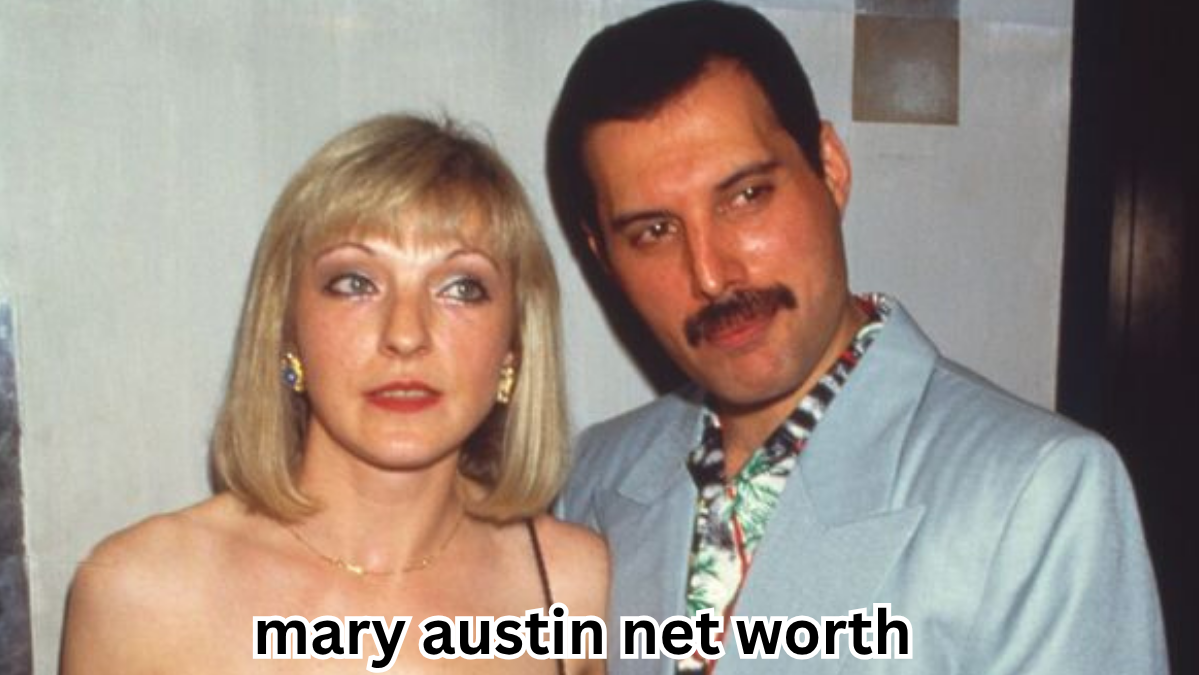
The subject of mary austin net worth is inseparable from one of the most extraordinary relationships in rock history. Mary Austin was not a musician, celebrity entrepreneur, or performer who built a conventional fortune in the public eye. Instead, her financial story is closely connected to Freddie Mercury, the legendary Queen frontman who remained one of her closest friends and confidantes long after their romantic relationship ended. Mercury’s decision to leave Austin a substantial portion of his estate transformed her financial circumstances while also placing her at the center of an enduring debate about his legacy.
Public estimates today place Austin’s wealth in the hundreds of millions of dollars, although the exact figure cannot be verified because she does not publish personal financial statements. Celebrity Net Worth currently estimates her fortune at $250 million. That figure is an estimate rather than an independently audited personal balance sheet, and it should be treated accordingly.
What makes Austin’s financial position especially interesting is the unusual way her wealth developed. Mercury left her Garden Lodge, the Kensington home where he spent his final years, along with half of his fortune and half of his future royalty income. The value of those interests changed dramatically over the decades as Queen’s music remained commercially powerful, streaming transformed the music business, and the 2018 film Bohemian Rhapsody introduced Mercury to another generation.
The story is therefore bigger than a single net-worth estimate. It involves inheritance law, music publishing, property, collectibles, auction history, celebrity culture, and the private relationship between two people whose connection survived the end of their engagement. It also illustrates why celebrity wealth figures can be difficult to calculate accurately: assets that were worth one amount in 1991 can become vastly more valuable decades later.
Austin has generally avoided the kind of publicity associated with major celebrity heirs. She has lived for decades at the center of enormous public curiosity while maintaining a relatively private lifestyle. Her recent decision to sell Mercury’s personal collection through Sotheby’s and put Garden Lodge on the market has nevertheless brought her financial story back into the spotlight.
Understanding her wealth requires separating documented facts from estimates, distinguishing Mercury’s estate from Austin’s personal assets, and recognizing that the value of Queen’s intellectual property has changed substantially since Mercury’s death.
Mary Austin’s Early Life and London Background
Mary Georgina Austin was born on March 6, 1951, in Fulham, London. Her upbringing was far removed from the glamorous world that would eventually surround her. Both of her parents were deaf, and her father worked as a wallpaper trimmer while her mother worked as a domestic servant. Austin left school at the age of 15 and entered the workforce rather than following a conventional extended academic path.
Her early working life included a receptionist position and later employment at Biba, the influential London fashion store. Biba was more than a retail business; it became an important part of the cultural atmosphere of late-1960s and early-1970s London. The store attracted musicians, artists, actors, models, and members of the city’s creative scene. That environment placed Austin closer to the emerging cultural world that would eventually transform her life.
Austin did not enter that world with obvious ambitions to become famous. In fact, her later life suggests almost the opposite. She became important to one of the most recognizable performers on the planet while remaining personally resistant to celebrity culture. Her story is unusual because she gained extraordinary wealth without building a public persona around it.
Before meeting Mercury, Austin had a brief relationship with Brian May, who would become Queen’s guitarist. Through that connection, she eventually met Mercury. The encounter took place around the beginning of the 1970s, when Mercury was still developing the identity and career that would later make him internationally famous. Biography.com reports that Mercury was 24 and Austin was 19 when they first met.
At that point, neither could have predicted the scale of Queen’s future success. Mercury had not yet become the stadium-filling performer associated with Bohemian Rhapsody, Somebody to Love, We Are the Champions, and Don’t Stop Me Now. Austin was simply a young London woman entering a relationship that would eventually become one of the most discussed personal connections in rock history.
Their early years were comparatively ordinary. They lived together, navigated financial limitations, and watched Mercury’s career develop. That period is important because it helps explain why their later relationship could not easily be reduced to the terms “ex-girlfriend” or “former fiancée.” Their connection was established before Mercury became a global superstar.
The financial story that followed decades later therefore began long before the inheritance. Austin knew Mercury when he was still building his career, and Mercury knew Austin before fame fundamentally changed the environment around him.
Freddie Mercury and Mary Austin’s Relationship
Mercury and Austin’s romantic relationship became serious relatively quickly. They eventually became engaged, and for a period their future appeared to be leading toward marriage. Yet Mercury’s personal identity and sexuality evolved in ways that changed the nature of their partnership.
When Mercury told Austin that he was attracted to men, their romantic relationship ended, but the emotional relationship did not. Instead, it developed into a lifelong friendship marked by unusual trust. This distinction is central to understanding both Mercury’s will and Austin’s later role in preserving his private wishes.
Mercury famously described Austin in extraordinarily intimate terms. Biography.com records his statement: “To me, she was my common-law wife. To me, it was a marriage.” That remark has frequently been cited because it captures something that conventional labels could not fully explain.
Their relationship was not simply a friendship maintained out of nostalgia. Austin remained deeply involved in Mercury’s life as his fame expanded. She was among the people who could provide a sense of normality away from the stage, and Mercury trusted her with personal matters that he did not necessarily share publicly.
As Queen became one of the world’s biggest rock bands, Mercury’s life became increasingly complicated. He was surrounded by musicians, managers, friends, partners, assistants, industry executives, and admirers. Yet Austin remained a constant presence.
That consistency helps explain why Mercury ultimately placed so much responsibility in her hands. Inheritance decisions are rarely based on financial logic alone. A will can express a person’s practical priorities, emotional loyalties, and sense of whom they trust to carry out private wishes.
Austin’s relationship with Mercury also continued through some of the most consequential periods of his career. She witnessed the transformation from ambitious young musician to international superstar and remained connected to him through the later stages of his life.
The relationship became especially important when Mercury’s health deteriorated. Austin was among those close to him during his final illness and remained connected to him until his death in November 1991.
That history gives the inheritance a context that is sometimes missing from simplified accounts of celebrity wealth. Mercury did not leave Austin his property merely because she happened to be a former partner. He had known her for more than two decades and had continued to regard her as one of the most important people in his life.
The Inheritance That Changed Austin’s Financial Life
The central fact behind mary austin net worth is the inheritance specified in Freddie Mercury’s will. After his death in 1991, Austin inherited Garden Lodge and its contents, half of Mercury’s fortune, and half of his future royalty income. Celebrity Net Worth describes her as the primary individual beneficiary of Mercury’s estate.
The scale of the inheritance was substantial even by celebrity standards at the beginning of the 1990s. However, the long-term importance of the arrangement became clearer as Queen’s commercial value continued growing.
Mercury did not simply leave Austin a fixed amount of cash. A major part of her inheritance was connected to assets capable of generating future income. That distinction is crucial. A cash inheritance can be spent once. An interest in royalties can continue producing money as music is purchased, streamed, licensed, broadcast, synchronized, or otherwise monetized.
The structure also meant that Austin’s financial position could benefit from the continued popularity of Queen. The band did not disappear after Mercury’s death. Its recordings continued selling around the world, while later generations discovered its catalog through radio, television, films, digital platforms, and live performances by surviving members.
This is one reason estimates of Austin’s wealth can differ significantly from calculations made shortly after Mercury’s death. The value of an income-producing music catalog is not static.
There is also an important distinction between Mercury’s estate and Austin’s personal fortune. Mercury’s estate held assets and rights, while Austin became a beneficiary and owner of specified interests. It is therefore misleading to treat every dollar associated with Queen or Mercury as money personally owned by Austin.
The public record also contains conflicting older claims about the exact percentage of Mercury’s estate Austin ultimately controlled. Some publications have repeated a claim that her share rose to 75% after the deaths of Mercury’s parents. More recent reporting has challenged that interpretation. In a 2026 interview, Austin said her share remained 50%, making the distinction especially important when discussing her finances.
That correction illustrates why celebrity net-worth articles need to be approached carefully. A number repeated for years can become accepted as fact even when the underlying documentation is incomplete.
For a responsible estimate, the safest approach is to use publicly documented property values, disclosed transactions, reported estate interests, and reputable financial estimates while clearly acknowledging what remains private.
Garden Lodge and Its Extraordinary Value
Garden Lodge is perhaps the most visible physical asset connected to mary austin net worth. The Kensington property was purchased by Mercury in 1980 and became his principal London home. Austin was involved in the house-hunting process and later inherited the property after Mercury’s death.
The house had a special significance for Mercury. It was deliberately secluded, giving him a degree of privacy from the enormous attention that surrounded his professional life. Bloomberg reported that Austin remembered the peaceful atmosphere when she first visited the property with Mercury. She recalled children playing in the garden and emphasized how quiet the house felt.
Mercury reportedly decided to purchase Garden Lodge immediately after seeing it. The property was not simply an investment. It became a personal sanctuary and an important part of his private identity.
Over the years, Mercury filled the home with objects reflecting his interests and tastes. Japanese art and decorative objects, furniture, clothing, photographs, manuscripts, jewelry, and other possessions accumulated within the house. The property and its contents became a physical archive of Mercury’s life.
After Mercury died, Austin moved into Garden Lodge and remained there for decades. The house became both her home and a powerful reminder of Mercury.
In February 2024, Austin placed the property on the market for approximately £30 million, equivalent to roughly $38 million at the exchange rate reported at the time. Bloomberg reported on the listing and described the property as Mercury’s longtime London residence.
The property attracted enormous international interest because of its connection to Queen history. Yet its value is not solely attributable to celebrity associations. Kensington real estate is among London’s most expensive residential property markets, and Garden Lodge is an unusually distinctive home with a strong architectural and historical identity.
As of September 2026, the property remained on the market. House & Garden reported that the eight-bedroom Edwardian house had still not sold nearly two years after its original listing.
The continuing listing matters when calculating Austin’s wealth. A £30 million asking price is not the same thing as £30 million of liquid wealth. Until a property sells, its asking price is simply a market expectation. Even after a sale, taxes, legal expenses, agent fees, and other transaction costs can reduce the amount received.
Nevertheless, Garden Lodge represents a major component of Austin’s asset base. Its combination of prime location, architectural character, cultural significance, and association with Mercury makes it unlike an ordinary residential property.
The decision to sell also represents a major personal transition. Austin spent more than three decades living in a house that was deeply associated with Mercury. Selling it separates her from one of the most tangible parts of their shared history.
The Queen Catalog and Long-Term Royalty Income
Music royalties are one of the most complicated elements of mary austin net worth because the public cannot see every private payment made to Mercury’s estate. Nevertheless, the broader economics of Queen’s catalog are well documented.
Queen’s recordings have remained commercially powerful for decades. Albums such as A Night at the Opera, News of the World, The Game, and Innuendo continue to generate income through physical sales, digital purchases, streaming, licensing, synchronization, broadcasting, and other uses.
Mercury’s songwriting credits are especially important because he wrote or co-wrote many of Queen’s most recognizable songs. His compositions include “Bohemian Rhapsody,” “Somebody to Love,” “Don’t Stop Me Now,” “We Are the Champions,” and “Crazy Little Thing Called Love.”
When Mercury died, his estate retained economic interests connected to his music. Those interests could continue generating income as the catalog remained commercially active.
The economics of music changed dramatically during the decades following Mercury’s death. In 1991, compact discs and physical recordings were central to the music business. Later, digital downloads became important, followed by streaming platforms that changed how listeners accessed catalogs.
For a rights holder, a successful older catalog can become increasingly valuable because its cultural familiarity reduces the need to create demand from scratch. A classic song can generate income repeatedly across generations.
Queen benefited from this phenomenon. The band’s music became a permanent part of popular culture, with songs appearing in sports arenas, television programs, advertisements, films, karaoke venues, and public events.
The 2018 film Bohemian Rhapsody provided another major boost. The official Freddie Mercury biography notes that the film helped introduce Queen’s music and Mercury’s story to new generations.
The movie became a major commercial success, earning more than $900 million worldwide and winning four Academy Awards, including Best Actor for Rami Malek. The film’s popularity helped reinforce the commercial strength of the Queen catalog.
Music rights eventually became valuable enough to attract one of the largest catalog transactions associated with a major rock act. Sony agreed in 2024 to acquire Queen’s catalog and related rights in a landmark deal reported at approximately £1 billion, or about $1.27 billion.
The transaction illustrates how valuable legacy music can become. It also explains why estimates of Mercury’s estate income changed dramatically in the years following the sale.
However, the headline transaction value should not be treated as a direct payment to Austin. Queen’s commercial rights involved multiple parties, ownership structures, and categories of intellectual property. The amount paid for the broader package cannot simply be divided among four individuals.
This distinction is essential for accurate financial reporting. A catalog can be sold for a billion dollars while individual beneficiaries receive substantially different amounts after ownership percentages, taxes, expenses, and contractual arrangements are considered.
The 2024 Queen Catalog Sale and Its Importance
The reported Sony transaction became one of the defining events in the modern financial history of Queen. It demonstrated that the band’s intellectual property was considered an extremely valuable long-term asset by one of the world’s largest music companies.
Queen’s surviving members—Brian May, Roger Taylor, and John Deacon—held interests alongside Mercury’s estate in important aspects of the band’s business. Mercury’s estate therefore participated economically in the catalog’s value.
Celebrity Net Worth reports that Mercury’s estate held a 25% interest alongside each of the three surviving classic members. It also notes that the broader transaction included recording and publishing interests, name and likeness rights, and other assets, while some North American rights were treated separately.
That structure means Austin’s financial benefit from the sale cannot be calculated simply by taking one quarter of the $1.27 billion headline value. Mercury’s estate represented one ownership component, and Austin’s own share of that estate represented another layer.
If Austin’s stated 50% interest is used as the basis, her economic share of the estate’s relevant proceeds could have been extremely significant. Forbes reportedly estimated that Mercury’s estate generated around $250 million in 2024, much of it connected to the catalog transaction. Celebrity Net Worth similarly notes that Austin’s economic interest could have represented a substantial amount before taxes and deductions.
Yet no public audited document establishes exactly how much money Austin personally received from the transaction. Any precise figure presented as fact should therefore be treated with skepticism.
The sale nevertheless provides a useful illustration of how inherited wealth can appreciate without the beneficiary creating the underlying asset. Mercury’s songwriting and performance career created the original value. Austin inherited a portion of the economic rights. Continued audience demand then increased the value of those rights.
That process is very different from earning a salary. It is closer to owning a long-term intellectual-property asset.
The Queen catalog sale also demonstrates the power of cultural longevity. Many entertainment assets lose commercial relevance as tastes change. Queen’s music has behaved differently. Songs created decades ago remain recognizable to listeners who were not born when Mercury recorded them.
That cultural durability is a major reason the catalog commanded such a high valuation.
For Austin, the sale also reduced uncertainty surrounding future royalty income. Selling an asset converts a potentially indefinite stream of future earnings into a large transaction value, although it also means giving up some future participation in the asset.
The Sotheby’s Auction of Freddie Mercury’s Collection
Another major development affecting mary austin net worth came in 2023, when Austin sold a large portion of Mercury’s personal collection through Sotheby’s.
The collection was extraordinary in scope. It included clothing, stage costumes, handwritten lyrics, artwork, jewelry, furniture, photographs, personal objects, and memorabilia. Many items had remained at Garden Lodge for decades.
Austin’s decision to sell was emotionally significant. The collection represented Mercury’s private world, not merely his public career. Objects in the auction had been touched, worn, displayed, or personally selected by Mercury.
Sotheby’s organized the material into a major series of auctions that attracted collectors and fans from around the world. The combined sales generated approximately £39.94 million, or about $50.4 million. Celebrity Net Worth reports those figures when discussing Austin’s financial position.
The auction demonstrated the enormous monetary value of celebrity memorabilia at the highest level. A handwritten lyric sheet, for example, can be worth vastly more when associated with a universally recognized song and a performer of Mercury’s stature.
Yet the auction also created an unusual tension between financial value and emotional value. Austin had preserved these objects for decades, and selling them meant allowing strangers to acquire pieces of Mercury’s private life.
Her decision was not simply a conventional liquidation of collectibles. It was a public turning point in how Mercury’s legacy would be distributed among collectors and institutions.
The auction attracted global coverage because it offered a rare glimpse into Mercury’s tastes outside the stage. His love of Japanese art, carefully chosen clothing, extravagant accessories, and personal decorations became visible in ways that had previously been limited to people who knew him privately.
The proceeds added substantial liquidity to Austin’s financial position. However, auction totals should not be confused with pure profit. Sellers can face taxes, commissions, insurance, shipping expenses, and other costs. The headline figure is therefore best understood as gross auction proceeds.
The event nevertheless reinforces the extraordinary scale of the estate Austin inherited. Few private collections associated with rock musicians have generated such intense worldwide attention.
A Financial Overview of Austin’s Publicly Documented Assets
The available information makes it possible to identify major components associated with Austin’s wealth, even though her personal accounts and complete portfolio are private.
| Asset or Financial Interest | Publicly Reported Information | Importance to Wealth |
|---|---|---|
| Garden Lodge | Listed for about £30 million in 2024 and still reportedly unsold in 2026 | Major property asset |
| Mercury estate interest | Austin has described her share as 50% | Central source of inherited wealth |
| Future and historical royalty interests | Mercury left Austin half of his future royalty income | Long-term income source |
| Sotheby’s collection sale | Approximately £39.94 million in combined auction proceeds | Major liquidity event |
| Queen catalog transaction | Broader deal reported at approximately £1 billion | Significant value event for Mercury’s estate |
| Personal earnings | Limited public information | Not considered a major documented source |
| Current net-worth estimate | Celebrity Net Worth estimates $250 million | Estimate, not audited disclosure |
This table demonstrates why a single number can never fully explain Austin’s finances. Her wealth is distributed across property, inherited rights, sale proceeds, and potentially other private holdings.
The most important point is that the public knows far more about the value of specific transactions than it knows about Austin’s complete balance sheet. A net-worth estimate therefore requires assumptions.
Property is another example. Garden Lodge’s asking price provides an indication of potential value, but not necessarily the final amount Austin would receive after a sale. Similarly, the Sotheby’s auction total reflects gross proceeds rather than an audited after-tax figure.
Music rights are even more complicated. Royalty payments depend on contracts, territories, copyrights, publishing arrangements, licensing, collection societies, and administrative expenses.
For these reasons, $250 million is best presented as a current public estimate rather than an established fact. Celebrity Net Worth itself explains that its figures are estimates derived from public information and are not guaranteed to represent exact private wealth.
Why Net-Worth Estimates Can Be Misleading
Celebrity wealth reporting often creates an illusion of precision. Readers see a figure such as $250 million and may assume someone has exactly that amount sitting in cash or investments.
That is rarely how net worth works.
Net worth generally means assets minus liabilities. It can include homes, investments, businesses, intellectual property, collectibles, cash, and other property. The value of those assets can fluctuate substantially.
Austin’s situation is especially complicated because one of her largest assets has been a historic London property. Its market value is influenced by location, architecture, condition, buyer demand, interest rates, and the property’s unique connection to Mercury.
Her inherited music interests are also difficult to value without access to private accounts. Royalty streams can fluctuate depending on consumption, licensing activity, and changes in music-industry economics.
A large auction sale can also distort perceptions. Receiving tens of millions of pounds from an auction does not necessarily mean the seller became richer by that entire amount. The seller has already owned the underlying items, and transaction costs and taxes affect the final result.
The same principle applies to the Queen catalog sale. A $1.27 billion headline valuation cannot be treated as a personal bank deposit for any one beneficiary.
This is why responsible reporting should use phrases such as “estimated net worth” rather than stating an unverified number as fact.
The public record supports the conclusion that Austin is extraordinarily wealthy. It does not support the idea that every detail of her finances is known.
Mary Austin’s Decision to Remain Private
One of the most distinctive aspects of Austin’s life is her reluctance to become a celebrity in her own right.
She became famous by association with Mercury, yet she did not turn that relationship into a conventional media career. She rarely gave interviews, maintained a low profile, and generally avoided discussing the financial details of her inheritance.
That privacy is especially striking considering the value of the estate. Many celebrity heirs use inherited wealth to build brands, businesses, media profiles, or social-media followings. Austin has largely done the opposite.
Her relative anonymity may also have helped protect the emotional significance of her relationship with Mercury. The more private a person remains, the less likely their personal memories become reduced to promotional material.
For decades, Austin also maintained Mercury’s instruction regarding the location of his ashes. She has said that he asked her to keep the location secret, and she has continued to honor that request.
In a recent interview, she acknowledged the difficulty of that responsibility. The Guardian reported that she viewed preserving his final wishes as part of the duty he entrusted to her.
This decision illustrates a broader theme in Austin’s story: she has repeatedly treated her role as Mercury’s confidante as a responsibility rather than an opportunity for publicity.
Her decision to sell Garden Lodge and Mercury’s collection represents a departure from that long period of quiet preservation, but it does not necessarily mean she has abandoned her private nature.
Instead, the sales may reflect the practical reality that preserving an enormous collection and maintaining a historically significant property becomes increasingly difficult over time.
The Emotional Cost of Inheriting a Famous Person’s Estate
Money is only one part of inheritance. When the person who leaves an estate is a cultural icon, the beneficiary can inherit public attention alongside financial assets.
Austin has spoken about the difficulty of inheriting Mercury’s fortune and dealing with the expectations surrounding it. The Independent reported that she described the inheritance as difficult and emphasized that the decisions concerning the estate were not always simple.
The emotional complexity is easy to overlook.
Garden Lodge was not simply a valuable house. It was Mercury’s home. The objects inside were not merely collectibles. They were pieces of a shared personal history.
Selling those possessions therefore required Austin to make decisions about memories that had enormous financial value to strangers.
The public also tends to interpret inheritances through simple narratives: someone receives a fortune, becomes rich, and enjoys a privileged life. Austin’s story is more complicated because the wealth was attached to grief and responsibility.
She lost a person who had been central to her life for more than two decades and simultaneously became responsible for preserving his wishes.
That dual role can be difficult to understand from outside.
The financial benefits were enormous, but so was the responsibility. Austin became the person who could decide what happened to Mercury’s home, possessions, papers, and private information.
That authority inevitably attracted criticism from some fans and observers who believed Mercury’s legacy should be more publicly accessible.
Austin has consistently maintained that she was acting according to Mercury’s wishes.
Mary Austin and the Question of Freddie Mercury’s Legacy
Austin’s relationship with Mercury has made her an important figure in discussions about how his legacy should be remembered.
Mercury’s fame has grown rather than diminished since his death. Queen remains one of the most recognizable rock bands in the world, while Mercury’s image continues appearing in documentaries, books, films, merchandise, exhibitions, and cultural commentary.
The 2018 film Bohemian Rhapsody significantly expanded public interest in Mercury’s private life. Rami Malek’s performance won the Academy Award for Best Actor, and the movie became one of the most commercially successful music biopics ever released.
Austin’s involvement in Mercury’s story made her a character in that cultural retelling. Lucy Boynton portrayed her in the film, introducing the name Mary Austin to viewers who had previously known little about Mercury’s private life.
The movie simplified certain aspects of the relationship, as biographical films often do, but it reinforced the importance of Austin in Mercury’s life.
The reality was more nuanced. Their relationship changed from romance to lifelong friendship, and Austin remained one of the people Mercury trusted most.
That trust extended to the most private details of his final years.
Austin has also pushed back against claims that she deliberately controlled Mercury’s legacy for personal reasons. Her perspective is that she was fulfilling responsibilities he had personally entrusted to her.
The tension between privacy and public ownership of a celebrity’s legacy is not unique to Mercury, but his case is especially intense because of the scale of his cultural influence.
A Life in Lyrics and Austin’s Recent Public Role
Austin’s decision to contribute to A Life in Lyrics: The Official Creative Legacy of Freddie Mercury represents another important chapter.
The book, released in September 2026, includes Mercury’s lyrics, photographs, creative material, and reflections from Austin. Recent reporting describes it as an unusually intimate look at Mercury’s creative life.
Austin’s involvement is significant because she spent decades choosing not to provide extensive public commentary about Mercury.
Her memories offer context that cannot easily be reconstructed from music-industry documents. She knew Mercury before Queen became internationally famous, lived through his rise, and remained close during the final years of his life.
The book also provides insight into the domestic and creative environment surrounding songs that became global classics.
One example concerns “Bohemian Rhapsody.” Austin recalled Mercury’s anxiety when the record company questioned the song’s length and unconventional structure. She described how the eventual success of the song reassured him that his creative risk had worked.
Such memories humanize Mercury in a way that statistics cannot.
They also explain why Austin’s role remains relevant even after the financial assets associated with Mercury have changed hands or been sold.
Her greatest historical value may ultimately be less about her fortune than her memory.
She represents one of the few people who knew Mercury both before and after he became Freddie Mercury—the larger-than-life performer recognized worldwide.
The Importance of “Love of My Life”
Mercury’s relationship with Austin has frequently been linked to Queen’s song “Love of My Life.”
Biography.com identifies the song as one associated with Austin and their relationship. Although songs can have multiple interpretations, the association has become part of the public narrative surrounding the pair.
The song’s emotional quality has helped reinforce the idea that Austin occupied a unique place in Mercury’s personal world.
Yet it is important not to reduce their entire relationship to one song. Their connection lasted for more than two decades and survived major personal changes.
Mercury’s life included romantic relationships with men, friendships with musicians and artists, and a demanding international career. Through those changes, Austin remained a stable presence.
That stability is arguably more significant than any individual song reference.
The emotional durability of their friendship also helps explain why the inheritance was so substantial.
A will can be read as a legal document, but it can also be understood as a final statement of trust.
Mercury’s decision to leave Austin his home, a large share of his fortune, and future royalty income reflected the extraordinary role she played in his life.
How Queen’s Continued Success Affected Austin’s Wealth
The long-term growth of mary austin net worth is closely connected to the fact that Queen did not become a legacy act in the ordinary sense.
The band’s music remained commercially relevant through every major change in the music industry. Its songs survived the transition from vinyl to CDs, from CDs to downloads, and from downloads to streaming.
Queen’s continued touring also kept the band’s name in the public conversation. Brian May and Roger Taylor continued performing Queen music with different vocal collaborators, keeping the catalog connected to live audiences.
Television appearances, sporting events, advertisements, films, and viral cultural moments further reinforced the music’s reach.
The result is an unusually durable intellectual-property asset.
For Austin, that durability mattered because Mercury’s estate retained economic interests connected to the music.
Every new generation that discovered Queen potentially increased the long-term commercial value of the catalog.
The success of Bohemian Rhapsody provided a particularly visible example. A film released more than 25 years after Mercury’s death generated hundreds of millions of dollars and sparked renewed interest in songs recorded decades earlier.
This illustrates why music catalogs can be attractive investments. A great song does not become obsolete simply because its creator is gone.
Instead, its value can increase as new technologies and cultural contexts create additional ways for people to hear and license it.
Mary Austin’s Children and Personal Life
Austin later built a family life separate from Mercury’s celebrity world.
She had two children with artist Piers Cameron. Mercury became godfather to her older son, Richard. The relationship between Mercury and Austin’s family illustrates how deeply he remained connected to her life even after their romantic relationship had ended.
Austin and Cameron eventually separated.
She later married businessman Nicholas Holford in 1998, although that marriage also ended.
Her personal life has remained considerably less public than Mercury’s. She did not attempt to recreate his celebrity lifestyle, and she generally avoided the entertainment industry’s appetite for personal disclosure.
This relative privacy is part of why information about her current finances remains limited.
There are no comprehensive public records showing every investment, bank account, property, or private business interest she may hold.
Consequently, estimates of her wealth should focus primarily on documented assets and transactions connected to Mercury’s estate.
Her children and family life also demonstrate that Austin’s identity cannot be reduced entirely to being Mercury’s heir.
She had a life, relationships, and responsibilities of her own before and after Mercury’s death.
The inheritance changed her financial position, but it did not erase the other dimensions of her life.
Why Austin Did Not Simply Sell Everything Earlier
The timing of Austin’s recent asset sales is noteworthy.
Mercury died in 1991, yet Austin waited more than 30 years before selling most of his personal collection.
That long period suggests that preservation rather than immediate financial gain was her priority.
Garden Lodge remained largely associated with Mercury’s memory, and the collection remained together inside the property.
Collectors and institutions would likely have paid significant amounts for individual items much earlier, especially as Mercury’s fame continued growing.
Austin nevertheless kept the collection intact.
That decision allowed an unusually complete picture of Mercury’s private environment to survive.
The Sotheby’s auction therefore became more than a conventional estate sale. It was a rare dispersal of a major celebrity collection that had remained largely untouched for decades.
Austin has explained that she believed the objects should eventually be shared with people who would appreciate them.
The decision also reflects the practical realities of age and responsibility. Maintaining a large private collection is demanding, and preserving historically important objects requires resources, expertise, security, and careful management.
Selling the items allowed them to enter museums, private collections, and archives where they could continue to be preserved and studied.
In that sense, the auction did not simply monetize Mercury’s possessions. It redistributed his physical legacy.
The Role of Sotheby’s in Preserving Mercury’s Material Legacy
Sotheby’s provided a global platform for Mercury’s collection.
The auction house’s involvement brought specialist expertise to objects ranging from handwritten lyrics to jewelry and costumes.
The scale of public interest demonstrated that Mercury’s personal belongings had become cultural artifacts.
Collectors were not simply buying expensive objects. They were purchasing direct connections to a musician whose influence had extended far beyond rock music.
The auction also created a historical record. Photographs, descriptions, estimates, and sale results documented objects that had previously been known mainly to Austin and Mercury’s inner circle.
For researchers, historians, music fans, and collectors, that documentation can become valuable in its own right.
The sale also revealed Mercury’s taste in art and design.
His collection showed interests that were broader than his stage persona. Japanese art, elegant furniture, decorative pieces, clothing, and personal accessories reflected a highly developed aesthetic sensibility.
This matters because Mercury was often reduced to his flamboyant performances.
The collection revealed the quieter, more private person behind the public image.
Austin was uniquely positioned to preserve that side of him because she had lived with Mercury and understood the significance of objects that might otherwise appear ordinary.
Mary Austin and the Secrecy Surrounding Mercury’s Ashes
Among the most closely guarded aspects of Mercury’s legacy is the location of his ashes.
Austin has said that Mercury personally asked her to keep the location secret.
She has maintained that promise for decades.
The decision has sometimes generated public speculation, but Austin has consistently refused to disclose the location.
Her position illustrates the boundary between public curiosity and private responsibility.
Mercury was one of the world’s most recognizable entertainers, but he also had the right to make private decisions about his remains.
Austin’s willingness to honor that request has become one of the clearest examples of her loyalty to him.
It also explains why some of her actions may appear unusual when viewed solely through the lens of celebrity culture.
She has repeatedly prioritized what she believes Mercury wanted over what fans or journalists might prefer to know.
That philosophy is consistent with her broader approach to Garden Lodge and the collection.
She protected the property for decades, kept the collection intact, and maintained privacy around Mercury’s most personal matters.
Public Controversies and Misunderstandings
The discussion around mary austin net worth has sometimes been shaped by inaccurate or oversimplified claims.
One of the most repeated claims is that Austin eventually received 75% of Mercury’s estate. Older articles have circulated that figure, but more recent reporting includes Austin’s own clarification that she continued to hold a 50% share.
That distinction is financially significant.
If a person is described as owning 75% rather than 50% of a major estate, the estimated wealth attributed to them can change dramatically.
Another common misunderstanding concerns the Queen catalog transaction.
The reported £1 billion deal represents the value of a broad collection of music-related assets and rights. It should not be described as the amount received by Mercury’s estate or by Austin personally.
Ownership structures, contractual rights, taxes, and transaction expenses all affect the final distribution.
Similarly, Garden Lodge’s £30 million asking price should not be described as money Austin already possesses.
These distinctions may seem technical, but they are essential when discussing celebrity finances responsibly.
A net-worth article can be engaging without presenting speculation as certainty.
The strongest approach is to explain what is known, what is estimated, and what remains private.
How Austin’s Wealth Compares With Traditional Celebrity Fortunes
Austin’s financial position is unusual because she did not build her fortune through a long public career.
Traditional celebrity wealth often comes from salaries, endorsements, business ownership, investments, or entertainment royalties earned directly by the individual.
Austin’s wealth developed primarily through inheritance.
That makes her story closer to that of a major estate beneficiary than a conventional celebrity entrepreneur.
However, the underlying assets she inherited were unusually productive.
Music rights can generate income for decades, especially when attached to a globally successful catalog.
The combination of inherited property and intellectual-property interests created a financial structure capable of appreciating substantially over time.
Austin also appears to have avoided the kind of conspicuous spending that can rapidly reduce inherited fortunes.
Her private lifestyle and limited public profile make it difficult to assess her personal spending, but there is little evidence that she transformed her inheritance into an extravagant celebrity brand.
Instead, much of the value remained tied to assets associated with Mercury.
This is one reason estimates of her wealth have remained high even after major sales.
The Difference Between Wealth and Cash
It is worth emphasizing that wealth does not mean cash.
If Garden Lodge were worth £30 million, Austin would not necessarily have £30 million available in a bank account. The value would be represented by ownership of property.
Likewise, a royalty interest can be worth millions without producing the same amount of cash every year.
Net worth is a snapshot of economic value rather than a description of liquidity.
This distinction becomes particularly important for wealthy heirs.
A person can be extremely wealthy while having relatively little cash compared with their total assets.
Conversely, selling a major asset can create substantial liquidity while reducing the portfolio’s long-term income potential.
Austin’s Sotheby’s sale illustrates this trade-off.
She converted physical objects into cash while giving up ownership of the collection.
The Queen catalog transaction created a similar economic transformation at a much larger scale for the relevant rights holders.
The practical financial outcome depends on what the proceeds are used for afterward.
Without access to Austin’s private financial records, it is impossible to know how she invested or spent her proceeds.
That uncertainty should be acknowledged rather than filled with speculation.
The Cultural Value of Garden Lodge Beyond Its Price
Garden Lodge’s importance cannot be measured solely in pounds or dollars.
The house became part of Mercury’s mythology because it was his private refuge during the final decade of his life.
It was also the place where his collection accumulated.
Fans associate the property with Mercury’s final years, while historians see it as a physical setting for understanding his domestic life.
Its potential sale therefore carries cultural significance beyond London’s luxury-property market.
A buyer would not simply acquire a large Kensington house. They would acquire a property with an unusually strong connection to twentieth-century music history.
That connection can be both valuable and complicated.
Some buyers may want the privacy and prestige associated with the property, while others may find the constant public interest burdensome.
The house’s future could determine how Mercury’s private legacy is remembered.
If it becomes another private residence, much of its connection to the public may fade.
If it becomes a museum or cultural site, the property could acquire an entirely different role.
Austin’s decision to sell places that choice in the hands of the market.
The Continuing Relevance of Freddie Mercury
Understanding mary austin net worth also requires understanding why Mercury remains such a valuable cultural figure.
Mercury’s influence extends beyond his role as Queen’s lead singer.
He was a songwriter, pianist, performer, recording artist, and theatrical innovator.
The official Freddie Mercury biography describes him as one of the greatest performers in rock history and emphasizes his role in shaping Queen’s creative identity.
His stage presence was extraordinary, but his songwriting was equally important.
Songs such as “Bohemian Rhapsody” demonstrated a willingness to challenge conventional structures. “Somebody to Love” showcased his vocal power, while “Don’t Stop Me Now” became one of Queen’s most enduring crowd favorites.
Mercury also pursued solo work and collaborated with Spanish opera singer Montserrat Caballé on the Barcelona project.
His creativity was therefore broader than the Queen catalog alone.
That breadth helps explain why his estate remained commercially important long after his death.
The market does not value nostalgia alone. It values continued demand.
Mercury has continued to attract that demand across generations.
The Influence of Bohemian Rhapsody on Mercury’s Financial Legacy
The 2018 film Bohemian Rhapsody was a major cultural and financial event.
Rami Malek’s portrayal of Mercury brought the singer’s story to audiences around the world.
The movie’s success created renewed interest in Queen’s music, and the band’s catalog benefited from increased public attention.
The film also introduced Austin to viewers who may not previously have known about her.
Lucy Boynton’s portrayal presented Austin as a major figure in Mercury’s personal story.
Although the movie necessarily compressed and dramatized real events, it helped reinforce the public perception that Austin had been one of Mercury’s most important relationships.
The financial impact of the film cannot be isolated from other factors, but its cultural effect was obvious.
Queen’s music experienced renewed exposure, and younger listeners discovered songs that had been recorded decades earlier.
This kind of cross-generational discovery is particularly valuable for music catalogs.
Every successful cultural revival can create new streams of licensing, streaming, sales, and merchandising income.
For Mercury’s estate, that renewed attention increased the economic significance of the assets Austin inherited.
What the Future Could Mean for Austin’s Wealth
The future value of Austin’s remaining assets depends on several factors.
The most obvious is Garden Lodge.
If the property eventually sells near its asking price, Austin could convert a substantial non-liquid asset into cash.
However, the final sale price could be higher or lower than the asking price, depending on market conditions.
Another factor is the remaining economic interest in Mercury’s music.
The reported Sony transaction changed the ownership structure of important Queen rights, but music continues generating income through areas that may remain outside the transaction.
Merchandising, licensing, live performance, publishing arrangements, and other rights can have separate commercial structures.
The precise future income available to Austin cannot be established from public information alone.
The Sotheby’s sale also means that a significant portion of Mercury’s physical collection has already been monetized.
That reduces the value of the remaining physical collection but increases liquidity from the items that were sold.
Future wealth will therefore depend increasingly on property, investment decisions, and remaining inherited rights rather than the complete collection that once filled Garden Lodge.
Why the $250 Million Estimate Should Be Treated as an Estimate
The current $250 million figure associated with mary austin net worth comes from Celebrity Net Worth, which is a commonly cited entertainment-finance website rather than a government or audited financial institution.
The site updated its estimate in September 2026 and places Austin’s net worth at $250 million.
The estimate is plausible when considered alongside the publicly reported value of Garden Lodge, the Sotheby’s auction, Mercury’s estate interests, and the Queen catalog transaction.
But plausibility is not proof.
Austin has not publicly released a detailed personal balance sheet.
There is no public document listing every asset she owns, every liability she owes, or every investment she controls.
Therefore, any article that states an exact personal net worth as unquestionable fact is overstating the evidence.
The better conclusion is that Austin is worth hundreds of millions of dollars according to current public estimates, with $250 million serving as a widely cited benchmark.
That figure may change as property is sold, investments appreciate or decline, tax obligations are settled, and remaining music-related interests generate income.
Celebrity wealth is dynamic.
The number should therefore be understood as a current estimate rather than a permanent valuation.
The Legacy of a Relationship That Outlasted Romance
Austin’s story is ultimately more interesting than a financial headline.
She met Mercury before Queen became a global phenomenon.
She loved him romantically, became engaged to him, and later remained his closest friend after their romantic relationship ended.
She witnessed his transformation into one of the greatest performers in music history.
She was trusted with his home, his possessions, his estate, and his private wishes.
She carried those responsibilities for more than three decades.
The financial consequences were extraordinary, but the relationship itself was unusual long before money entered the story.
Mercury’s description of Austin as his “common-law wife” captures the emotional significance he attached to their bond.
Their relationship resisted conventional categories.
It was not a marriage, yet Mercury described it in marital terms.
It was not a romantic partnership throughout its entire duration, yet the emotional attachment remained powerful.
It was not a business relationship, yet Austin eventually became responsible for a large part of Mercury’s financial legacy.
That complexity is why Austin continues to attract public interest.
Mary Austin’s Place in Music History
Austin is not a member of Queen, and she did not perform on its records.
Yet her role in Mercury’s personal life places her within the broader history of the band.
She knew him before his fame and remained close after he became a global icon.
She also became the person who preserved many of the physical traces of his private life.
The recent publication of A Life in Lyrics expands that historical role.
Austin can provide details about Mercury’s personality, creative process, relationships, and domestic environment that are not available through conventional music biographies.
Her memories therefore have value beyond their financial implications.
As time passes, firsthand witnesses to Mercury’s early life and career become fewer.
Austin’s perspective is unusually important because she knew him during multiple phases of his life.
She knew the young man before the fame, the superstar at the height of Queen’s success, and the private individual facing serious illness.
That range gives her recollections a rare depth.
The Financial Lessons From Austin’s Story
There are broader lessons in the story behind mary austin net worth.
First, inherited wealth can become much more valuable when the inherited assets produce continuing income.
Second, intellectual property can be among the most durable forms of wealth.
A successful song can generate revenue for decades, while a physical asset can appreciate or decline depending on market conditions.
Third, celebrity wealth estimates require caution.
Public headlines often simplify complicated ownership structures.
Fourth, privacy can coexist with enormous wealth.
Austin’s life demonstrates that someone can inherit hundreds of millions of dollars without becoming a highly visible celebrity entrepreneur.
Finally, wealth can carry emotional responsibilities.
The person who inherits a famous individual’s possessions may also inherit the burden of deciding what should be preserved, sold, donated, or kept private.
Austin’s experience shows that money and memory can become inseparable.
Conclusion: Understanding Mary Austin’s Wealth and Legacy
The story of mary austin net worth is ultimately a story about inheritance, intellectual property, property ownership, and an extraordinary personal relationship with Freddie Mercury.
Public estimates place Austin’s fortune at around $250 million, but that figure should be understood as an estimate rather than an independently verified personal balance sheet. The evidence behind her wealth is nevertheless substantial. Mercury left Austin Garden Lodge, half of his fortune, and half of his future royalty income.
Garden Lodge alone became a multimillion-pound asset. Listed for approximately £30 million in 2024, the property remained on the market as of September 2026.
The Sotheby’s sale of Mercury’s possessions generated approximately £39.94 million in gross proceeds, while the reported Queen catalog transaction demonstrated the extraordinary value of the music rights associated with the band.
Yet the financial figures tell only part of the story.
Austin’s importance comes from the unusual trust Mercury placed in her. They began as a romantic couple, but their relationship survived the end of that romance. Mercury continued to regard her as one of the most important people in his life and ultimately entrusted her with his home, his wealth, his possessions, and his private wishes.
For more than three decades, Austin preserved that legacy largely away from the spotlight. Her recent decisions to sell Mercury’s collection, place Garden Lodge on the market, and contribute her memories to A Life in Lyrics mark a new stage in her public story.
Her wealth is therefore best understood not as a simple celebrity fortune but as the long-term financial result of inheriting valuable property and intellectual-property interests from one of the most influential performers of the twentieth century.
The most remarkable element may be that Austin’s financial story began with a relationship formed before fame. What became an enormous inheritance was rooted in decades of friendship, loyalty, and trust.
Frequently Asked Questions About Mary Austin’s Wealth and Life
What is Mary Austin’s estimated net worth?
Current public estimates put Mary Austin’s wealth at approximately $250 million. Celebrity Net Worth published that figure in September 2026, based on publicly available information concerning her inheritance from Freddie Mercury, Garden Lodge, royalty interests, the Sotheby’s collection sale, and the Queen catalog transaction. Because Austin has not released a private audited balance sheet, the figure should be treated as an estimate rather than an exact measurement.
How did Mary Austin become wealthy?
The largest source of Austin’s wealth was her inheritance from Freddie Mercury. His will left her Garden Lodge and its contents, half of his fortune, and half of his future royalty income. The value of those interests grew over time as Queen’s music remained commercially successful and Mercury’s cultural influence expanded.
Did Freddie Mercury leave Garden Lodge to Mary Austin?
Yes. Mercury left Garden Lodge to Austin in his will. She subsequently lived in the Kensington property for more than three decades. The house was placed on the market for approximately £30 million in February 2024 and was still reportedly unsold in September 2026.
What percentage of Freddie Mercury’s estate did Mary Austin inherit?
Austin has described her inheritance as 50% of Mercury’s fortune and 50% of his future royalty income. Some older publications have claimed that her share later rose to 75%, but more recent reporting includes Austin’s own rejection of that claim. For accurate financial discussion, the 50% figure is the better-documented basis.
Did Mary Austin sell Freddie Mercury’s belongings?
Yes. In 2023, Austin sold a large portion of Mercury’s personal collection through Sotheby’s. The collection included handwritten lyrics, clothing, jewelry, artwork, furniture, photographs, and other personal objects. The combined auction proceeds were reported at approximately £39.94 million.
Why did Mary Austin sell Freddie Mercury’s collection?
Austin’s decision appears to have been influenced by the desire to eventually release Mercury’s possessions into the world rather than continue preserving the entire collection privately. The objects had remained together for decades, and the Sotheby’s sale allowed collectors and institutions to acquire pieces of Mercury’s personal history while generating substantial proceeds.
Is Mary Austin still living at Garden Lodge?
No current public reporting indicates that she remains living at Garden Lodge. She placed the property on the market in February 2024, and House & Garden reported in September 2026 that the property remained unsold.
What is Garden Lodge worth?
Garden Lodge was listed for approximately £30 million in 2024. That asking price is the clearest recent public indication of its market value, although an eventual sale price could be different. A property’s asking price should not be confused with the owner’s final proceeds after a transaction.
Was Mary Austin married to Freddie Mercury?
No. Austin and Mercury were engaged during their romantic relationship but never married. Their romance ended after Mercury told Austin about his attraction to men. They remained extremely close friends, and Mercury later described Austin in marital terms, saying she was his “common-law wife” and that their relationship was like a marriage.
Did Mary Austin and Freddie Mercury have children together?
No. Austin and Mercury did not have children together. Austin later had two children with artist Piers Cameron. Mercury became godfather to her older son, Richard, demonstrating that his relationship with Austin remained close after their romantic partnership had ended.
Why was Mary Austin so important to Freddie Mercury?
Austin knew Mercury before Queen became internationally famous and remained close to him for more than two decades. Their relationship evolved from romance into lifelong friendship. Mercury trusted her with deeply personal matters and ultimately entrusted her with his home, a large portion of his estate, and the secret location of his ashes.
Does Mary Austin know where Freddie Mercury’s ashes are?
Yes. Austin has said that Mercury personally entrusted her with the location and asked her never to reveal it. She has honored that request for decades, even though the public has repeatedly speculated about where his ashes were placed.
Did Queen’s catalog sale make Mary Austin richer?
The reported sale of major Queen music rights in 2024 was financially significant for Mercury’s estate, but the exact amount Austin personally received has not been publicly disclosed. Because ownership interests and contractual arrangements are complex, it would be inaccurate to divide the headline transaction value directly among Austin and the surviving Queen members.
Is Mary Austin still receiving Freddie Mercury royalties?
Austin inherited half of Mercury’s future royalty income under his will, although the precise current annual amount she receives is private. Changes in music consumption, licensing arrangements, catalog ownership, and the 2024 Queen transaction make it impossible to state a reliable current annual royalty figure from public information alone.
Did Mary Austin write a book about Freddie Mercury?
Austin contributed memories and material to A Life in Lyrics: The Official Creative Legacy of Freddie Mercury, released in September 2026. The project provides rare insight into Mercury’s creative process and private life, including reflections on songs, photographs, lyrics, and experiences Austin shared with him.
Why is Mary Austin’s financial story still so closely connected to Freddie Mercury?
Austin’s wealth is closely connected to Mercury because the largest publicly documented assets associated with her fortune originated with his estate. At the same time, her historical importance goes beyond money. She was Mercury’s former fiancée, lifelong confidante, beneficiary, and the person he trusted to protect several of his most private wishes.