
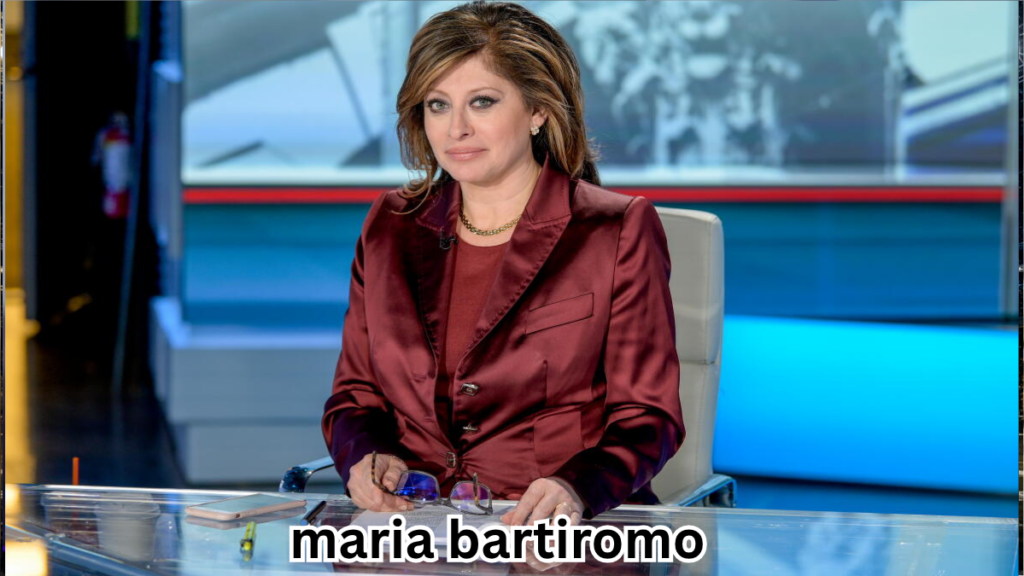
Maria Bartiromo is one of the most recognizable names in American financial journalism. Over a career spanning decades, she helped transform business reporting from a specialized field into a mainstream television format that could attract viewers far beyond Wall Street. Her work has included live market coverage, interviews with corporate executives, economic analysis, political interviews, documentaries, books, and television hosting.
What makes her career particularly notable is the range of roles she has occupied. She began behind the scenes in business television, developed into a major on-air correspondent at CNBC, became a pioneering presence on the floor of the New York Stock Exchange, and later built a prominent second chapter at Fox Business and Fox News. Her professional profile has therefore crossed financial journalism, television broadcasting, business commentary, and political news.
There is also an important current development in her career. On September 3, 2026, Reuters reported that Bartiromo had departed Fox News Media with immediate effect after more than 12 years at the company. Fox described the departure as a business decision and did not publicly provide a specific reason. Her final broadcast had reportedly aired on August 9, 2026.
That development makes it useful to look beyond a simple biography. Her career is best understood as a long evolution in which financial markets, television technology, celebrity culture, corporate power, politics, and changing news audiences increasingly overlapped. The story includes major accomplishments, influential interviews, prestigious awards, entrepreneurial opportunities, and controversies that became part of the wider discussion surrounding modern cable news.
Early Life, Family Background, and Education
Maria Bartiromo was raised in Brooklyn, New York, in an Italian-American family. Her family background became an important part of the personal story she later shared publicly, particularly when discussing immigration, work ethic, entrepreneurship, and the American Dream. Her mother’s family came from Agrigento, Sicily, while her grandfather Carmine Bartiromo came from Nocera in Naples. According to Bartiromo’s own account, her family history was closely connected with hard work and building a life in the United States.
Her grandfather’s experience became especially meaningful in the way she later described her heritage. She recalled that he arrived in America with very little money, eventually settling in Brooklyn and building the Rex Manor restaurant. Bartiromo has said that working at the restaurant as a teenager gave her an early experience of responsibility and customer service. Her first job there was as a coat-check girl, an ordinary beginning that stands in sharp contrast to the high-profile television career that followed.
Education provided another important foundation. Bartiromo attended New York University, where she studied journalism and economics. That combination proved unusually well suited to the direction of her career. Journalism gave her the reporting and communication framework required for television, while economics provided a foundation for understanding the financial subjects she would later cover.
The pairing also reflected an emerging reality in financial broadcasting. Business journalism requires more than the ability to read a teleprompter or interview executives. Reporters must understand markets, companies, economic indicators, monetary policy, corporate earnings, investment behavior, and the sometimes complicated language used by financial professionals. An education combining journalism and economics gave Bartiromo a foundation that could support that crossover.
Her connection to New York was also significant. New York is one of the world’s major financial centers, and the proximity of Wall Street, corporate headquarters, media organizations, and financial institutions created an unusually rich environment for someone interested in business reporting. Her later career would place her directly at the center of that ecosystem.
The First Steps Into Business Journalism
Before becoming a household television personality, Bartiromo worked in production and editorial positions. She spent five years with CNN Business News as a producer, writer, and assignment editor. Those roles gave her experience with the mechanics of television journalism before she became a prominent correspondent herself. Fox Business identifies this period as an important early stage of her professional development.
Behind-the-scenes experience can be particularly valuable in broadcast journalism because it teaches how stories are selected, organized, produced, and delivered. A producer needs to understand deadlines, guests, scripts, video, market movements, breaking news, and the practical limitations of live television. Bartiromo’s early work therefore provided an operational education that complemented her academic background.
In 1993, she joined CNBC. The network was developing a specialized television identity around business and financial markets, and Bartiromo became one of the personalities who helped establish that identity. Her career at CNBC eventually lasted two decades, making it the central institution of the first major chapter of her professional life.
The significance of CNBC during this period should not be underestimated. Financial information had long been available through newspapers, specialist publications, radio, wire services, and professional terminals, but cable television offered a different model. Markets could be followed throughout the trading day, with prices, commentary, corporate news, and economic developments presented continuously.
Bartiromo became particularly effective in that environment because she combined traditional reporting with the immediacy of live television. Instead of treating Wall Street as a distant institution, her work brought the people and activity of the market directly into viewers’ homes.
Making History at the New York Stock Exchange
One of the defining moments in Bartiromo’s career came in 1995, when she became the first journalist to report live from the floor of the New York Stock Exchange on a daily basis. Fox Business describes the milestone as a pioneering moment in financial television.
The achievement was important because the exchange floor was not simply another television location. It represented the physical center of American financial markets for generations. Traders, specialists, executives, journalists, and visitors operated in an environment characterized by constant movement, noise, visual information, and rapid decision-making.
Broadcasting from the floor changed the way television audiences experienced the market. Instead of seeing only charts or hearing an anchor summarize prices, viewers could watch the environment where financial transactions were taking place. The visual immediacy made economic news feel more tangible.
Bartiromo was only 27 when she began reporting from the exchange floor. Her age made the accomplishment even more striking because she was entering a space historically dominated by experienced financial professionals, many of whom were not accustomed to the presence of television cameras in the way later generations would be.
Her work also demonstrated that financial journalism could be visually compelling. Market reporting does not naturally offer the same kind of imagery as sports or entertainment, but a live trading floor supplied movement, personalities, and atmosphere. The combination helped make financial television more accessible to general audiences.
In 2020, she returned to the New York Stock Exchange to ring the opening bell and mark 25 years since her historic broadcasting milestone. Fox Business reported that she reflected on the significance of the anniversary and her long relationship with Wall Street.
That anniversary also illustrates the longevity of her career. A television milestone that began in the mid-1990s remained relevant a quarter-century later because it represented a broader change in how business news was communicated. Bartiromo was not simply reporting from Wall Street; she was part of the process through which Wall Street became a recurring element of popular television.
Building a Career at CNBC
Bartiromo’s twenty-year CNBC tenure produced numerous programs and assignments. Fox Business credits her with launching the network’s morning program Squawk Box, anchoring The Closing Bell with Maria Bartiromo, and serving as anchor and managing editor of On the Money with Maria Bartiromo.
Each role reflected a different part of the financial news day. Morning programming required an ability to summarize overnight developments and prepare audiences for the trading session. Closing coverage focused on what had happened during the day and what investors might be watching next. Longer-form programming created room for interviews, analysis, and deeper discussion.
This variety helped her become more than a correspondent. She developed into a recognizable anchor whose name became associated with the network’s broader identity. That transition is important in television because anchors increasingly function as brands in their own right.
Her interviews also became a major part of her professional reputation. Financial television depends heavily on access to executives, investors, economists, policymakers, and market analysts. High-profile guests can attract viewers while providing information that is difficult to obtain through ordinary reporting.
Bartiromo developed a reputation for securing conversations with influential business figures. Her work brought viewers into contact with corporate leaders at a time when many Americans were becoming increasingly interested in stocks, retirement accounts, technology companies, and the broader economy.
The rise of the internet during her CNBC years also changed financial journalism. Market information was becoming more accessible online, yet television remained valuable because it provided interpretation and personality. Viewers did not necessarily need an anchor simply to tell them that an index had risen or fallen; they needed context explaining why the move mattered.
Bartiromo’s role therefore evolved alongside the information environment. Her television presence helped bridge professional financial markets and a general audience that increasingly wanted to understand the forces affecting investments, jobs, housing, technology, and consumer prices.
Awards and Professional Recognition
The breadth of Bartiromo’s professional recognition reflects the range of her work. Fox Business reports that she has won two Emmy Awards and a Gracie Award, while also receiving recognition from major broadcasting institutions.
Her first Emmy was connected to coverage of the 2007–2008 financial crisis, including reporting on the collapse of bailout talks. That period represented one of the most consequential moments in modern financial journalism because the global economy was facing severe stress and audiences needed understandable explanations of rapidly developing events.
She later won a second Emmy for the documentary Inside the Mind of Google. The program reflected another side of her work: rather than concentrating solely on daily market movements, she could use documentary television to explore the influence and development of major technology companies.
Her Gracie Award recognized Greenspan: Power, Money & the American Dream. The program focused on Alan Greenspan and the relationship between monetary policy, financial power, and American economic life. Such projects demonstrate her ability to work across both daily news and longer-form television.
In 2009, the Financial Times named her one of the “50 Faces That Shaped the Decade.” The recognition was particularly relevant because the 2000s brought major changes to financial markets, technology, television, and journalism.
Bartiromo also became the first female journalist inducted into the Cable Hall of Fame in 2011, according to Fox Business. She was later inducted into the Library of American Broadcasting’s Giants of Broadcasting & Electronic Arts in 2016.
These honors provide useful context for understanding her place in broadcasting history. Her career was not defined solely by ratings or celebrity. She received institutional recognition for contributing to the development of financial television and the broader cable news industry.
Books and Written Work
Television has been the most visible part of Bartiromo’s professional identity, but books have also played an important role. She has authored several books that extend themes found throughout her broadcasting career.
Two notable titles published in 2010 were The Weekend That Changed Wall Street and The 10 Laws of Enduring Success. Fox Business lists both among her published works.
The Weekend That Changed Wall Street focuses on the dramatic period surrounding the financial crisis. A book-length format allows an author to provide considerably more context than a television segment, particularly when explaining complicated events that unfold over multiple days or weeks.
The 10 Laws of Enduring Success takes a different approach, emphasizing lessons associated with achievement, professional development, and leadership. Its subject reflects the broader public image Bartiromo developed as someone who had navigated a competitive media environment while maintaining a long career.
Her writing also extended beyond books. Fox Business notes that she contributed columns to publications including Business Week and Milano Finanza and wrote for USA Today and other magazines. She was also published in outlets including the Financial Times and Newsweek.
This written work matters because journalism across different formats requires different skills. Television rewards concise explanation and immediacy, while print permits more detailed argument and reflection. Moving between the two can strengthen a journalist’s ability to communicate with different audiences.
The combination of broadcasting and writing also helped establish her as a commentator rather than merely an on-screen presenter. She became associated with interpretations of markets, leadership, economic policy, and business trends.
Moving From CNBC to Fox Business
In 2013, Bartiromo announced her departure from CNBC after two decades, and in 2014 she joined Fox Business. The move represented a significant transition because CNBC had been central to her identity for most of her adult professional life.
Fox Business announced her signing in January 2014, describing her as a veteran financial news anchor. The network said she would serve as global markets editor and anchor programming for both Fox Business and Fox News.
Changing networks at that stage of a career is a major professional decision. Bartiromo was not an emerging journalist searching for her first major platform; she was already a well-established broadcaster with a distinctive identity. The challenge was therefore to transfer that identity into a different institutional environment.
Her move also occurred during a broader period of expansion for Fox Business. The network was competing for viewers in an increasingly crowded financial-news market, while Fox News offered opportunities to connect economic coverage with a larger political and general-news audience.
Bartiromo became one of the most prominent personalities associated with that crossover. Her programs increasingly covered not only markets and companies but also government policy, elections, trade, regulation, geopolitics, and political leadership.
The shift demonstrated how financial journalism had changed. Economic stories were no longer isolated from political stories. Decisions about taxes, tariffs, interest rates, regulation, government spending, energy policy, immigration, and international trade could directly influence markets.
A financial journalist therefore needed to understand politics, while political audiences increasingly needed economic information. Bartiromo’s later career developed directly within that overlap.
Mornings With Maria and Financial Television
At Fox Business, Bartiromo became closely associated with Mornings with Maria. The program combined market coverage with interviews and discussion of economic and political developments.
Morning financial programs occupy an important place in the news cycle. Investors, business professionals, policymakers, and general viewers often want to know what happened overnight and what could influence the day ahead. A morning anchor must therefore process information quickly and communicate priorities clearly.
The program also reflected the changing boundaries of business television. Market information could sit alongside conversations about government policy, corporate strategy, inflation, employment, technology, and consumer behavior.
Bartiromo’s long experience gave her a substantial network of contacts. Fox Business has highlighted interviews with corporate leaders such as JPMorgan CEO Jamie Dimon, Microsoft co-founder Bill Gates, Salesforce CEO Marc Benioff, Walmart CEO Doug McMillon, and Bridgewater Associates founder Ray Dalio.
These interviews illustrate a central principle of financial journalism: access matters. A reporter who can obtain direct answers from decision-makers can give viewers information that is unavailable from market charts alone.
At the same time, high-profile interviews place greater responsibility on the interviewer. Corporate executives, political figures, and investors are skilled communicators. A strong interview requires preparation, subject knowledge, persistence, and the ability to distinguish between an informative answer and a carefully constructed public-relations statement.
Bartiromo’s career has therefore involved not only appearing on television but also managing the complex relationship between journalists and powerful sources.
Sunday Morning Futures and the Expansion Into Politics
Another major element of Bartiromo’s Fox career was Sunday Morning Futures on Fox News Channel. The program placed economic issues within a broader political-news environment.
Sunday political programs traditionally focus on interviews with lawmakers, administration officials, presidential candidates, economists, and other influential figures. They can shape the political conversation heading into a new week.
Bartiromo’s presence in that format reflected her growing involvement in political coverage. Her background remained strongly rooted in economics and markets, but her programs increasingly explored the policy decisions that influence the economy.
This crossover became especially pronounced during the Trump era. Bartiromo conducted interviews with Donald Trump and other major political figures and became a recognizable television interviewer within conservative political media.
Fox Business has stated that during her Fox tenure she interviewed presidents, senior administration officials, business executives, and prominent economic policymakers. Her guest list included Bill Clinton, George W. Bush, Barack Obama, Donald Trump, and other major public figures.
Her political programming also gave her a role in major election coverage. Fox Business reported that she co-moderated two Republican presidential primary debates.
That represents a significant evolution from her original identity as a Wall Street correspondent. She had moved from reporting on financial markets to participating directly in one of the most consequential formats in American political media.
The transition illustrates the interconnected nature of economic and political journalism. Interest rates, taxes, government spending, trade, energy, business regulation, and employment are economic issues, but they are also political issues. A journalist covering one field inevitably encounters the other.
Major Interviews and the Value of Access
One of the most distinctive elements of Bartiromo’s career has been her ability to attract high-profile interview subjects. Her professional history includes conversations with corporate executives, investors, presidents, cabinet officials, lawmakers, and other influential figures.
Interviews with business leaders can provide information about earnings, investment, technology, employment, corporate strategy, and economic conditions. Interviews with policymakers can clarify the intended direction of government decisions and the reasoning behind them.
The value of an interview depends partly on timing. A conversation with a chief executive after a major corporate announcement can offer insight into strategy. A discussion with a policymaker during a market-moving event can help explain the government’s position. A presidential interview can attract enormous public attention because of the political influence involved.
Bartiromo’s long-standing presence in business media helped create a reputation that could support these conversations. Her experience meant that she could discuss corporate and financial subjects with executives while also asking questions relevant to a broader television audience.
Her interview style has also been part of her public identity. Supporters have viewed her as direct and willing to press powerful guests, while critics have sometimes questioned the framing or political direction of particular interviews. Both reactions demonstrate the larger role that prominent interviewers play in polarized media environments.
In modern television, the interviewer is often part of the story. Viewers develop expectations about an anchor’s worldview, tone, priorities, and approach to guests. That can increase audience loyalty while simultaneously intensifying scrutiny.
Bartiromo’s career demonstrates this dynamic clearly. Her professional identity has never been only about transmitting information. It has also involved creating a recognizable framework through which audiences interpret that information.
Coverage of Financial Crises
Financial journalism is most heavily tested when markets become unstable. During ordinary trading days, a journalist can explain earnings reports, economic data, stock movements, and corporate announcements. During a crisis, the demands become much greater.
Bartiromo’s Emmy-winning coverage of the 2007–2008 financial collapse became one of the most important examples of her crisis reporting. Fox Business identifies her coverage of the financial collapse and bailout negotiations as the work that earned her first Emmy.
The financial crisis was difficult to explain because its causes and consequences crossed multiple sectors. Housing markets, mortgage finance, investment banks, credit markets, government intervention, employment, and consumer confidence were interconnected.
Television journalists had to make these relationships understandable without losing the urgency of breaking news. Viewers wanted to know what was happening immediately, but they also needed context about why the events mattered.
That challenge is one reason experienced financial reporters can become especially valuable during economic disruptions. Market data changes rapidly, while explanations must remain accurate.
Bartiromo’s later coverage continued to involve major economic events, including the COVID-era economic shock, inflation, monetary policy debates, and changing relationships between government and business.
Her work has therefore spanned multiple generations of economic journalism. The subjects have changed, but the basic challenge remains the same: explaining complex economic developments to an audience that includes both financial professionals and people with little specialized knowledge.
Reporting on September 11 and Wall Street Resilience
Bartiromo has also publicly discussed her experience reporting from the New York Stock Exchange during the September 11, 2001 attacks. In a 2021 Fox Business reflection marking the twentieth anniversary, she recalled being on the exchange floor during the events and later returning to the location to reflect on what had happened.
The attacks created a unique challenge for financial journalists because the financial system itself was directly affected. The New York Stock Exchange and broader financial district were physically close to the World Trade Center, and the consequences extended far beyond stock prices.
When the NYSE reopened on September 17, the event carried symbolic importance. Markets were not merely resuming business; reopening represented an effort to restore economic continuity after a national tragedy.
For a journalist who had built a career around the exchange floor, the experience became part of her professional history. It connected the personal dimension of reporting with the institutional importance of Wall Street.
Bartiromo’s reflections also show why journalism is not simply a collection of facts. Reporters who cover major historical events often carry memories of the environments in which those events unfolded.
The experience of reporting during crises can influence how journalists understand resilience, markets, institutions, and public confidence. Financial markets depend partly on expectations, and expectations are shaped by information. Journalism therefore becomes part of the larger process through which society understands economic shocks.
Italian-American Heritage and the American Dream
Family heritage has remained a recurring part of Bartiromo’s public story. She has often connected her career to the values she learned from her Italian-American family.
In 2019, Fox Business published an account of her discussion of her family’s immigration history. She described her grandfather’s arrival in the United States, his work, his service, and his eventual establishment of the Rex Manor restaurant in Brooklyn.
She has described her upbringing as an influence on her work ethic and professional outlook. In discussing her National Italian American Foundation recognition, she said that her background shaped how she approached hard work and opportunity.
Her family story also connects to a broader theme frequently associated with American business culture: entrepreneurship beginning at a very small scale.
The Rex Manor was not a multinational corporation. It was a family business built through labor and persistence. Yet the story became meaningful because it provided a concrete example of economic mobility and immigrant entrepreneurship.
Bartiromo’s later career in financial journalism gave her an unusual platform for discussing these themes. She spent much of her professional life interviewing people who had built large companies, managed major institutions, or influenced markets, while remembering that her own family story began with a small restaurant in Brooklyn.
Her recognition by the National Italian American Foundation reflected this connection. In 2019, she received a lifetime achievement award from the organization, which praised both her professional accomplishments and her involvement with the Italian-American community.
The award added another dimension to her public profile. Her career had become not only a story about television but also one about family heritage, professional achievement, and cultural identity.
Leadership Lessons From Jack Welch
Bartiromo’s long career brought her into contact with many prominent corporate leaders. One relationship she later discussed in detail was with Jack Welch, the former General Electric chairman and CEO.
In a 2020 Fox Business article following Welch’s death, Bartiromo wrote that she had known him for more than 25 years and described him as an important influence during her CNBC years. She recalled that he was a hands-on manager and a regular source for her programs.
Her reflections illustrate another aspect of financial journalism: reporters often develop long professional relationships with the people they cover. Those relationships can provide access, historical perspective, and insight into how major organizations operate.
Welch also supported Bartiromo’s work at the NYSE. She later recalled that he was among those who encouraged her move onto the exchange floor.
The episode is significant because pioneering broadcast decisions often require institutional support. A journalist may have an idea, but networks and executives have to believe that the idea is worth the risk.
Bartiromo’s NYSE reporting became one of the defining elements of her career, and the support of influential figures helped make that experiment possible.
Her recollections of Welch also demonstrate how journalists can learn from the executives they interview. Conversations with corporate leaders can become informal lessons in management, communication, risk-taking, and organizational culture.
Maria Bartiromo’s Wall Street
Another important program in her Fox career was Maria Bartiromo’s Wall Street, a weekly investing program. Fox Business describes the show as a program focused on Wall Street and investing, with episodes available through the network.
A program devoted specifically to Wall Street allowed Bartiromo to draw on the financial expertise developed throughout her career. It also reinforced the continuity between her early CNBC years and her later Fox work.
The concept of a recognizable journalist hosting a show named after herself reflects how television personalities can become brands. Viewers were not simply watching a generic financial program; they were watching a program built around a journalist whose career was closely associated with Wall Street.
The format also reflected the growing sophistication of individual investors. Over the decades, more Americans gained direct or indirect exposure to financial markets through retirement plans, mutual funds, brokerage accounts, and online investing platforms.
That expanded audience created demand for financial programming that could be understandable without being simplistic.
A successful financial program has to walk a narrow line. Too much technical language can lose general viewers, while excessive simplification can reduce credibility among financially knowledgeable audiences.
Bartiromo’s long experience in both reporting and interviewing gave her a foundation for navigating that balance.
The Relationship Between Markets and Politics
One reason Bartiromo’s career became increasingly political is that financial markets are deeply connected to government decisions.
The Federal Reserve influences borrowing costs and financial conditions. Congress shapes taxation and spending. Presidential administrations establish trade policies and regulatory priorities. International events affect energy prices, supply chains, currency markets, and investor confidence.
A journalist covering the economy therefore cannot avoid politics.
Bartiromo’s Fox programming increasingly reflected this reality. Interviews with political leaders frequently focused on economic policy, while conversations with business executives could involve regulation, trade, taxes, and government intervention.
This intersection became particularly important during the Trump administration and the years that followed. Trade disputes, tariffs, tax policy, energy production, technology regulation, and monetary policy were all subjects with both political and financial consequences.
The changing media landscape also encouraged this convergence. Audiences often consume news across categories rather than keeping politics and economics separate.
Someone interested in the stock market may also be interested in an election because the outcome could influence corporate taxation or regulation. Likewise, a political audience may want economic information because inflation, employment, and interest rates affect everyday life.
Bartiromo’s career sits directly at this intersection. Her professional identity began with financial markets but eventually encompassed a much wider definition of economic and political journalism.
Controversies and Media Scrutiny
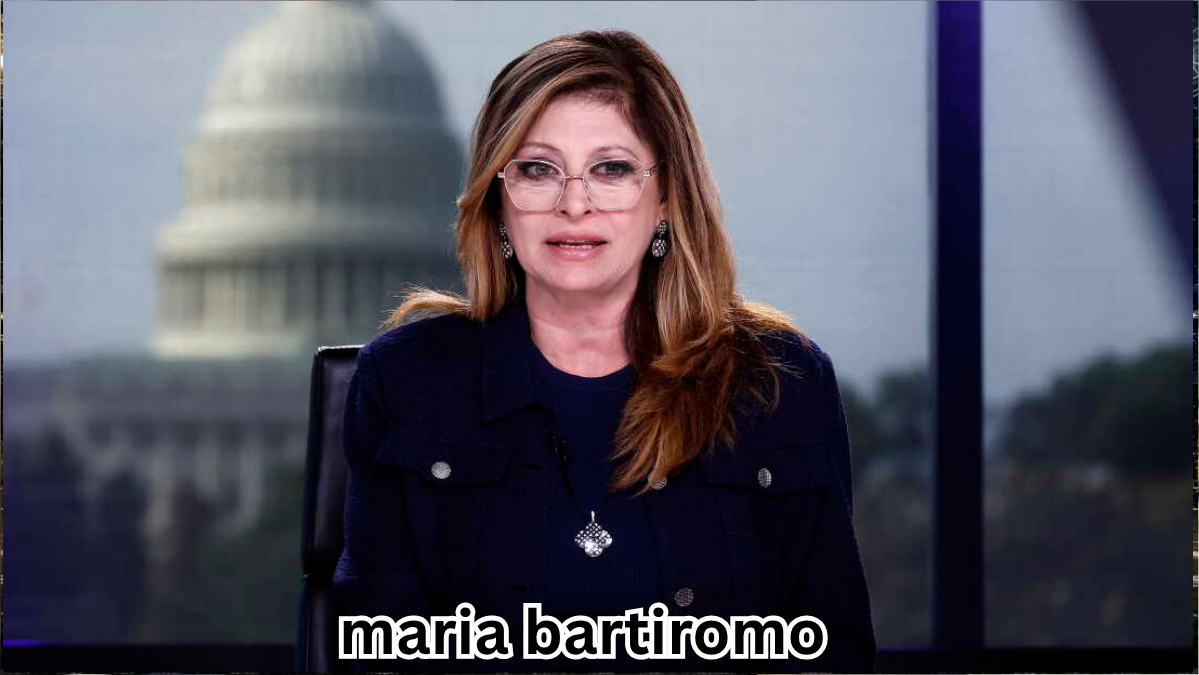
A complete account of Bartiromo’s public career must also acknowledge controversy. High-profile journalism inevitably attracts scrutiny, particularly when an anchor becomes closely associated with politically sensitive coverage.
During the period surrounding the 2020 U.S. presidential election, Bartiromo was among Fox personalities involved in litigation and public scrutiny related to the network’s airing of false claims about election fraud. Reuters has reported that Fox News ultimately settled Dominion Voting Systems’ lawsuit for $787.5 million in 2023, while litigation involving Smartmatic remained unresolved at the time of its 2026 report on Bartiromo’s departure.
The broader episode became one of the most consequential controversies in American television journalism. It raised questions about editorial responsibility, source verification, audience expectations, corporate governance, and the relationship between news organizations and political personalities.
For Bartiromo, the controversy formed part of the later phase of a career that had previously been strongly associated with financial journalism. It illustrated how the risks facing prominent anchors increase when programming moves from market analysis into highly contested political subjects.
At the same time, public scrutiny is not unusual for journalists who become major television personalities. Viewers, competitors, political organizations, corporations, and media critics may all evaluate the work of prominent anchors through different standards.
The controversy should therefore be understood within the larger context of the transformation of cable news. Modern anchors can simultaneously be reporters, interviewers, commentators, public personalities, and recognizable brands. Those overlapping roles can create significant influence, but they can also make professional boundaries more difficult to define.
Professional Recognition in Later Years
Despite the controversies surrounding parts of her career, Bartiromo continued to receive professional recognition.
Her awards and institutional honors include the two Emmys, the Gracie Award, the Cable Hall of Fame induction, and the Library of American Broadcasting recognition. Fox Business also reports that she received the Horatio Alger Award in 2026 and became a lifetime member of the association.
The Horatio Alger Association recognition is particularly consistent with the personal narrative she has often emphasized. Her public story has repeatedly connected family immigration, work, persistence, education, and professional advancement.
Awards do not erase controversy, nor do controversies erase professional achievements. Both can exist within the history of a long public career.
That distinction is important when evaluating journalists objectively. A career can contain groundbreaking accomplishments and serious disputes at the same time. Understanding both produces a more complete picture than reducing a public figure to either praise or criticism.
Bartiromo’s professional longevity is itself notable. Television careers can be short, particularly in competitive news environments where audiences and technology change quickly.
Remaining relevant across multiple decades requires adaptation. Bartiromo moved from production to reporting, from financial news to broader economic coverage, from one network to another, and from business programming into political broadcasting.
Boards, Teaching, and Professional Engagement
Bartiromo’s work has extended beyond television. Fox Business reports that she has served on the Board of Trustees of New York University, participated in the Council on Foreign Relations, and served on the board of the National Italian American Foundation.
Her relationship with NYU is especially fitting given her educational background. She also served as an adjunct professor at NYU Stern School of Business during the fall semesters from 2010 through 2013.
Teaching represents another way experienced journalists can influence future professionals. A journalist with decades of experience can provide students with insights into interviewing, media ethics, economic reporting, television production, and professional development.
Her involvement with educational and civic organizations also demonstrates that a public career can extend beyond daily broadcasting.
For a journalist who spent so much time explaining markets and business, participation in institutions connected with education and public affairs provided opportunities to contribute in different ways.
Why Her Career Matters to Financial Journalism
The broader significance of Bartiromo’s career lies in the evolution of financial television itself.
Before the expansion of twenty-four-hour business news, financial markets were often treated as specialized subjects. Their importance was undeniable, but the average television viewer might encounter Wall Street primarily during major market crashes or corporate scandals.
Bartiromo’s generation of broadcasters helped normalize financial markets as part of everyday news consumption.
Live market reporting made stock movements visible. Interviews with CEOs made corporate strategy part of television conversation. Economic indicators became recurring elements of morning news. Financial crises became subjects requiring immediate broadcast explanation.
The result was a closer relationship between markets and popular culture.
Today, millions of people follow financial information through television, websites, social media, podcasts, apps, newsletters, and online communities. The expectation that financial developments should be explained continuously owes something to the broadcasting infrastructure developed during the era in which Bartiromo rose to prominence.
Her NYSE reporting is particularly symbolic of that transition. The exchange floor was transformed from a professional environment into a television location that ordinary viewers could see regularly.
That helped humanize finance. Markets were no longer simply numbers displayed on a page. They involved people, voices, institutions, emotions, and rapid decisions.
A Career Built on Adaptation
Adaptation is perhaps the most useful theme for understanding Bartiromo’s professional history.
She began as a producer and writer before becoming an on-air journalist. She moved from CNN to CNBC, then from CNBC to Fox. She shifted from financial reporting toward broader economic and political coverage. She worked in daily programming, documentaries, books, columns, interviews, and debate moderation.
Each transition required a different set of skills.
The move onto the NYSE floor required confidence and the ability to operate in an unfamiliar broadcast environment. Long-form interviews required preparation and subject expertise. Political programs required knowledge of policy and political personalities. Documentary work required storytelling beyond the rhythm of daily market news.
The ability to remain visible while changing formats is one reason her career lasted for so long.
Her story also reflects the broader evolution of journalism. The modern media personality is expected to communicate across television, digital platforms, books, live events, interviews, and social media.
The boundaries between journalist, commentator, analyst, and public personality have become less rigid. Bartiromo’s career developed during precisely this period of transformation.
Personal Branding and Public Recognition
A television journalist’s name can become a professional asset when viewers associate it with a particular area of expertise.
Bartiromo’s name became closely linked with Wall Street, markets, business leadership, and later political interviews. Programs carrying her name reinforced that association.
Personal branding in journalism can have practical advantages. A recognizable anchor may attract guests, viewers, advertisers, and institutional opportunities. It can also provide continuity when networks change.
But personal branding brings responsibilities as well. When audiences strongly identify a journalist with particular subjects or viewpoints, they may interpret coverage through that identity.
Bartiromo’s career demonstrates both sides of the equation. Her recognizable name helped her build major programs and secure prominent interviews, but it also meant that controversies involving her broadcasts received substantial attention.
In this sense, celebrity and journalism increasingly overlap. The journalist is no longer invisible behind the story. The journalist becomes part of the media product.
The Meaning of Her American Dream Narrative
The American Dream is a recurring theme in Bartiromo’s public storytelling.
Her family’s immigrant background, her grandfather’s restaurant, her early job, her education, and her rise into national television provide the structure for a conventional upward-mobility narrative.
Yet the story is more useful when viewed as a professional case study rather than simply an inspirational tale.
Bartiromo’s career required specialized education, persistence, networking, communication skills, willingness to take professional risks, and the ability to perform under pressure.
Her early position at CNN did not guarantee a television career. Joining CNBC in the early 1990s did not guarantee that she would become one of its defining personalities. Moving onto the NYSE floor required an opportunity that could easily have gone to someone else.
Her later move to Fox required another professional reinvention.
The narrative therefore combines opportunity with preparation. Her story illustrates how career advancement often occurs when a person’s skills meet an institution willing to provide a platform.
That combination is especially relevant to journalism because the industry rewards both individual talent and institutional access.
Financial Journalism in the Digital Age
The media environment Bartiromo entered in the 1990s is dramatically different from the environment that exists today.
When she began reporting from the NYSE, live television was still one of the most powerful ways to deliver immediate financial information to a mass audience. Today, market data is available instantly on smartphones and computers.
This raises the question of what television journalists contribute when information itself is no longer scarce.
The answer increasingly lies in context, interpretation, interviews, credibility, and storytelling.
A stock price can be obtained instantly. Understanding why a company moved requires deeper reporting. An economic statistic can be downloaded from a government website. Understanding its implications requires expertise. A politician’s statement can be posted online within seconds. Determining its significance requires journalism.
Bartiromo’s career illustrates this transition because her value has never depended solely on reading numbers from a screen. Her programs have relied heavily on conversations with influential figures and analysis of broader economic developments.
The future of financial journalism will likely continue moving toward this model. Raw information is abundant, but useful interpretation remains valuable.
The Importance of Interviewing Powerful People
Interviewing powerful people is one of the most visible responsibilities of a prominent news anchor.
The guest may be a president, CEO, investor, policymaker, or technology executive. Such individuals often have extensive media training and clear communication strategies.
A good interview therefore requires more than asking prepared questions. It requires understanding the subject well enough to recognize when an answer is incomplete, evasive, or inconsistent with previous statements.
Bartiromo’s career provides numerous examples of high-profile interviews, including conversations with major corporate leaders and political figures. Fox Business has highlighted the breadth of those interviews throughout her tenure.
Access itself can be a form of journalistic capital. A journalist who consistently obtains important guests can build a reputation that creates further access.
However, access must be balanced with independence. The journalist’s responsibility is not simply to maintain relationships with powerful sources but to provide useful information to the audience.
That tension exists throughout political and business journalism. Sources need journalists to reach the public, while journalists need sources for information. Each side has an interest in the relationship, but the audience ultimately judges whether the interview was informative.
Legacy of the New York Stock Exchange Milestone
Among all of Bartiromo’s accomplishments, the NYSE milestone remains particularly important because it is easy to understand and historically significant.
She was the first journalist to report live from the exchange floor on a daily basis, beginning in 1995. Fox Business repeatedly identifies this achievement as one of the central milestones of her career.
The achievement mattered because television journalism depends on access to physical locations. Getting a camera onto the exchange floor created a new visual relationship between audiences and financial markets.
It also contributed to the normalization of market reporting.
For subsequent generations of viewers, seeing journalists surrounded by traders and financial professionals became familiar. The images helped define the visual language of business television.
Bartiromo’s later anniversary appearance at the exchange demonstrated the durability of that legacy. Twenty-five years after the milestone, the event was still significant enough to be commemorated by the institution itself.
That kind of longevity is uncommon. Television formats change quickly, but certain images become part of broadcasting history.
The 2026 Fox News Media Departure
The latest major development in Bartiromo’s career came in September 2026, when Reuters reported that she had departed Fox News Media effective immediately after more than 12 years with the company. Fox described the move as a business decision and did not provide a specific public reason.
Reuters reported that her last broadcast was August 9, 2026. The departure marked the end of a substantial second chapter in her career, following her move from CNBC to Fox Business in 2014.
The significance of the departure is difficult to separate from the scale of her Fox tenure. She had hosted multiple programs, including Mornings with Maria, Maria Bartiromo’s Wall Street, and Sunday Morning Futures.
Her Fox years also represented the broadest expansion of her career beyond traditional financial journalism. She became an interviewer and commentator whose coverage frequently connected markets with politics, government, and international affairs.
The end of a long network relationship naturally raises questions about what comes next professionally, but speculation should be distinguished from documented information. As of Reuters’ September 3 report, Bartiromo had not publicly commented on the departure and no specific explanation beyond Fox’s characterization of it as a business decision had been established.
What can be stated with confidence is that the departure closes an important chapter in a career that began long before Fox Business existed.
Career Timeline and Major Milestones
| Period | Career milestone | Significance |
|---|---|---|
| Early career | CNN Business News | Developed production, writing, and assignment experience |
| 1993 | Joined CNBC | Began two-decade association with a leading financial television network |
| 1995 | Began daily live reporting from the NYSE floor | Established a major broadcasting milestone |
| 2000s | Expanded CNBC hosting and reporting roles | Became one of the network’s defining business personalities |
| 2008 | Emmy-winning financial crisis coverage | Recognized for reporting during a major economic crisis |
| 2009 | Financial Times recognition | Named among the “50 Faces That Shaped the Decade” |
| 2010 | Published major books | Extended her work into business writing |
| 2011 | Cable Hall of Fame | Became first female journalist inducted |
| 2013 | Left CNBC | Ended a 20-year chapter |
| 2014 | Joined Fox Business | Began a new phase as global markets editor and anchor |
| 2016 | Broadcasting Hall recognition | Inducted as a Giant of Broadcasting & Electronic Arts |
| 2019 | NIAF lifetime achievement recognition | Honored for professional and cultural contributions |
| 2020 | NYSE 25th-anniversary appearance | Marked quarter-century since her historic reporting milestone |
| 2026 | Horatio Alger Award | Received major recognition later in her career |
| September 2026 | Departed Fox News Media | Ended more than 12 years with the company |
The timeline shows how unusual the length and variety of her career have been. Few television journalists move successfully across so many formats while remaining closely associated with their original field of expertise.
It also demonstrates the importance of timing. Her biggest professional milestones often occurred during periods of transformation in financial media, from the rise of live cable business coverage to the convergence of economic and political news.
Maria Bartiromo’s Place in Broadcasting History
Maria Bartiromo’s place in broadcasting history rests on several overlapping achievements.
First, she helped make financial markets more visible to ordinary television audiences. Her live NYSE reporting gave Wall Street a regular visual presence in homes across the country.
Second, she demonstrated that a financial journalist could become a major television personality. Her programs carried her name, and her interviews attracted some of the most influential people in business and government.
Third, she helped illustrate the increasingly blurred boundary between financial journalism and political journalism. Economic policy became inseparable from broader political news, and her career followed that evolution.
Fourth, she built a career that crossed television, books, print journalism, teaching, institutional service, and public speaking.
Her legacy is therefore broader than any single program.
The most durable part of her influence may be the idea that financial journalism can be both authoritative and accessible. Markets affect ordinary people, and explaining them effectively requires translating specialized information into language that general audiences can understand.
That remains an important mission even as the media environment continues to change.
What Can Be Learned From Her Career
Several professional lessons emerge from Bartiromo’s career.
One is the value of specialization. Her expertise in economics and financial markets gave her a distinctive professional identity. In a crowded media industry, specialized knowledge can create opportunities that general skills cannot.
Another lesson is the importance of taking calculated risks. Moving from behind-the-scenes production into on-camera journalism required a major professional transition. Reporting from the NYSE floor also involved stepping into a new format.
A third lesson is adaptability. Bartiromo did not remain confined to one role. She became a correspondent, anchor, interviewer, documentary host, author, columnist, professor, debate moderator, and political interviewer.
A fourth lesson is that reputation compounds over time. Decades of reporting create networks of sources and professional relationships that can become valuable later in a career.
A fifth lesson is that public visibility has both rewards and costs. A recognizable journalist can gain enormous influence and access, but mistakes and controversies also become more visible.
These lessons are relevant beyond journalism. They apply to many careers in which expertise, communication, adaptability, and reputation determine long-term success.
FAQ
Who is Maria Bartiromo?
Maria Bartiromo is an American journalist and television broadcaster best known for her long career covering financial markets, business, economics, and later political news. She spent 20 years at CNBC before joining Fox Business in 2014, where she became associated with programs including Mornings with Maria, Maria Bartiromo’s Wall Street, and Sunday Morning Futures. Reuters reported in September 2026 that she had departed Fox News Media after more than 12 years with the company.
What is Maria Bartiromo best known for?
She is best known for becoming the first journalist to report live from the floor of the New York Stock Exchange on a daily basis in 1995. The milestone became a defining part of her broadcasting legacy and helped establish her as one of the most recognizable financial journalists on American television. She later became known for high-profile interviews with business leaders, investors, politicians, and government officials.
Where did Maria Bartiromo go to college?
She attended New York University and studied journalism and economics. The combination of those subjects closely matched the direction of her eventual career because she needed both communication skills and a working understanding of financial and economic subjects. She later served as an adjunct professor at NYU Stern School of Business.
What awards has Maria Bartiromo won?
Her documented honors include two Emmy Awards and a Gracie Award. She was also the first female journalist inducted into the Cable Hall of Fame, was recognized by the Library of American Broadcasting as a Giant of Broadcasting & Electronic Arts, and received a lifetime achievement award from the National Italian American Foundation. Fox Business reported that she also received the Horatio Alger Award in 2026.
Did Maria Bartiromo write books?
Yes. Her published books include The Weekend That Changed Wall Street and The 10 Laws of Enduring Success, both released in 2010. Her written work has also included columns and articles for publications such as Business Week, Milano Finanza, USA Today, and other magazines.
When did Maria Bartiromo join Fox Business?
She joined Fox Business in 2014 after spending approximately two decades at CNBC. Fox announced her signing in January 2014 and described her role as global markets editor, with responsibilities involving financial programming and a Sunday business-focused program on Fox News.
What programs did Maria Bartiromo host at Fox?
Her Fox career included Mornings with Maria on Fox Business, Maria Bartiromo’s Wall Street, and Sunday Morning Futures on Fox News Channel. Her programming increasingly combined financial-market coverage with economic policy, political interviews, and broader news analysis.
What happened to Maria Bartiromo in 2026?
Reuters reported on September 3, 2026, that Bartiromo had departed Fox News Media effective immediately after more than 12 years with the network. Fox described the departure as a business decision and did not publicly provide a specific reason. Reuters also reported that her last broadcast was August 9, 2026, and that she had not publicly commented on the departure at the time of the report.
What is Maria Bartiromo’s connection to Italian-American heritage?
Bartiromo has frequently spoken about her Italian-American family history. She has said that her mother’s family came from Agrigento, Sicily, while her grandfather Carmine Bartiromo came from Nocera in Naples. Her grandfather later established the Rex Manor restaurant in Brooklyn, where Bartiromo worked as a teenager. Her family history became an important part of her public discussion of work, opportunity, and the American Dream.
Why is her New York Stock Exchange reporting historically important?
Her NYSE reporting was historically important because she became the first journalist to report live from the exchange floor on a daily basis. The milestone brought the physical environment of Wall Street directly into television homes and helped make financial markets more visually accessible to a mass audience. It became one of the defining achievements of her career.
Conclusion
Maria Bartiromo‘s career is a story of transformation as much as achievement. She began in the production side of business journalism, developed into a pioneering financial correspondent, became a recognizable CNBC anchor, made history on the New York Stock Exchange floor, authored books, earned major broadcasting honors, and later moved into a broader role combining financial, economic, and political coverage.
Her professional journey also mirrors major changes in American media. Financial markets became more visible, business news became mainstream television programming, and economic issues became increasingly intertwined with political debates. Bartiromo operated at the center of those changes for decades.
Her accomplishments are substantial and well documented, particularly her NYSE milestone, Emmy-winning reporting, Cable Hall of Fame induction, long tenure at CNBC, extensive Fox career, books, interviews, and professional honors. At the same time, her later career also demonstrates how increased media influence brings increased scrutiny, particularly when financial reporting overlaps with highly polarized political news.
The September 2026 departure from Fox News Media marks a new point in that long professional story. Reuters’ reporting establishes the basic facts of the departure while leaving her next chapter open.
Whatever comes next, her historical contribution to financial television is already established. She helped make Wall Street a familiar presence on mainstream television and demonstrated the influence a skilled financial journalist could achieve when reporting, interviewing, broadcasting, and personal credibility came together. Her career remains a significant case study in the evolution of American business journalism and the changing relationship between markets, media, and public life.