
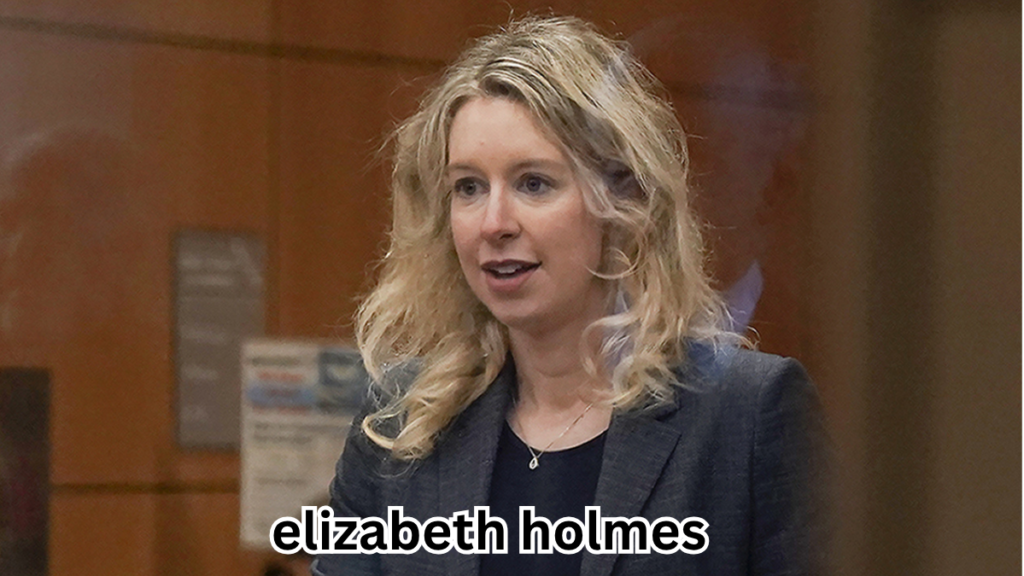
Elizabeth Holmes became one of the most recognizable names in Silicon Valley after promising to transform the way blood testing was performed. Her company, Theranos, presented an appealing vision: instead of drawing several vials of blood and sending them through conventional laboratory systems, patients could supposedly receive a wide range of medical test results from a tiny amount of blood. The idea was simple enough to understand, commercially exciting, and potentially revolutionary for healthcare.
That promise helped Holmes attract influential investors, prominent board members, major business partnerships, and extraordinary media attention. At one point, Theranos was valued at approximately $9 billion, and Holmes was celebrated as a young entrepreneur who had entered an industry dominated by established medical companies and attempted to reinvent it. Her distinctive public image, carefully controlled company culture, and ability to communicate a compelling vision all contributed to the company’s remarkable rise.
The story eventually became one of the most consequential business scandals in modern American corporate history. Investigations, whistleblower disclosures, regulatory action, journalism, criminal prosecution, and a federal trial exposed a stark difference between Theranos’s public claims and the capabilities of its technology. The company ultimately collapsed, and its founder was convicted of multiple counts of fraud against investors.
The Theranos story is compelling because it involves far more than the rise and fall of one startup. It raises difficult questions about innovation, corporate governance, investor due diligence, medical technology, secrecy, leadership, media culture, and the responsibilities that accompany ambitious claims. It also demonstrates how quickly an extraordinary reputation can disappear when the underlying evidence does not support the story being told.
Understanding the complete history requires looking beyond the headlines. The most useful way to examine Holmes is to follow the progression from her early interest in entrepreneurship and medicine to the creation of Theranos, its rapid expansion, the growing skepticism surrounding its technology, the investigations that followed, the criminal trial, and the consequences that continue to shape how the business world thinks about health technology.
Early Life and the Foundations of Her Ambition
Holmes was born in Washington, D.C., in 1984 and grew up in a family with professional and business connections. From an early age, she displayed an interest in entrepreneurship and the idea of building something significant. Her childhood and teenage years have since been repeatedly examined because they provide some context for the ambition that later defined her career.
She attended Stanford University, where she studied chemical engineering. Her time at Stanford became particularly important because it was there that she encountered the scientific and entrepreneurial environment that would influence the direction of her future company. She left the university before completing her degree, choosing instead to pursue the startup that would eventually become Theranos.
Leaving college to build a company was not completely unusual in Silicon Valley. The region had developed a powerful mythology around young founders who abandoned conventional educational or professional paths to pursue ambitious ideas. That culture rewarded confidence, speed, disruption, and the belief that established industries could be transformed by determined entrepreneurs.
For Holmes, the healthcare sector offered an especially attractive target. Medical testing affects an enormous number of people, and laboratory diagnostics represent an important part of modern medicine. The possibility of making testing cheaper, faster, less invasive, and more accessible had obvious appeal.
The challenge was that healthcare is not simply another consumer technology market. A new social media platform or shopping application can be changed rapidly after launch, but diagnostic technology directly affects medical decisions. Accuracy, validation, quality control, regulatory compliance, and patient safety are fundamental requirements.
That distinction became one of the central lessons of the Theranos saga.
The Creation of Theranos
Theranos was founded in 2003 when Holmes was still a young college student. The company’s original name was Real-Time Cures before it eventually became Theranos, a name derived from a combination of therapy and diagnosis.
The company’s central proposition was built around a small blood sample and a compact testing system. Rather than relying exclusively on conventional laboratory analyzers, Theranos claimed that its technology could perform numerous tests using only a small amount of blood.
The idea had immediate commercial appeal. Traditional blood draws can be uncomfortable, particularly for children, elderly patients, people with difficult veins, and patients who need repeated testing. A successful technology capable of producing accurate results from a finger prick could potentially change the economics and experience of diagnostic medicine.
The company positioned itself as a disruptive alternative to the established laboratory industry. The pitch was not merely that Theranos had developed another medical device. The larger narrative suggested that the company was fundamentally changing how people interacted with healthcare.
That distinction helped make the story powerful. Investors were not simply being presented with a new machine. They were being invited to imagine a future in which blood testing became faster, more convenient, more private, and potentially less expensive.
The company’s ambition also helped Holmes build a distinctive public identity. She was young, intensely focused, and unusually confident in interviews and presentations. Her leadership style and carefully controlled public appearances contributed to the perception that she was not merely running a startup but leading a major technological transformation.
The Vision Behind the Theranos Technology
The Theranos vision centered on the idea that blood analysis could be performed using a much smaller sample than conventional laboratory testing required. The proposed benefits were easy for ordinary consumers to understand. Instead of visiting a laboratory for a traditional blood draw, a patient could theoretically provide a small sample and receive useful information through a more convenient process.
This vision connected with broader trends in healthcare. Consumers were becoming increasingly interested in personalized medicine, preventive care, faster diagnostic results, and greater control over medical information. A company promising to make laboratory testing easier appeared perfectly positioned for that environment.
The problem was not that the goal itself was impossible to imagine. The problem was whether the underlying technology could actually deliver the promised results consistently and accurately.
According to the Securities and Exchange Commission, Theranos’s proprietary analyzer could perform only a small number of tests, while the company conducted the vast majority of patient testing using modified conventional commercial analyzers manufactured by other companies. The SEC also alleged that investors were given misleading information about the capabilities of the technology.
That difference between a technological vision and a validated product became the defining issue of the entire controversy. In healthcare, an impressive demonstration is not enough. A diagnostic system must work reliably under controlled conditions and produce results physicians can trust.
The Theranos case therefore became a warning about the danger of confusing a promising concept with a proven medical technology.
The Rise of Theranos in Silicon Valley
During its expansion, Theranos attracted substantial investment and assembled a remarkable network of influential supporters. The company benefited from the enthusiasm surrounding healthcare innovation and from the reputation of its founder.
The startup’s ability to maintain secrecy also contributed to its mystique. Theranos frequently argued that protecting proprietary information was necessary to preserve intellectual property and competitive advantage. In many technology companies, confidentiality is normal. The difficulty arises when secrecy prevents employees, investors, regulators, or partners from independently evaluating claims that directly affect patient care or financial decisions.
Theranos became particularly skilled at presenting a compelling narrative while limiting access to technical details. Investors and prominent supporters could be impressed by the company’s vision without necessarily receiving the information needed to independently verify every technological claim.
This environment allowed the company’s reputation to grow rapidly.
The board of directors included high-profile figures from government, business, and national security circles. Their presence gave the company additional credibility in the eyes of investors and the public. A prestigious board can signal that experienced people believe in an organization, even though the composition of a board does not itself prove that a technology works.
This is one reason corporate governance became such an important part of the Theranos discussion. A company can possess influential advisers and still lack the technical oversight necessary to evaluate a highly specialized scientific product.
The Theranos story demonstrated that reputation can amplify confidence, but reputation is not a substitute for evidence.
The Walgreens Partnership and Public Expansion
One of the most important moments in the company’s growth was its partnership with Walgreens. The relationship created an opportunity to make Theranos testing available to ordinary consumers rather than limiting the technology to private demonstrations or controlled development environments.
The partnership significantly increased the stakes. Once medical testing became available to patients, questions about accuracy and reliability were no longer theoretical.
The company also pursued relationships with other major organizations and promoted the idea that its technology could operate at scale. These developments reinforced the impression that Theranos had moved beyond experimentation and into commercial healthcare.
The public-facing nature of the Walgreens relationship made the company’s claims more consequential. Consumers could reasonably assume that a major pharmacy partner would have confidence in the underlying testing technology.
The later collapse of that confidence became one of the most damaging aspects of the Theranos story. What had once looked like a breakthrough partnership became evidence of how a bold commercial narrative could move ahead of technological validation.
The episode also illustrates a broader challenge in healthcare partnerships. Large companies often rely on outside vendors for specialized technologies, but evaluating those technologies can be difficult when the vendor strongly controls access to technical information.
The Role of Secrecy Inside the Company
Secrecy was one of the most frequently discussed features of Theranos’s internal culture. Employees often worked on specific components without having a complete understanding of the broader system. Holmes and senior executives maintained strict control over information.
From a conventional technology-business perspective, some degree of secrecy can make sense. Companies protect trade secrets, unpublished research, source code, engineering designs, and other intellectual property.
Medical diagnostics are different because safety and accuracy require meaningful scrutiny. When employees cannot freely evaluate whether different components work together, problems can remain hidden longer.
Former employees later became important sources of information about concerns inside the company. The story of whistleblowers became especially significant because raising internal concerns could involve substantial professional and personal risks.
The broader lesson is not that confidentiality is inherently wrong. Instead, it is that secrecy must be balanced against accountability. A company developing technology that affects patients needs mechanisms through which scientific and safety concerns can be raised, investigated, and addressed.
A culture that treats disagreement as disloyalty can become dangerous when the product involves health decisions.
The Investigative Reporting That Changed the Story
The Theranos narrative began to change dramatically through investigative journalism. Wall Street Journal reporter John Carreyrou investigated claims made about the company’s technology and interviewed current and former employees.
The resulting reporting challenged central claims made by the company. It brought allegations about the limitations of Theranos’s testing technology and the use of conventional analyzers to public attention.
Investigative journalism played a crucial role because the company’s secrecy made independent verification difficult. Journalists speaking with former employees and examining documentary evidence could ask questions that were difficult to answer through the company’s carefully managed public presentations.
Carreyrou’s reporting ultimately became the foundation for his book Bad Blood, which further documented the company’s rise and collapse.
The story demonstrated the importance of independent scrutiny in industries where technical information is difficult for outsiders to evaluate. Investors may not have the expertise or access necessary to challenge a company’s scientific claims directly, while journalists, whistleblowers, regulators, and independent experts can sometimes expose contradictions.
The Theranos case therefore became an important example of investigative reporting’s role in corporate accountability.
The SEC Investigation and Civil Fraud Charges
In March 2018, the Securities and Exchange Commission announced fraud charges against Theranos, Holmes, and former company president Ramesh “Sunny” Balwani. The SEC said the company and its executives had raised more than $700 million from investors through what it described as an elaborate, years-long fraud involving exaggerated or false statements about the technology, business, and financial performance.
The SEC alleged that Theranos misled investors about the capabilities of its blood-testing technology. Among the claims described by regulators were representations about the number of tests the company’s proprietary analyzer could perform and statements concerning government and military use.
The SEC said Theranos’s technology had not been deployed by the U.S. Department of Defense as claimed and that the company’s 2014 operating revenue was little more than $100,000 rather than the much larger figure that had been projected.
Holmes agreed to settle the SEC’s civil charges without admitting or denying the allegations. Under the settlement, she agreed to pay a $500,000 penalty, surrender remaining shares obtained during the alleged fraud, relinquish voting control, and accept a ten-year prohibition on serving as an officer or director of a public company.
The SEC described the case as an important lesson for Silicon Valley. Its message was straightforward: technological innovation does not exempt entrepreneurs from securities laws or the obligation to provide truthful information to investors.
The Criminal Case Against the Founder
The civil SEC case was not the end of the legal consequences. Federal prosecutors separately pursued criminal charges against Holmes and Balwani.
The criminal case focused on allegations that investors and patients had been deceived. This distinction mattered because criminal fraud charges required prosecutors to establish the elements of the offenses beyond a reasonable doubt.
Holmes’s trial became one of the most closely watched corporate criminal proceedings in the United States. The prosecution presented evidence concerning Theranos’s technology, investor communications, internal company practices, and statements made by Holmes.
The defense attempted to challenge the prosecution’s interpretation of events and the evidence concerning her knowledge and intent. Holmes did not simply face a question of whether Theranos’s technology had failed. The legal question was whether she knowingly participated in fraudulent conduct that satisfied the specific requirements of the criminal charges.
That distinction is important when discussing the case responsibly. A failed startup and a criminal fraud conviction are not the same thing. Businesses can fail for countless reasons without their founders committing crimes.
In this case, however, a federal jury ultimately found Holmes guilty on four investor-related counts.
The 2022 Conviction
On January 3, 2022, a federal jury convicted Holmes of one count of conspiracy to commit fraud against investors and three counts of wire fraud involving individual investors. The U.S. Department of Justice states that the charges involved wire transfers totaling more than $140 million.
The verdict was more limited than some of the allegations originally presented during the trial. The jury acquitted Holmes of the patient-related fraud conspiracy count and three counts of fraud against individual patients. The jury also could not reach unanimous verdicts on three additional investor fraud counts.
That detail is significant because public discussions sometimes compress complex trials into a simple statement that a defendant was found guilty of “everything.” Holmes’s actual verdict involved four investor-related convictions, while several other counts resulted in acquittals or unresolved verdicts.
The trial therefore produced a mixed legal outcome, even though the convictions were extremely serious.
The case also separated Holmes’s legal position from that of Balwani. The two were prosecuted separately, and their trials involved overlapping allegations but different evidence and proceedings.
The eventual verdict marked a dramatic reversal from the years when Theranos had been presented as one of Silicon Valley’s most promising private companies.
The Prison Sentence and Federal Incarceration
On November 18, 2022, U.S. District Judge Edward Davila sentenced Holmes to 135 months in federal prison, equivalent to 11 years and three months. The Department of Justice states that she was ordered to surrender and begin serving the sentence on April 27, 2023.
The sentence represented a major shift in the public story surrounding Theranos. The founder who had once appeared at conferences, magazine covers, business events, and high-profile meetings was now serving a federal prison sentence for investor fraud.
The sentence also illustrated the difference between civil regulatory penalties and criminal punishment. The SEC settlement had involved financial penalties, loss of corporate control, and restrictions on future corporate leadership. The criminal conviction added imprisonment.
According to Reuters reporting published in January 2026, Holmes was serving her sentence at a minimum-security federal prison in Bryan, Texas, and was eligible for release in December 2031 under the then-current calculation. Reuters also reported that she had sought a commutation of her sentence from President Donald Trump.
The existence of a sentence and a later request for clemency should not be confused with an automatic change in the conviction. A commutation can reduce or end imprisonment while leaving other legal consequences intact, whereas a pardon has different legal implications.
The Restitution Order and Financial Consequences
The criminal case also carried substantial financial consequences. Reuters reported in 2026 that Holmes had been ordered to pay $452 million in restitution, with the obligation remaining even if her prison sentence were commuted.
Restitution is distinct from a criminal fine. It is designed to compensate victims for losses associated with the offense. In the Theranos case, the financial consequences therefore extended well beyond the loss of the company and Holmes’s personal wealth.
The SEC’s earlier civil settlement had already dramatically reduced the financial value and control associated with her Theranos holdings. The commission said she agreed to return her remaining 18.9 million shares and relinquish her super-majority voting control.
These developments help explain why public estimates of a former entrepreneur’s “net worth” can be misleading. Wealth during a startup’s peak valuation does not necessarily represent money that a founder can actually keep.
Private-company shares can become extraordinarily valuable on paper while remaining difficult to sell. If the company collapses, preferred shareholders have liquidation rights, creditors may have claims, and legal judgments can dramatically change a founder’s financial position.
Theranos demonstrates the difference between headline valuation and realized wealth.
The Relationship With Sunny Balwani
Ramesh “Sunny” Balwani was one of the most important figures in the Theranos story. He joined the company as an executive and became closely associated with Holmes both professionally and personally.
Balwani was also prosecuted separately. His criminal trial resulted in convictions on fraud-related charges, and he received a longer prison sentence than Holmes. Reuters reported in 2025 that Holmes was sentenced to 11 years and three months, while Balwani received 12 years and 11 months.
The separate trials are important because they demonstrate that the government’s case involved multiple individuals and different evidence. The Theranos collapse was not treated legally as a one-person failure.
Balwani’s role has also become central to public discussions about company culture, executive authority, and internal decision-making. His relationship with Holmes was particularly significant because the two occupied powerful positions within the company while also maintaining a personal relationship.
That overlap can create serious governance challenges. When professional and personal relationships intersect at the highest levels of a company, independent oversight becomes even more important.
The Appeals Process
Holmes continued to challenge her conviction after sentencing. Her legal team argued that errors during the trial and other issues justified overturning the verdict.
In February 2025, the U.S. Court of Appeals for the Ninth Circuit upheld the convictions of Holmes and Balwani. Reuters reported that the appellate court rejected their arguments that legal errors had occurred during their separate trials.
The appellate decision represented another major turning point. It meant the convictions remained in place after review by a federal appeals court.
Appeals are an essential part of the American criminal justice system because defendants have the right to challenge legal errors that may have affected their trials. An appeal is not simply another opportunity to repeat the original case. Appellate courts generally examine whether the trial court made significant legal errors or whether the proceedings complied with applicable law.
The Ninth Circuit’s decision therefore reinforced the legal durability of the verdict.
The case remained in public discussion afterward because Holmes’s imprisonment, restitution obligations, and request for clemency continued to attract attention.
Why the Theranos Story Became So Famous
Many corporate scandals receive temporary attention and then fade. Theranos remained unusually prominent because the story combined several elements that captured public imagination.
First, the underlying idea was easy to understand. A small amount of blood producing many medical test results sounded revolutionary without requiring an audience to understand complicated laboratory science.
Second, the founder was unusually young and charismatic. Holmes became a recognizable business celebrity, and her image was frequently presented alongside comparisons to other famous technology entrepreneurs.
Third, the company’s valuation and investor roster were extraordinary. Theranos appeared to have achieved something many startups spend decades pursuing: enormous financial backing and recognition from powerful people.
Fourth, the collapse was dramatic. The story moved from billion-dollar valuation and celebrity status to regulatory investigations, criminal charges, trial, conviction, and imprisonment.
Finally, the case touched an especially sensitive area. Theranos was not merely selling software or a consumer gadget. It was making claims about medical testing that could affect patients and doctors.
Those elements turned a corporate failure into a cultural story about ambition, credibility, evidence, and accountability.
The Media Image and the Power of Personal Branding
The public image surrounding Holmes became inseparable from the Theranos narrative. Her appearance, voice, clothing, interviews, and presentation style received significant attention.
Her black turtleneck clothing was particularly notable because it became associated with the Silicon Valley founder archetype. The comparison with Steve Jobs became part of the popular discussion surrounding her image.
Personal branding can be extremely powerful for entrepreneurs. A recognizable founder can attract attention, investors, employees, customers, and media coverage. In a crowded market, a compelling personality can help a company stand out.
But personal branding also creates risk. When a company becomes closely identified with its founder, evidence concerning the company can become psychologically connected to the person presenting it.
The Theranos case demonstrated why corporate credibility should ultimately rest on independently verifiable performance rather than personality.
An entrepreneur can be persuasive without being correct. Confidence can attract capital, but it cannot validate a laboratory instrument. Charisma can create attention, but it cannot substitute for clinical evidence.
That distinction remains one of the most important lessons from the entire episode.
What the Theranos Case Revealed About Investor Due Diligence
Investors in private companies often face information asymmetry. Founders and executives know far more about the business than outside investors do, particularly when the company is developing proprietary technology.
This makes due diligence essential. Investors need to evaluate financial statements, technical claims, regulatory status, market assumptions, intellectual property, management practices, and potential risks.
The Theranos case showed what can happen when a compelling narrative becomes stronger than the underlying verification process. A famous board member, prestigious investor, or respected partner may provide social proof, but none of those things replaces independent technical assessment.
The SEC’s 2018 allegations were particularly significant because they focused on claims about technology, revenue, government use, and business performance.
For investors, one practical lesson is to distinguish between a founder’s description of what a technology is intended to accomplish and evidence demonstrating what it can actually accomplish.
Another lesson is to examine how a company responds to skepticism. Healthy organizations should have mechanisms for technical disagreement, independent testing, and internal escalation of problems.
A company that discourages scrutiny may deserve greater scrutiny, not less.
Why Healthcare Startups Face Special Responsibilities
Healthcare entrepreneurship can create enormous opportunities because technology can improve diagnosis, treatment, access, and efficiency. But healthcare innovation also carries responsibilities that may be greater than those involved in many other industries.
A defective consumer product can cause inconvenience or financial loss. A defective diagnostic system can influence a physician’s understanding of a patient’s condition.
That means medical technology needs rigorous validation. Laboratory testing requires attention to accuracy, precision, reproducibility, calibration, quality control, and appropriate interpretation.
The Theranos controversy demonstrated why healthcare companies cannot rely on marketing language alone. Claims need to be supported by scientific evidence and evaluated within appropriate regulatory frameworks.
This does not mean healthcare startups must avoid ambitious goals. Innovation often begins with ideas that seem unrealistic. The important distinction is between clearly identifying an aspirational goal and representing an unproven capability as an established fact.
The most responsible healthcare entrepreneurs understand that scientific credibility is not an obstacle to innovation. It is part of innovation.
Corporate Governance Lessons From Theranos
Corporate governance became a major subject in discussions of the Theranos collapse. A company’s board is supposed to provide oversight, challenge management when appropriate, and protect the interests of shareholders and, depending on the company’s structure and obligations, other stakeholders.
The presence of prominent board members can create confidence, but a board’s effectiveness depends on whether directors possess the expertise and independence necessary to evaluate the company’s activities.
A highly technical medical startup needs directors or advisers who understand laboratory science, diagnostics, regulatory requirements, and healthcare operations. Political experience or corporate prestige may be valuable, but it does not automatically provide scientific oversight.
The Theranos case therefore raised broader questions about board composition. A board should not simply make a company look impressive. It should help management confront difficult questions.
Good governance also requires an environment where inconvenient information can reach decision-makers. If senior executives hear only positive reports, serious problems can remain hidden.
That lesson applies far beyond healthcare startups. Every organization benefits when leaders receive accurate information, especially when that information challenges the assumptions underlying the company’s strategy.
The Importance of Whistleblowers
Whistleblowers became central to the public understanding of Theranos. Former employees raised concerns about the technology and company practices, and some provided information to journalists and regulators.
Whistleblowing can be extraordinarily difficult. Employees may fear losing their jobs, damaging professional relationships, facing legal pressure, or being labeled disloyal.
Yet organizations need legitimate channels through which employees can report serious concerns. This is particularly important in industries where mistakes or misconduct can affect investors, customers, patients, or public safety.
The Theranos experience illustrates how internal disagreement can become an early warning system. A company that listens to technically qualified employees may identify problems before they become catastrophic.
The opposite environment can allow small issues to become major failures.
For that reason, whistleblower protection is not merely a legal or ethical topic. It is also a corporate risk-management issue. Organizations that make it safe to report concerns can identify problems earlier and potentially prevent much larger damage.

The Difference Between Innovation and Disruption
The word “disruption” became extremely popular in technology and business. Entrepreneurs were encouraged to challenge established industries, move quickly, and reject traditional assumptions.
Those principles can produce remarkable results. Many successful companies have emerged because founders questioned established business models.
But disruption does not mean ignoring evidence.
Innovation is the process of developing something new or substantially improved. Disruption describes a broader change in markets or industries. Neither concept means that scientific rules, safety requirements, or financial disclosure obligations can be ignored.
The Theranos story is therefore useful because it separates genuine innovation from innovation theater. A product can sound revolutionary without actually working.
The strongest innovators understand that skepticism is part of the process. Independent testing, peer review, regulatory scrutiny, and technical criticism can make a product stronger.
A founder who treats every challenge as an attack may create an environment where serious problems remain unresolved.
How Theranos Changed Silicon Valley Conversations
The collapse of Theranos changed the way many people discussed startup culture. Before the scandal, rapid growth, secrecy, founder worship, and ambitious claims were often treated as familiar features of technology entrepreneurship.
Afterward, those characteristics received greater scrutiny.
The case encouraged investors, journalists, employees, regulators, and entrepreneurs to ask more direct questions about evidence and accountability. Particularly in healthcare, the idea that a founder could rely on a powerful narrative without providing sufficient technical verification became harder to defend.
The story also contributed to broader discussions about “fake it until you make it” culture. That phrase can sometimes describe harmless experimentation, but it becomes dangerous when applied to medical claims or financial statements.
There is a significant difference between saying, “We are developing technology that we hope will eventually perform this function,” and saying, “Our existing technology performs this function,” when the second statement is not true.
That distinction is fundamental to responsible entrepreneurship.
Books, Documentaries, and the Continuing Public Interest
The Theranos story generated extensive coverage across books, documentaries, podcasts, television programs, and other media. John Carreyrou’s Bad Blood became one of the best-known accounts of the company’s rise and collapse.
The story also inspired dramatized portrayals, including the television miniseries The Dropout, which brought the events to a wider entertainment audience.
These adaptations contributed to the continuing fascination with the case. They also demonstrate the difficulty of telling a complex corporate story accurately through entertainment.
Dramatizations necessarily compress events, combine scenes, and focus on particular characters. Serious readers should therefore distinguish between documented court records, regulatory findings, investigative reporting, and fictionalized portrayals.
The strongest understanding comes from comparing sources rather than relying on a single dramatic narrative.
Where Theranos Ultimately Failed
Theranos failed on multiple levels rather than through one isolated mistake. The technological claims were central, but the company’s governance, culture, communication practices, investor relationships, and regulatory challenges all contributed to the eventual collapse.
The company’s fundamental business proposition depended on reliable blood testing. If the technology could not deliver the promised range and accuracy of tests, the entire commercial model became unstable.
Once credible doubts emerged, other parts of the system began to unravel. Partnerships were threatened, regulatory attention increased, investors became more concerned, and public confidence declined.
The SEC’s allegations provide a particularly important official account of the gap between representations and the company’s actual capabilities. The commission said the proprietary analyzer could perform only a small number of tests and that most patient testing was conducted on modified conventional analyzers.
The collapse therefore illustrates a basic business principle: a compelling story can accelerate growth, but only a functioning product can sustain it.
The Legacy of Elizabeth Holmes
The legacy of Elizabeth Holmes is complicated because it contains both legitimate lessons about entrepreneurial ambition and serious lessons about accountability.
Her early career demonstrates the power of a compelling vision. She identified a genuine problem, communicated an ambitious solution, attracted substantial capital, and gained access to influential business networks.
But the eventual criminal conviction demonstrates the consequences of crossing the line between aspiration and deception. The federal jury’s verdict and subsequent appellate decision established a legal judgment about investor fraud, while the broader Theranos collapse demonstrated the practical consequences of unsupported technological claims.
The story also changed perceptions of founder mythology. Age, confidence, media presence, and impressive networks can create credibility, but none is a substitute for evidence.
Perhaps the most enduring lesson is that innovation and accountability must coexist. A society benefits from ambitious entrepreneurs, but it also needs regulators, journalists, scientists, employees, investors, and institutions willing to challenge claims.
Lessons Entrepreneurs Can Take From the Theranos Story
Entrepreneurs can learn from Theranos without concluding that bold ambition is inherently dangerous. The problem was not simply that the company attempted something difficult. Difficult problems often require ambitious experimentation.
The more important lesson is that claims must remain proportional to evidence. If a technology is still under development, entrepreneurs should describe it as under development. If testing has not been independently validated, that limitation should be disclosed.
A second lesson concerns organizational culture. Employees should be able to challenge technical assumptions without fearing retaliation. Executives should actively seek information that contradicts their preferred narrative.
A third lesson concerns governance. Specialized companies need specialized expertise at the board and advisory levels. Healthcare companies should not rely solely on general business experience when making decisions about medical technology.
Finally, founders need to understand that credibility is an asset that takes years to build and can disappear quickly. Once investors, employees, customers, regulators, and the public believe that information has been deliberately distorted, restoring trust becomes extraordinarily difficult.
Lessons for Investors and Consumers
Investors can take a similarly practical set of lessons from the Theranos case. A company’s valuation is not proof of its technology. A prominent investor is not proof of product quality. A prestigious board is not proof of regulatory compliance.
Independent verification matters.
Investors should examine the underlying evidence supporting major claims and consider whether outside experts have been able to validate the technology. They should also investigate whether the company’s financial projections are supported by actual revenue and realistic assumptions.
Consumers have an equally important role in healthcare. When a new medical service promises dramatic improvements, it is reasonable to look for information about validation, regulatory status, clinical evidence, and the limitations of the technology.
The Theranos story is particularly valuable because the original idea sounded so attractive. People naturally want medical testing to become simpler and less invasive.
But attractive outcomes do not make a technology true. Evidence must come first.
The Broader Meaning of the Theranos Collapse
The Theranos collapse became a symbol because it represented a clash between two powerful ideas: the excitement of innovation and the necessity of accountability.
Innovation encourages people to imagine what could be possible. Accountability asks whether the evidence supports what is being claimed today.
Both are necessary.
Without innovation, industries can become stagnant. Without accountability, ambitious ideas can turn into serious risks.
The healthcare sector makes this balance especially important. New diagnostic technologies can improve lives, but they must be accurate enough for physicians and patients to rely upon them.
The story also demonstrates why institutions matter. Journalists can investigate, employees can report concerns, regulators can enforce laws, courts can evaluate evidence, and investors can demand transparency.
No single institution can guarantee that a company will behave responsibly. Accountability works best when several independent systems operate at the same time.
The Current Public Record
The public record surrounding Holmes now extends across regulatory filings, federal court proceedings, appellate decisions, investigative journalism, books, documentaries, and extensive reporting.
The SEC’s 2018 enforcement action established the government’s civil allegations and the terms of Holmes’s settlement. The Department of Justice’s case history records her 2022 criminal conviction and sentence. The Ninth Circuit’s 2025 decision, as reported by Reuters, upheld the convictions.
By 2026, the story had entered another phase. Reuters reported that Holmes had requested a commutation of her prison sentence and remained subject to the restitution order.
These developments matter because the Theranos story is not simply historical. The legal consequences continue to affect Holmes’s life, and the case remains relevant to discussions about corporate fraud and healthcare entrepreneurship.
At the same time, responsible reporting requires distinguishing established facts from speculation. Public fascination with a controversial figure can generate rumors about wealth, family life, future business plans, or possible legal outcomes. Those claims should not be treated as established facts without reliable evidence.
Frequently Asked Questions About Elizabeth Holmes
Who is Elizabeth Holmes?
Elizabeth Holmes is the founder and former chief executive of Theranos, a healthcare technology company that claimed it had developed blood-testing technology capable of performing many tests from a very small blood sample. The company attracted hundreds of millions of dollars in investment and reached a private valuation reported at approximately $9 billion before its claims came under intense scrutiny.
Holmes was later prosecuted for fraud against investors. A federal jury convicted her in January 2022 on one count of conspiracy to commit investor fraud and three counts of investor wire fraud. She was sentenced to 135 months in federal prison in November 2022.
What happened to Theranos?
Theranos collapsed after investigative reporting, regulatory scrutiny, and government investigations challenged the company’s claims about its blood-testing technology. The SEC alleged that the company and its executives misled investors about the capabilities of the technology and other aspects of the business.
The company eventually ceased operations and was dissolved. Its collapse became one of the most prominent examples of corporate and startup failure involving medical technology.
What was Elizabeth Holmes convicted of?
Holmes was convicted of one count of conspiracy to commit fraud against investors and three counts of wire fraud involving individual investors. The Department of Justice states that the investor-related charges involved wire transfers totaling more than $140 million.
She was acquitted of several patient-related charges, while the jury could not reach unanimous verdicts on three additional investor fraud counts. The final conviction was therefore narrower than the complete set of charges originally presented at trial.
How long is Elizabeth Holmes’s prison sentence?
Holmes was sentenced to 135 months, or 11 years and three months, in federal prison. She was ordered to surrender on April 27, 2023.
Reuters reported in January 2026 that she was serving the sentence at a minimum-security federal prison in Bryan, Texas, and was eligible for release in December 2031 under the then-current calculation. Reuters also reported that she had sought a commutation of the sentence.
Is Elizabeth Holmes still legally convicted?
Yes. The conviction remained in place after the U.S. Court of Appeals for the Ninth Circuit upheld her convictions in February 2025. Reuters reported that the appellate court rejected arguments that legal errors had occurred during the trial.
A request for sentence commutation is separate from an appeal of the conviction. A commutation can affect punishment without automatically erasing the underlying conviction.
How much money did Theranos raise?
The SEC stated in 2018 that Theranos and its executives had raised more than $700 million from investors through what the agency characterized as an elaborate, years-long fraud involving exaggerated or false statements about the company’s technology, business, and financial performance.
The amount illustrates why the Theranos case became such a significant corporate fraud story. The company was able to attract enormous investment before its core technological claims were publicly challenged.
Did Theranos technology actually work?
Theranos had working laboratory systems, but the central controversy concerned the scope and capabilities of its proprietary technology compared with what the company represented publicly. The SEC alleged that the proprietary analyzer could perform only a small number of tests and that most patient testing was conducted using modified conventional commercial analyzers.
That distinction was central to the regulatory and criminal cases. The issue was not simply whether the company possessed functioning laboratory equipment, but whether the representations made to investors accurately described what the proprietary technology could do.
What happened to Sunny Balwani?
Ramesh “Sunny” Balwani, Theranos’s former president and chief operating officer, was prosecuted separately from Holmes. He was convicted of fraud-related charges and received a sentence of 12 years and 11 months in prison.
Reuters reported in 2025 that the Ninth Circuit also upheld Balwani’s convictions when it upheld Holmes’s convictions.
Why is the Theranos story still important?
The Theranos story remains important because it connects several major issues: startup investing, healthcare technology, corporate governance, whistleblowing, media scrutiny, securities regulation, and criminal accountability.
It also demonstrates why ambitious technological claims need independent evidence. A persuasive founder and a billion-dollar valuation can attract attention, but neither can replace scientific validation or truthful disclosure.
Conclusion
The story of Elizabeth Holmes is ultimately a story about the extraordinary power of a compelling idea and the equally important need for evidence, transparency, and accountability. Theranos began with a vision that was easy to understand and genuinely attractive: make blood testing simpler, less invasive, and more accessible. That vision helped the company attract investors, influential supporters, major commercial relationships, and enormous public attention.
The problem was that the public story surrounding the technology became disconnected from what the technology could actually deliver. The SEC alleged that Theranos misrepresented important aspects of its technology and business, while a federal jury later convicted Holmes on four investor-related fraud counts.
Her sentence of 135 months, the restitution obligation, and the subsequent appellate decision transformed the case from a dramatic startup failure into a landmark example of the legal consequences that can follow investor deception. In 2025, the Ninth Circuit upheld the convictions, and by 2026, reporting showed that Holmes remained incarcerated while pursuing a request for commutation.
The broader lesson extends well beyond one company. Entrepreneurs need ambition, but ambition must be matched by evidence. Investors need optimism, but optimism should be balanced with independent due diligence. Boards need confidence in management, but they also need enough expertise and independence to challenge leadership. Employees need a way to raise concerns, particularly when the product affects health or safety.
Perhaps the most important lesson is that innovation does not become less exciting when it is tested rigorously. In fact, reliable evidence makes genuine innovation more valuable. A technology that works under independent scrutiny has a stronger foundation than one protected primarily by secrecy and persuasion.
The Theranos story will likely remain part of business education for years because it illustrates how quickly a company can move from extraordinary promise to extraordinary failure. It also shows why credibility is one of the most valuable assets any founder can possess. Money can be raised again, products can be redesigned, and companies can be rebuilt, but once trust is seriously damaged, restoring it can be extraordinarily difficult.
The lasting significance of the Theranos case is therefore not simply that one entrepreneur rose to extraordinary prominence and then fell. It is that the episode exposed the tension between storytelling and proof, disruption and responsibility, ambition and accountability. Those tensions exist in every generation of business.
For entrepreneurs, investors, regulators, journalists, employees, and consumers, the lesson is remarkably practical: big claims deserve strong evidence, especially when those claims involve people’s money, health, or trust. That principle is more durable than any startup valuation, and it is the clearest legacy of the Theranos era.