

Few nonconference matchups can bring together two programs with as much championship history, national recognition, and football tradition as clemson vs lsu. Both schools have built reputations around elite defensive talent, explosive offenses, passionate fan bases, and coaches who have operated successfully under enormous expectations. Although Clemson and LSU do not share a traditional annual rivalry, their meetings have repeatedly arrived on some of college football’s biggest stages.
The matchup became particularly significant during the modern College Football Playoff era. Clemson and LSU met for the national championship following the 2019 season, when both entered the title game undefeated and ranked among the strongest teams in the country. LSU eventually won 42-25 in New Orleans, completing one of the most celebrated seasons in school history. Clemson had entered the contest as the defending national champion and had won 29-23 against Ohio State in the Fiesta Bowl to reach the championship game.
The story did not end with that championship meeting. The programs later agreed to a home-and-home series, creating the first regular-season meetings in the history of the matchup. LSU traveled to Clemson in 2025 and won 17-10 in a defensive battle. A year later, Clemson traveled to Baton Rouge, where LSU produced an emphatic 51-10 victory in the opening game of the 2026 season.
That recent history gives this matchup an unusual quality. Clemson and LSU have not played frequently enough to develop the everyday familiarity of rivals such as Alabama-Auburn or Clemson-South Carolina. Instead, their meetings tend to feel like events. When they meet, the stakes, rankings, coaching storylines, recruiting implications, and national attention tend to make the game larger than a normal nonconference contest.
Why Clemson and LSU Make Such an Interesting Matchup
The appeal of this matchup begins with the identities of the two football programs. Clemson has spent much of the modern era building itself into an annual national contender. Under Dabo Swinney, the Tigers developed a reputation for player development, continuity, defensive speed, quarterback play, and a culture that expects to compete for championships rather than simply reach bowl games.
LSU operates in a different football environment but carries equally enormous expectations. Baton Rouge is one of the sport’s great college football communities, and Tiger Stadium has long been associated with intimidating crowds and major night games. LSU’s recruiting location, SEC competition, defensive tradition, and history of producing NFL talent give the program an unusually high ceiling.
The contrast creates an interesting tactical battle. Clemson’s modern success has often been built around quarterback development, defensive line talent, and a structured program that values continuity. LSU has frequently leaned on the recruiting advantages of the SEC, physical defensive fronts, speed at the skill positions, and an environment where every major game can feel like a national audition.
Both programs also understand the importance of big-game performance. Clemson’s rise under Swinney included national championships and repeated College Football Playoff appearances. LSU’s strongest modern seasons have produced conference championships and national titles, including the extraordinary 2019 campaign. The teams therefore bring more than their current rosters to the field. They bring expectations established over generations.
That is why a matchup between the Tigers of Clemson and the Tigers of LSU can be difficult to categorize as simply another nonconference game. Even when the regular-season standings are not directly connected, the game carries a national feel. Recruits watch it. NFL scouts watch it. College football analysts watch it. Fans remember it long after the final whistle.
The Early History of the Series
The first meeting between Clemson and LSU came in the 1959 Sugar Bowl, although the game technically concluded the 1958 season. Clemson entered the contest at 8-2 as ACC champion, while LSU arrived undefeated and ranked No. 1 in the nation. LSU won 7-0 in New Orleans, completing a perfect 11-0 championship season.
The setting was appropriate for what would eventually become a fascinating series. LSU was playing in a major bowl against one of the nation’s best teams, and Clemson was representing a strong conference season against a top-ranked opponent. The 7-0 score also demonstrated something that would repeatedly appear in the history of this matchup: defense and field position could dominate the contest.
The teams did not meet again for several decades. Their second encounter came in the 1996 Peach Bowl in Atlanta. LSU entered ranked No. 17, while Clemson was unranked, and LSU again came away with the victory, this time by a 10-7 score. The game was another low-scoring affair and gave LSU a 2-0 advantage in the series.
The long gaps between meetings meant there was little opportunity for the rivalry to develop into a conventional annual competition. Fans did not grow up expecting the game every autumn. Instead, the teams appeared when circumstances brought them together in postseason football or, eventually, a carefully planned home-and-home series.
That scarcity has actually helped preserve the significance of the matchup. A game that happens once every few years can feel different from a conference rivalry played every season. There is less repetition, but more anticipation. Every meeting becomes its own chapter rather than another installment in a familiar yearly schedule.
The 2012 Chick-fil-A Bowl Changed the Series
The third meeting arrived in the 2012 Chick-fil-A Bowl in Atlanta, and this time Clemson finally broke through. Clemson defeated LSU 25-24 in one of the most dramatic games in the history of the series. The victory reduced LSU’s series lead to 2-1 and gave Clemson its first win against the Tigers from Baton Rouge.
The game also illustrated how quickly the balance of power could shift between these programs. LSU had entered the season as one of the nation’s most respected teams, while Clemson was establishing itself as a major offensive program. The one-point margin made the contest memorable and created the possibility that future meetings could become more competitive.
For Clemson supporters, the victory carried significance beyond the bowl trophy. It represented a breakthrough against an opponent that had previously beaten Clemson twice. For LSU, it became an early reminder that a strong national program could not assume control simply because of its reputation.
The 2012 contest also helped create historical symmetry in the series. The first two games had been decided by seven points or fewer, and the third meeting was decided by a single point. That pattern would make the 2019 national championship result even more striking because the championship game would be played at a dramatically different scoring pace.
When the teams eventually met again, college football had changed considerably. The Bowl Championship Series had given way to the College Football Playoff, conference realignment was beginning to reshape scheduling, and Clemson had become a regular national championship contender under Swinney. LSU, meanwhile, remained one of the country’s premier recruiting and talent-producing programs.
The 2019 National Championship Became the Defining Game
The most famous chapter in clemson vs lsu history arrived after the 2019 season. LSU entered the College Football Playoff National Championship Game ranked No. 1 and undefeated. Clemson entered ranked No. 3 and also undefeated, having won the previous year’s national championship and reached the title game once again.
The matchup brought together two extraordinary teams. LSU had already defeated Oklahoma 63-28 in the Peach Bowl semifinal, while Clemson had defeated Ohio State 29-23 in the Fiesta Bowl. The championship therefore featured teams that had already survived elite competition and were both 14-0 entering the final game.
LSU won 42-25 in New Orleans. The victory completed a perfect 15-0 season and gave LSU a national championship during one of the most dominant campaigns in program history. Clemson’s defeat ended an extraordinary stretch in which the Tigers had established themselves as one of the defining programs of the College Football Playoff era.
The game became especially memorable because of the quarterbacks and offensive talent involved. LSU’s Joe Burrow delivered a spectacular championship performance during his Heisman Trophy-winning season, while Clemson quarterback Trevor Lawrence entered the contest undefeated as a collegiate starter. Both quarterbacks represented the modern evolution of college football, where elite passing, tempo, spacing, and explosive skill players could transform a championship game.
Yet the final score was not simply the result of offensive fireworks. LSU made enough defensive plays and controlled enough important stretches to prevent Clemson from turning the game into another comeback story. The Tigers from Baton Rouge gradually created separation, and Clemson could not completely close the gap.
The 42-25 result also changed the emotional meaning of the series. Before that night, Clemson-LSU was a sporadic postseason matchup. Afterward, it had a defining national championship memory. Whenever the programs meet, the 2019 game naturally sits in the background.
For LSU fans, the championship is a symbol of the program’s peak under Ed Orgeron and the extraordinary talent assembled around Burrow. For Clemson fans, it represents the end of one championship chapter and a reminder of how difficult it is to sustain dominance at the highest level.
The Series Record and What It Really Tells Us
The historical record entering the 2025 season showed LSU leading Clemson 3-1 across four previous meetings. Those four games were all postseason contests, and none had been played during the regular season. Clemson’s official notes listed the previous scores as LSU 7-0 in the 1959 Sugar Bowl, LSU 10-7 in the 1996 Peach Bowl, Clemson 25-24 in the 2012 Chick-fil-A Bowl, and LSU 42-25 in the 2020 College Football Playoff National Championship Game.
The record therefore says LSU has historically had the advantage, but it also shows how unusual the series has been. The teams did not meet repeatedly over a short period until the 2025-26 home-and-home arrangement. The first four meetings were separated by decades or were connected to postseason qualification.
The aggregate scoring from those first four meetings was 83 points for LSU and 57 for Clemson, according to Clemson’s 2025 series notes. That figure is interesting because it combines three relatively low-scoring games with one high-scoring national championship.
The numbers also demonstrate why head-to-head records should be interpreted carefully. Four games over more than six decades cannot fully explain the relative strength of the two programs. College football has changed dramatically in recruiting, scholarships, offensive philosophy, conference structures, player development, and postseason formats.
Still, the historical record matters because it gives the matchup context. LSU has won most of the meetings, Clemson owns one memorable one-point victory, and the programs have repeatedly encountered each other when at least one team was operating at a high national level.
That combination makes the series feel bigger than its raw number of games suggests.
The First Regular-Season Meeting in 2025
The 2025 season marked a major change in the relationship between the programs. LSU and Clemson finally met during the regular season, with LSU traveling to Memorial Stadium in Clemson for the August 30 season opener. LSU’s official schedule described it as the first regular-season meeting in the history of the series.
The game was nationally significant before kickoff. Clemson was ranked No. 4, while LSU was ranked No. 9. The matchup was scheduled for primetime and broadcast nationally on ABC, giving the season an immediate high-profile opening weekend game. LSU entered the contest with Garrett Nussmeier returning at quarterback after throwing for 4,052 yards and 29 touchdowns during the 2024 season.
Clemson had home-field advantage and plenty of confidence. LSU, meanwhile, had to travel into one of the most recognizable venues in college football. It was also the first time LSU had ever played at Clemson, adding another historical element to the contest.
The game lived up to its reputation as a defensive struggle. Clemson took a 10-3 lead into halftime, but LSU rallied in the second half and eventually won 17-10. Garrett Nussmeier led the decisive fourth-quarter touchdown drive, connecting with Trey’Dez Green for an eight-yard touchdown that gave LSU the lead with 12:18 remaining.
Clemson had one final opportunity. The Tigers forced a punt and took possession with 1:46 remaining, driving all the way to the LSU 15-yard line. Cade Klubnik completed passes to T.J. Moore and Tyler Brown during the final possession, but LSU’s defense stopped Clemson on fourth down, allowing the visitors to run out the clock.
The statistical profile reinforced how competitive the game was. Klubnik finished 19-of-38 for 230 yards, while Clemson’s defense recorded eight tackles for loss and forced two takeaways. LSU finished with 354 yards of total offense, but its ability to make the critical plays late proved decisive.
That victory gave LSU a 4-1 advantage in the all-time series and made the 2025 game the first regular-season meeting to add another distinct chapter to the history.
What the 2025 Game Revealed About Both Programs
The 2025 meeting offered a useful lesson about the difference between statistical production and situational execution. Clemson moved the ball effectively enough to create scoring opportunities and held LSU below 20 points, but the Tigers could not convert their final opportunity. LSU, meanwhile, stayed composed through Clemson’s pressure and found the decisive touchdown in the fourth quarter.
Clemson’s defensive performance was encouraging despite the loss. Eight tackles for loss and two takeaways showed that the defense could create disruption against an LSU offense containing experienced talent. The problem was that Clemson needed more consistency from its offense when the game reached its decisive stage.
LSU’s victory was valuable because it demonstrated resilience. The Tigers did not panic after trailing 10-3 at halftime in a hostile environment. They tied the game during the third quarter, survived a missed field goal, and eventually produced the winning touchdown.
For a season opener, the game also had a psychological dimension. Winning a road game against a top-five opponent can influence confidence for an entire season. LSU had entered a difficult environment and left with one of the most valuable nonconference victories available.
The result also made the 2026 return game more intriguing. LSU would host Clemson in Baton Rouge the following season, meaning the Tigers would have an opportunity to turn a close road win into a broader statement about the series.
The 2026 Return Game in Baton Rouge
The 2026 meeting arrived on September 5 at Tiger Stadium and became the opening game of the Lane Kiffin era at LSU. The game was scheduled as a major national showcase, with ABC carrying the broadcast and ESPN’s College GameDay originating from LSU’s campus.
The atmosphere became even more unusual because severe weather delayed kickoff. LSU’s official schedule recorded that the game was delayed by lightning at 5:39 p.m. CT and eventually began at 8:40 p.m. CT.
What followed was nothing like the close contest in Clemson the year before. LSU dominated Clemson 51-10, producing 644 yards of total offense while holding the visiting Tigers to a much less productive night. LSU’s official recap described the performance as a three-phase domination in the first game of Kiffin’s tenure.
The game began with Clemson taking an early 3-0 lead on a 49-yard field goal by Nolan Hauser. LSU responded with a field goal of its own, then began controlling the line of scrimmage and exploiting opportunities on both sides of the ball.
Quarterback Sam Leavitt was central to the offensive explosion. He used his legs as well as his arm, helping LSU establish an early rhythm. Running back Dillin Jones also produced a major performance, and LSU entered halftime with a 31-3 advantage.
The defensive performance was just as important. LSU intercepted Christopher Vizzina for a 30-yard pick-six, turning a Clemson possession into seven points and extending the margin to 17-3. That type of defensive scoring play can completely change the emotional direction of a game, especially in a loud home stadium.
By the third quarter, LSU had moved the contest beyond the reach of a normal comeback. Leavitt threw a 32-yard touchdown pass to Winston Watkins Jr., while Jones added another rushing touchdown. LSU became the first team since 2023 to produce two 100-yard rushers in the same game, with Leavitt and Jones each finishing with 113 rushing yards.
The final 51-10 score gave LSU consecutive victories over Clemson and established an entirely different tone for the series heading into the future.
The Coaching Story Behind the Matchup
Coaching has always been a major part of this matchup because Clemson and LSU have each experienced eras in which their head coach became central to the identity of the program.
Dabo Swinney’s influence at Clemson is difficult to overstate. He helped turn the Tigers into a national championship power and created an organizational culture centered on continuity and development. Clemson’s run of success during the 2010s and early 2020s placed Swinney among the most accomplished active coaches in college football.
The LSU side has experienced several different coaching identities over the same period. Ed Orgeron led the program to the 2019 national championship. Brian Kelly subsequently took over and led LSU through several seasons of SEC competition before leaving the program. In 2026, Lane Kiffin began his LSU tenure with the home game against Clemson, immediately placing one of college football’s most visible coaching hires into a nationally televised setting.
That makes the coaching comparison especially interesting. Swinney entered the 2026 matchup with a long-established system and a program culture that had been built over many seasons. Kiffin entered his LSU debut with the challenge of quickly establishing his own identity while competing in the SEC.
The 51-10 result obviously favored Kiffin’s opening chapter. LSU’s offense was explosive, the defense generated a touchdown, and the team maintained intensity despite the weather delay and unusual game schedule. It was the type of opening performance that can immediately create excitement around a new coaching era.
Yet one game never tells the whole coaching story. Sustained success depends on recruiting, roster development, player retention, staff continuity, tactical adjustment, and performance against conference opponents. The Clemson-LSU matchup simply provided a dramatic opening snapshot.
Quarterback Play Has Shaped the Modern Meetings
Quarterback performance has been central to the most famous games in the series. The 2019 championship featured Joe Burrow and Trevor Lawrence, two quarterbacks who would soon become major NFL figures. Their presence elevated the national profile of the championship and made the game one of the defining quarterback matchups of that season.
The 2025 meeting brought a different generation of quarterbacks into focus. Cade Klubnik represented Clemson’s continuation of a strong quarterback-development tradition, while Garrett Nussmeier entered the game with substantial experience and impressive statistical production from the previous season.
Klubnik’s 2025 performance showed both promise and frustration. He passed for 230 yards and helped Clemson create a late scoring opportunity, but LSU’s pressure on fourth down ended the final drive. The contest demonstrated how a quarterback can produce respectable numbers without necessarily controlling the most important moments.
Nussmeier, meanwhile, did not need to produce a huge statistical line to influence the result. His decisive fourth-quarter touchdown pass to Trey’Dez Green provided the score that separated the teams. That is often what matters most in a defensive game: making one or two high-leverage throws when the margin is small.
The 2026 game introduced Sam Leavitt as the quarterback at the center of LSU’s new era. His debut was spectacular. He used both passing and rushing ability to keep Clemson’s defense off balance, and his 113 rushing yards made him a central part of the offensive game plan.
This evolution shows how the quarterback role in modern college football has expanded. A quarterback is no longer simply a passer standing behind the line. Mobility, decision-making, zone-read ability, scramble efficiency, and the capacity to create explosive plays with broken-down defenses can determine whether an offense remains balanced.
Defense Remains a Major Ingredient
Despite the offensive explosion in the 2019 championship and the 2026 blowout, defense remains a defining element of clemson vs lsu. The historical games of 1959 and 1996 were both low-scoring contests, and even the 2025 meeting produced only 27 combined points.
Clemson has traditionally invested heavily in defensive line talent and athletic linebackers. That approach became a major component of the program’s championship identity. LSU has also developed a powerful defensive reputation, particularly through its ability to recruit and develop elite defensive backs and pass rushers.
The 2025 contest demonstrated Clemson’s defensive potential. The Tigers recorded eight tackles for loss and forced two turnovers, while holding LSU to 354 total yards. Those numbers are consistent with a defense capable of keeping a high-ranked opponent within reach.
LSU’s defense, however, produced the decisive moment late. Clemson’s final drive reached the LSU 15-yard line before the Tigers failed on fourth down. A defense does not necessarily need to dominate every possession to win a game. Sometimes the most important defensive performance occurs on one critical series.
The 2026 game demonstrated the opposite extreme. LSU’s defense not only stopped Clemson but created points directly through the pick-six by Jordan Ross. Defensive touchdowns are particularly valuable because they combine field position, scoring, and psychological pressure.
The lesson is straightforward: when elite programs meet, defensive consistency often determines whether an offense gets enough possessions to win. Explosive offenses can generate headlines, but championship-level teams still require defenses capable of winning high-leverage downs.
The Importance of Line Play
One of the easiest aspects of college football to overlook when focusing on quarterbacks and receivers is the offensive and defensive line battle. Yet line play often explains why one team controls the rhythm of a game.
LSU’s 2026 performance provided a clear example. The Tigers were able to run the ball effectively enough to give Leavitt opportunities to use play-action, designed quarterback runs, and passing concepts. When an offense can threaten a defense horizontally and vertically, defensive coordinators have fewer comfortable calls.
Clemson faced the opposite problem. Once LSU established a significant lead, the Tigers became increasingly dependent on passing situations. That can allow a defense to attack the quarterback more aggressively, knowing that the offense has fewer options.
The 2025 matchup was much closer because neither team established overwhelming line-of-scrimmage control. Clemson’s defense consistently disrupted LSU, while LSU eventually found enough offensive success to produce the winning drive.
Line play also tends to become more important as a season progresses. Early-season games can feature communication issues, inexperienced starters, and players adjusting to new roles. As the year continues, teams usually become more cohesive. That makes the early results of a season important but not necessarily definitive.
For both programs, continued success against elite opponents will depend heavily on recruiting and developing linemen who can win one-on-one battles. The modern game may showcase quarterbacks, but championships are still built around blocking and tackling.
Recruiting Implications of High-Profile Games
A matchup between Clemson and LSU also functions as a recruiting showcase. Top prospects pay attention to how programs use their players, how coaching staffs develop talent, and how athletes perform under national attention.
Clemson has long benefited from its reputation for developing players for the NFL. LSU possesses a similarly powerful recruiting brand, particularly because of Louisiana’s football culture and the program’s national reach throughout the South.
A nationally televised game gives coaches an opportunity to demonstrate their environment to recruits. Stadium atmosphere matters. So does player development. So does offensive creativity. So does the number of players who eventually reach professional football.
The 2026 game provided LSU with an especially strong recruiting advertisement. The Tigers opened a new coaching era with a nationally televised game, hosted College GameDay, played in front of a packed Tiger Stadium, and defeated a highly regarded Clemson team 51-10. That combination creates the kind of weekend that a recruiting staff can reference for years.
Clemson can make a similar argument from its own history. The program’s national championships, playoff appearances, facilities, quarterback development, and NFL pipeline remain important selling points.
Ultimately, recruits are not choosing a program because of one game. They are evaluating coaching relationships, development opportunities, academics, facilities, playing time, culture, geography, and professional prospects. But high-profile games can shape perception, and perception matters when a recruit is comparing elite programs.
Home-Field Advantage in Clemson
Memorial Stadium gives Clemson one of college football’s most recognizable home environments. The venue has hosted championship-level teams, major ACC games, and nationally televised nonconference matchups for generations.
The 2025 meeting demonstrated that home-field advantage can matter even when the visiting team is also nationally ranked. LSU entered the game as the No. 9 team and eventually escaped with a 17-10 victory, but Clemson had opportunities throughout the night and drove into the LSU red zone during the final possession.
The atmosphere also made the first regular-season meeting feel different from the neutral-site postseason games that had defined the series. Instead of playing in New Orleans or Atlanta, the teams were dealing with the routines, crowd, travel, and emotional environment of a true road game.
Clemson’s ability to recruit and develop players who are comfortable in such environments remains an important part of its identity. The stadium is not simply a backdrop. It is part of the program’s home-field culture.
The 2025 result also showed that home advantage is not a guarantee. LSU’s ability to remain composed, absorb Clemson’s pressure, and execute late demonstrated why elite teams can win difficult road games.
The Unique Power of Tiger Stadium
Tiger Stadium in Baton Rouge is one of the sport’s most famous venues, and the 2026 game illustrated why. The contest was delayed by severe weather, yet the atmosphere remained intense when the game eventually kicked off at 8:40 p.m. CT.
LSU entered the night with the additional energy of a new head coach. College GameDay was on campus, the season opener carried national attention, and Clemson arrived as the opponent. The circumstances were almost perfectly designed for a major home performance.
The result intensified the atmosphere. LSU scored repeatedly, created a defensive touchdown, produced two 100-yard rushers, and built a 31-3 halftime lead. Once the Tigers had established control, the crowd and game environment became part of the pressure facing Clemson.
This is one reason home-and-home scheduling is so valuable for college football. A neutral-site game can provide spectacle, but a home-and-home series allows fans to experience how two elite programs operate in their own environments.
Clemson had its opportunity in 2025. LSU had its opportunity in 2026. The results created a fascinating contrast: LSU won a close road game in the first matchup and then dominated at home in the return game.
Comparing the Two Football Cultures
Clemson and LSU share many characteristics, but their football cultures have developed in different environments.
Clemson is strongly associated with consistency. The Swinney era has emphasized internal culture, player development, continuity, and a program structure designed to compete nationally year after year. The Tigers’ success has been particularly impressive because they built a championship identity while operating outside the SEC.
LSU exists inside the SEC, where weekly competition can be brutal. The program’s expectations are shaped by a conference environment featuring Alabama, Georgia, Texas, Texas A&M, Ole Miss, Florida, Tennessee, and other nationally relevant teams.
That difference affects roster construction. LSU must routinely recruit players capable of handling SEC-level physicality. Clemson must prepare its roster for an ACC schedule while also scheduling high-profile nonconference games and postseason opponents.
Neither model is inherently superior. They simply create different pressures.
LSU’s 2026 schedule, for example, placed Clemson at the front of a season that included major SEC games against Texas A&M, Alabama, Texas, Tennessee, and others. Clemson’s 2025 season similarly involved the challenge of recovering from an opening-week loss while navigating ACC competition.
These broader contexts matter when evaluating the teams. A single matchup provides valuable information, but a program’s quality is ultimately measured over an entire season.
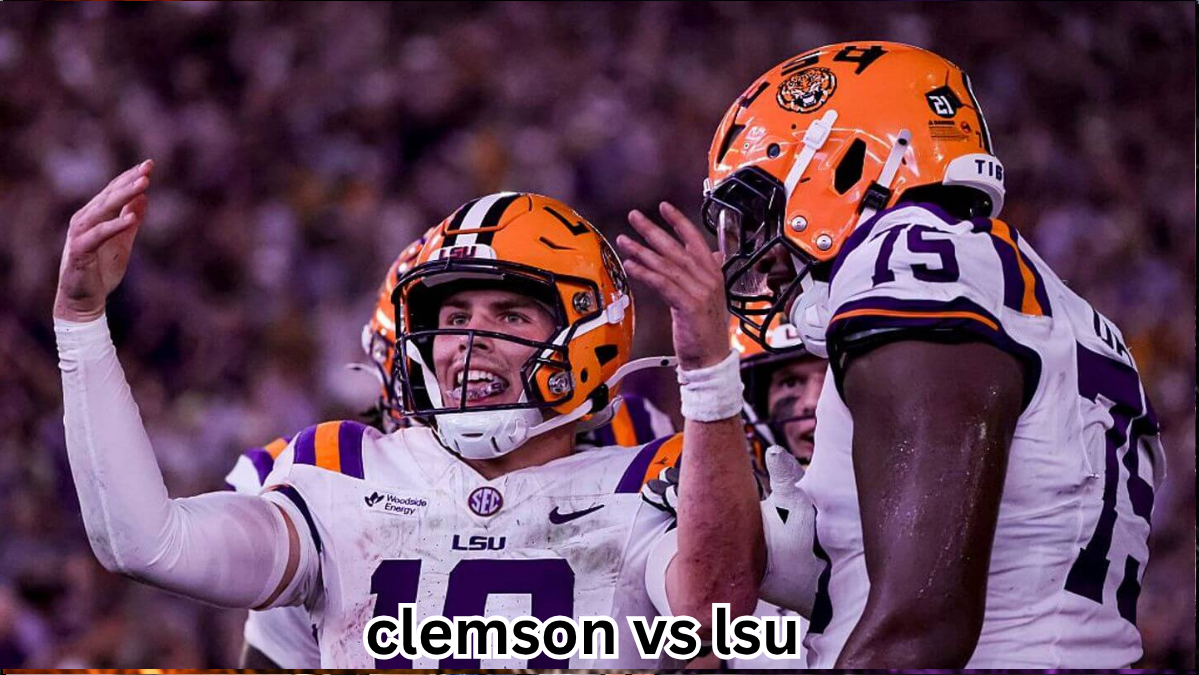
The Role of National Expectations
National expectations can be both an advantage and a burden. When Clemson enters a season ranked near the top of the polls, anything short of championship contention can be treated as disappointment. LSU faces a similar standard, especially when playing in the SEC.
The pressure was visible in the 2025 opener. Clemson entered ranked No. 4 and LSU ranked No. 9, making the game one of the highest-profile contests of opening weekend.
The 2026 game carried a different but equally significant type of pressure. LSU was opening the Lane Kiffin era and hosting a nationally ranked Clemson team. The result therefore represented more than one win. It created immediate momentum for the new coaching staff.
However, national expectations can change quickly. A 51-10 victory creates excitement, but maintaining that standard through an entire season is much harder. Coaches must prevent players from becoming satisfied after one major win and must prepare for opponents with completely different styles.
For Clemson, the 2026 defeat provided an equally important test of resilience. Programs with championship ambitions must respond to difficult losses without allowing one game to define the season.
This is one of the most compelling aspects of high-level college football. The same programs that experience national glory can face major setbacks within a few months. Sustained excellence requires the ability to manage both extremes.
Key Statistical Themes From Recent Meetings
The numbers from the 2025 and 2026 games tell a dramatic story. The first game was decided by one possession, while the second became a rout. That difference illustrates how quickly college football outcomes can change from season to season.
| Category | 2025 Meeting | 2026 Meeting |
|---|---|---|
| Location | Clemson, South Carolina | Baton Rouge, Louisiana |
| Result | LSU 17, Clemson 10 | LSU 51, Clemson 10 |
| LSU Total Offense | 354 yards | 644 yards |
| Clemson Result | Loss | Loss |
| LSU Quarterback Highlight | Garrett Nussmeier game-winning TD pass | Sam Leavitt’s 113 rushing yards |
| Major Defensive Moment | Clemson stopped on final fourth down | LSU pick-six |
| Series After Game | LSU led 4-1 | LSU led 5-1 |
| Regular-Season Meetings | First | Second |
The 2025 contest emphasized situational football. LSU did not overwhelm Clemson statistically, but the Tigers executed when it mattered most. The 2026 game emphasized explosive production and field-position control, with LSU creating an early lead that quickly became insurmountable.
Another interesting trend is the change in LSU’s offensive production. The Tigers managed 354 total yards in the 2025 road game and 644 yards in the 2026 home game. While venue and personnel changes obviously influenced those figures, the contrast demonstrates how dramatically different two games between the same programs can become.
The defensive scoring component in 2026 was also significant. LSU’s interception return for a touchdown effectively turned a competitive opening sequence into a major momentum swing. Defensive scores are often among the most valuable plays in football because they eliminate the need for the offense to complete an entire scoring drive.
Statistics do not replace film study, but they provide a useful framework for understanding the story. The 2025 game was about control and execution. The 2026 game was about overwhelming production.
Why the 2019 Championship Still Matters
Even after the 2025 and 2026 regular-season meetings, the 2019 national championship remains the emotional center of the series.
That game brought together undefeated teams, elite quarterbacks, future NFL stars, and a national championship at stake. LSU’s 42-25 victory became the culmination of a 15-0 season, while Clemson’s defeat ended its own championship run.
The significance extends beyond the final score. The 2019 LSU team is often remembered as one of the greatest teams of the modern era because of its combination of quarterback play, offensive efficiency, receiver talent, defensive athletes, and quality wins.
Clemson’s presence in that game also reinforced the program’s extraordinary consistency. The Tigers had won the previous national championship and had reached another title game. Simply reaching the championship was evidence that Clemson had become one of the sport’s elite powers.
The game therefore represents two different stories. For LSU, it was the peak of an unforgettable season. For Clemson, it was a setback inside an otherwise extraordinary championship era.
Whenever the teams meet, the 2019 championship supplies historical context. It is the game that casual fans remember most readily, even though the programs have now created additional chapters in the regular season.
What Makes the Matchup Valuable for College Football
High-profile nonconference games matter because they allow teams from different conferences to test themselves against unfamiliar opponents.
For LSU, playing Clemson offers a different preparation challenge than facing an SEC opponent. Clemson’s schemes, recruiting profile, defensive structure, and quarterback development provide a distinctive test.
For Clemson, LSU offers a look at SEC-level roster depth and physicality without requiring a postseason matchup. The games also give Clemson an opportunity to demonstrate that it can compete successfully against one of the conference’s strongest programs.
These games can influence playoff discussions as well. A road victory over a highly ranked opponent is valuable for a team’s national résumé, while a loss can become a major obstacle.
The importance of strength of schedule has increased as college football’s postseason structure has evolved. With the expanded College Football Playoff era, teams have more opportunities to reach the postseason, but quality victories remain valuable when selecting and seeding the field.
That makes games like Clemson-LSU meaningful even before conference play begins. They are not simply exhibitions. They can influence national perception, playoff positioning, recruiting momentum, and the confidence of a team entering a long season.
Future Scheduling and the Potential for More Meetings
The 2025-26 home-and-home series was originally announced by LSU as a two-game arrangement, with the first game scheduled for Clemson and the return game scheduled for Tiger Stadium. The original agreement was announced in 2018 and specifically described the 2025 contest as the first regular-season matchup between the programs.
The completion of that series does not automatically mean the teams will meet annually. Neither Clemson nor LSU needs a permanent rivalry to justify future games. Their national profiles make another home-and-home series attractive whenever schedules and conference structures allow.
The future of college football scheduling, however, is becoming increasingly complicated. Conference expansion, expanded playoff access, protected rivalries, revenue considerations, and changing television priorities all affect how nonconference schedules are constructed.
If the programs meet again, the historical context will be different from what existed in 2025. The series now includes a national championship, a close road victory, and a 41-point blowout. That creates a richer history for future players and coaches.
A future meeting could also carry a completely different tactical identity. Rosters turn over rapidly in college football, coaching staffs change, and offensive systems evolve. A quarterback who is a freshman today may be an established star by the next time the teams meet.
That uncertainty is part of what makes college football compelling.
The Broader Legacy of Clemson Football
Clemson’s place in modern college football is defined by sustained national success. The program’s championship run under Swinney established the Tigers as one of the most important teams of the playoff era.
The program’s success has also changed the expectations surrounding every major game. Clemson is no longer viewed simply as a strong ACC team. When the Tigers play an elite SEC opponent, the national conversation naturally includes championship implications.
That status was evident in 2025 when Clemson entered the season ranked No. 4 and hosted LSU in the opening game. The fact that a regular-season contest could immediately attract that level of national attention reflects how far the program has come.
Clemson’s development of quarterbacks has also been a major part of its modern reputation. From Deshaun Watson to Trevor Lawrence and beyond, the program has repeatedly been associated with talented signal callers capable of performing on the biggest stage.
The defensive side remains equally important. Clemson’s ability to recruit defensive linemen and defensive backs has supported its championship-level identity and allowed the Tigers to compete with physically gifted opponents.
The 2025 and 2026 results do not erase that legacy. They simply add new chapters to it.
The Broader Legacy of LSU Football
LSU’s football legacy is built around championship success, elite recruiting, defensive tradition, and the extraordinary environment surrounding Tiger Stadium.
The program’s 2019 championship season remains one of the strongest examples of modern college football excellence. LSU went undefeated, defeated Oklahoma in the playoff semifinal, and beat Clemson in the national championship game.
LSU has also produced a remarkable number of NFL players, particularly at wide receiver, defensive back, defensive line, and running back. That talent pipeline reinforces the program’s appeal to elite recruits.
The SEC environment adds another layer. LSU cannot measure itself solely against nonconference opponents. Its long-term success depends on navigating one of the deepest conferences in college football.
The 2026 victory over Clemson provided an immediate demonstration of what the program can look like when everything works together. The offense generated 644 yards, the defense scored a touchdown, and the team produced two 100-yard rushers.
For LSU, the challenge after a major victory is maintaining that standard. New coaches often receive enormous attention after a strong debut, but the true measure of a program is what happens over months and years.
The Human Side of High-Stakes College Football
Behind every matchup are players who have spent years working toward opportunities like these. A national television audience sees the scoreboard, but athletes experience the game through preparation, pressure, recovery, and the emotional highs and lows of competition.
The 2025 game illustrated this particularly well for Clemson. The Tigers had the ball late, drove deep into LSU territory, and came within a few plays of potentially forcing overtime or winning the game. Instead, the final fourth-down incompletion ended the comeback attempt.
The 2026 game created a very different emotional experience. LSU’s players had to wait through a long weather delay before finally taking the field. Once play began, they quickly established control and turned the unusual circumstances into momentum.
These experiences can influence young athletes long after the game ends. Players learn how to respond to adversity, handle national attention, manage mistakes, and remain focused when circumstances change.
That is part of why college football games cannot be reduced entirely to rankings and statistics. The human element remains central.
Lessons From the Rivalry for Football Fans
The history of this matchup offers several useful lessons for understanding college football.
First, historical reputation matters, but it does not determine the result. LSU led the series entering 2025, yet Clemson had won the most recent meeting before the national championship. Then LSU won consecutive games in 2025 and 2026.
Second, home-field advantage is powerful but not absolute. LSU won at Clemson in 2025 and then produced a much larger victory at home in 2026. The difference between those games demonstrates how environment and execution can interact.
Third, one possession can define a close game. Clemson’s final drive in 2025 reached the LSU 15-yard line before LSU stopped the Tigers on fourth down. That single sequence effectively decided the contest.
Finally, programs are constantly evolving. The teams that met in the 2019 championship were built differently from the teams that met in 2025 and 2026. Players graduate, coaches change, recruiting classes arrive, and strategies adapt.
For fans, that means every new meeting deserves to be judged on its own terms while still respecting the history.
How the Matchup Could Evolve
The future of clemson vs lsu will depend on several factors, including coaching stability, quarterback development, recruiting, conference strength, and scheduling priorities.
At LSU, the beginning of the Kiffin era creates a new tactical identity. Kiffin has long been associated with creative offensive structures, aggressive play-calling, tempo, and quarterback-friendly systems. The 2026 opener immediately displayed offensive explosiveness, although one game is not enough to define an entire tenure.
Clemson, meanwhile, continues to operate within the culture established by Swinney. The Tigers will need to keep developing young players and responding to changes in the national recruiting landscape.
Quarterback play will likely remain one of the most important variables. The 2019 matchup featured two future NFL quarterbacks. The 2025 contest centered on Klubnik and Nussmeier. The 2026 game showcased Leavitt. Future meetings will almost certainly introduce another generation of quarterbacks.
Defensive recruiting will matter just as much. When elite offenses meet, the ability to generate pressure without sacrificing coverage becomes essential. Teams that can create negative plays on early downs gain enormous advantages.
The future series could therefore produce anything from another defensive struggle to another offensive explosion. College football changes too quickly to assume that the next game will resemble the last one.
Why Fans Continue to Search for This Matchup
The popularity of clemson vs lsu searches is closely connected to the programs’ national reputations and the dramatic nature of their meetings.
Fans want historical context because the series is unusual. There are not dozens of annual games to create a simple narrative. Instead, each meeting has a distinct story: the 1959 Sugar Bowl, the 1996 Peach Bowl, the 2012 Chick-fil-A Bowl, the 2019 national championship, the 2025 season opener, and the 2026 return game.
The matchup also attracts fans interested in rankings, playoff implications, coaching changes, quarterback development, and recruiting. It is a subject that naturally connects many parts of the college football ecosystem.
Recent results have made the story even more compelling. LSU’s 17-10 road victory in 2025 was followed by a 51-10 home victory in 2026, giving the series a much more recent identity than it had for most of its history.
For search audiences, that creates several layers of interest. Some fans want the all-time record. Others want the latest score. Some want to understand the 2019 championship. Others are interested in the coaches or quarterbacks.
The best way to understand the matchup is to consider all of those layers together.
A Complete Timeline of Major Meetings
The series can be understood through a handful of games that each represent a different era of college football.
The 1959 Sugar Bowl was the beginning. LSU entered undefeated and ranked No. 1 and won 7-0, completing a perfect championship season. It established LSU as the early leader in the series and demonstrated how important postseason football would become to the relationship between the programs.
The 1996 Peach Bowl continued the trend. LSU won 10-7, again keeping the game close and moving the series record to 2-0.
The 2012 Chick-fil-A Bowl finally gave Clemson its first victory. The Tigers won 25-24 in a one-point thriller, cutting LSU’s series advantage to 2-1.
The 2020 College Football Playoff National Championship was the biggest meeting of them all. LSU defeated Clemson 42-25 after entering undefeated and ranked No. 1, while Clemson entered undefeated and ranked No. 3.
The 2025 season opener created a new category because it was the first regular-season meeting. LSU won 17-10 at Memorial Stadium, overcoming a 10-3 halftime deficit and stopping Clemson on the final drive.
The 2026 return game added another dramatic chapter. LSU won 51-10 in Tiger Stadium, producing 644 yards of offense and opening the Kiffin era with a statement victory.
Taken together, those games show why the series has developed such a strong national profile despite its relatively small number of meetings.
What the Series Says About Modern College Football
The evolution of clemson vs lsu reflects the broader evolution of college football itself.
The first meeting occurred in an era when postseason bowl games were the defining national showcase. The 1996 meeting came during the traditional bowl era as well. The 2012 game took place during the BCS era, while the 2019 championship occurred during the College Football Playoff era.
The 2025 and 2026 meetings, meanwhile, took place during another period of major transformation. Conference realignment, expanded playoff structures, changes to athlete compensation, transfer movement, and increasingly national recruiting have changed the environment surrounding every major program.
Scheduling has also become more strategic. A game between two nationally recognized teams can generate television value, recruiting exposure, and playoff résumé benefits.
That is why the return of LSU and Clemson to regular-season competition was significant. It represented not only a football matchup but also the modern scheduling philosophy of major college programs.
The game also demonstrated the value of national television. Both the 2025 and 2026 meetings received prominent broadcast treatment, while the 2026 game attracted College GameDay to Baton Rouge.
In that sense, the series is not just a record of wins and losses. It is a snapshot of how college football has evolved.
Conclusion: A Series Built for Big Moments
The history of clemson vs lsu is unusual because the teams have met relatively few times but have repeatedly encountered each other in meaningful settings. LSU leads the all-time series, and its victories include the 1959 Sugar Bowl, 1996 Peach Bowl, 2019 national championship, and 2025 season opener. Clemson’s most famous victory came in the 2012 Chick-fil-A Bowl, when the Tigers won 25-24.
The modern chapter has added even more intrigue. LSU won the first regular-season meeting 17-10 at Clemson in 2025, then returned home in 2026 and produced a dominant 51-10 victory. The second game also launched the Lane Kiffin era at LSU and featured an extraordinary performance from quarterback Sam Leavitt and the LSU offense.
Yet the most important part of this series may be what happens next. Clemson remains one of the defining programs of the modern era, while LSU has the recruiting power, conference platform, stadium environment, and resources to compete for championships. Their histories are strong enough that another meeting would immediately attract national attention.
The rivalry may never become an annual conference-style feud, and perhaps that is part of its charm. Because the games are relatively rare, each one can feel like an event. The 2019 championship created a permanent memory, the 2025 game introduced regular-season football to the series, and the 2026 blowout created another unforgettable chapter.
College football thrives on those moments. Two great programs, two famous stadiums, generations of players, and the possibility that one night can become part of a school’s history. That is ultimately what makes this matchup so compelling.
Frequently Asked Questions
What is the all-time record between Clemson and LSU?
LSU leads the all-time series. Entering the 2025 season, LSU held a 3-1 advantage across the four previous meetings, which included the 1959 Sugar Bowl, 1996 Peach Bowl, 2012 Chick-fil-A Bowl, and 2020 College Football Playoff National Championship. LSU then won the 2025 regular-season meeting 17-10 and the 2026 meeting 51-10, extending its overall advantage to 5-1.
When did Clemson and LSU first play each other?
The programs first met in the 1959 Sugar Bowl, which concluded the 1958 season. LSU entered the game undefeated and ranked No. 1 nationally, while Clemson entered as ACC champion. LSU won 7-0 in New Orleans and completed a perfect 11-0 championship season.
Who won the 2019 Clemson-LSU national championship game?
LSU defeated Clemson 42-25 in the 2020 College Football Playoff National Championship Game following the 2019 season. LSU entered the championship ranked No. 1 and undefeated, while Clemson was ranked No. 3 and also undefeated. The victory completed LSU’s perfect 15-0 season and delivered one of the most memorable championships of the playoff era.
Who won the 2025 Clemson-LSU game?
LSU won the 2025 season opener 17-10 at Clemson’s Memorial Stadium. Clemson led 10-3 at halftime, but LSU tied the game in the third quarter and took the lead in the fourth when Garrett Nussmeier threw an eight-yard touchdown pass to Trey’Dez Green. Clemson reached the LSU 15-yard line during its final possession but failed to convert on fourth down.
Who won the 2026 Clemson-LSU game?
LSU defeated Clemson 51-10 in Tiger Stadium on September 5, 2026. The game was delayed by lightning and heavy rain before eventually kicking off at 8:40 p.m. CT. LSU produced 644 yards of total offense, while quarterback Sam Leavitt and running back Dillin Jones each rushed for 113 yards. LSU also scored on a defensive interception return.
Where was the 2019 championship between the teams played?
The 2019 College Football Playoff National Championship was played at the Mercedes-Benz Superdome in New Orleans, Louisiana, placing LSU relatively close to its home state. LSU defeated Clemson 42-25 in the championship game. The neutral-site setting nevertheless gave LSU a strong regional connection because of the game’s location in Louisiana.
Was the 2025 meeting the first regular-season game between the programs?
Yes. LSU’s official 2025 schedule announcement stated that the August 30, 2025 game at Clemson marked the first time LSU and Clemson had met during the regular season. Their previous four meetings had all occurred in postseason bowl or playoff games.
Why is the Clemson-LSU matchup nationally important?
The matchup matters because both programs have national championship histories, large fan bases, strong recruiting reputations, and extensive experience playing in high-pressure environments. The teams have also produced major postseason games, including the 2019 national championship. Their 2025 and 2026 home-and-home series brought that national-level competition into the regular season.
What made the 2026 LSU victory so dominant?
LSU controlled the 2026 game in all three phases. The Tigers generated 644 yards of offense, established a strong running game, received a standout performance from quarterback Sam Leavitt, and scored a defensive touchdown on an interception return. LSU led 31-3 at halftime and ultimately won 51-10.
Will Clemson and LSU become an annual rivalry?
There is no indication that the programs are becoming an annual conference-style rivalry. The 2025 and 2026 games were part of a two-game home-and-home arrangement originally announced in 2018. The teams now have a stronger recent history, but future meetings will depend on scheduling decisions and the changing structure of college football.