
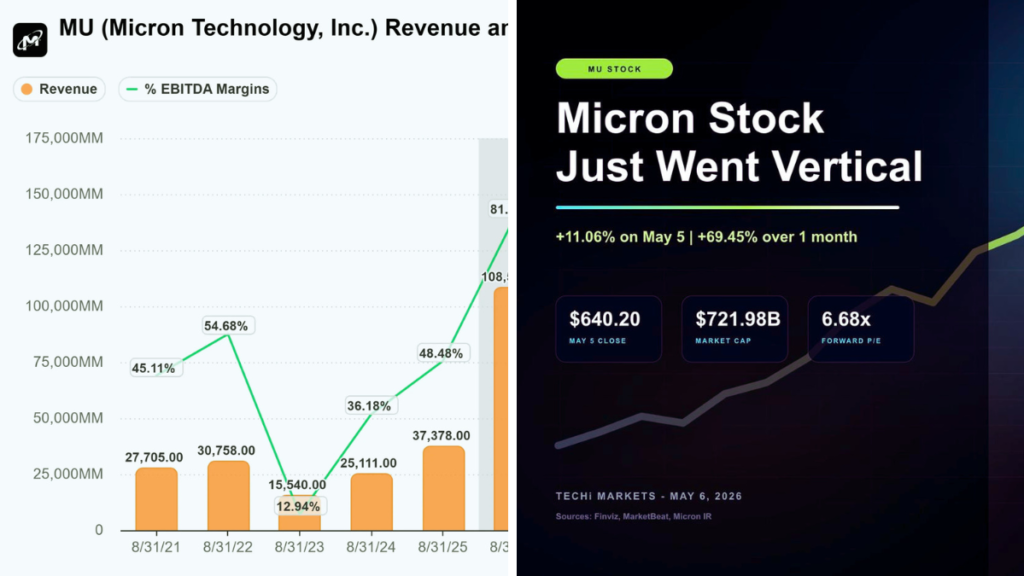
The semiconductor industry has become one of the most important sectors in the global economy. From smartphones and laptops to artificial intelligence systems and cloud computing, memory chips power nearly every part of modern technology. In the middle of this rapidly evolving industry stands Micron Technology, a company recognized worldwide for its innovation in memory and storage solutions.
Investors across the world closely monitor micron stock price because the company operates in one of the most cyclical yet potentially rewarding industries in the market. Semiconductor companies often experience dramatic growth during technology booms, followed by periods of slower demand and market corrections. This creates both opportunity and volatility for shareholders.
Micron Technology has gained increasing attention over the years due to the growing importance of DRAM and NAND memory products. As digital transformation accelerates globally, the need for faster data processing, artificial intelligence computing, autonomous vehicles, and cloud infrastructure continues to rise. These trends have pushed investors to take a closer look at the company’s financial strength and long-term prospects.
The stock has experienced periods of rapid gains, sharp pullbacks, and major recovery cycles throughout its history. These movements make the company an interesting case study for investors who want exposure to the semiconductor sector without focusing solely on traditional chipmakers involved in processors and graphics cards.
Many market analysts believe memory demand will continue expanding over the next decade. Data centers require massive storage capabilities, AI systems need high-bandwidth memory, and consumer electronics continue becoming more advanced. These industry developments place Micron in a strategic position within the global technology landscape.
At the same time, semiconductor investing is never simple. Market competition, geopolitical tensions, supply chain disruptions, and economic slowdowns can all influence share performance. Understanding these factors is essential for anyone evaluating the future direction of Micron Technology.
The company’s position within the memory market, combined with evolving investor sentiment, creates a fascinating story that extends beyond simple stock charts. Understanding what drives the company’s valuation requires examining technology trends, financial performance, global manufacturing conditions, and the broader semiconductor ecosystem.
Understanding Micron Technology and Its Business Model
Micron Technology is one of the world’s largest producers of memory and storage products. The company focuses primarily on DRAM, NAND flash memory, and solid-state storage solutions used across a wide range of industries.
Unlike some semiconductor firms that specialize in processors or graphics chips, Micron operates in the memory segment of the market. Memory technology plays a critical role in computing performance because it determines how efficiently systems can store and access data.
DRAM products are commonly used in personal computers, servers, mobile devices, gaming systems, and data centers. NAND flash memory supports storage in smartphones, SSDs, tablets, and enterprise infrastructure.
The company’s business model depends heavily on manufacturing efficiency, technological innovation, and global demand cycles. Memory markets are highly competitive, and pricing often fluctuates significantly based on supply and demand conditions.
Micron invests billions of dollars annually into research and development. Semiconductor manufacturing requires constant innovation because memory density, performance, and energy efficiency must improve continuously.
One quote often repeated within the technology sector states, “Innovation distinguishes leaders from followers.” That philosophy strongly reflects how semiconductor companies compete in a rapidly changing market.
The company serves customers across several industries including cloud computing, automotive technology, consumer electronics, industrial systems, and enterprise storage.
Artificial intelligence has become a particularly important growth driver. AI systems require enormous amounts of high-performance memory to process large datasets efficiently. This has increased investor interest in memory-focused companies.
As digital infrastructure expands worldwide, demand for advanced memory solutions continues growing. This trend remains one of the major reasons investors keep tracking the long-term direction of the business.
Historical Performance and Market Cycles
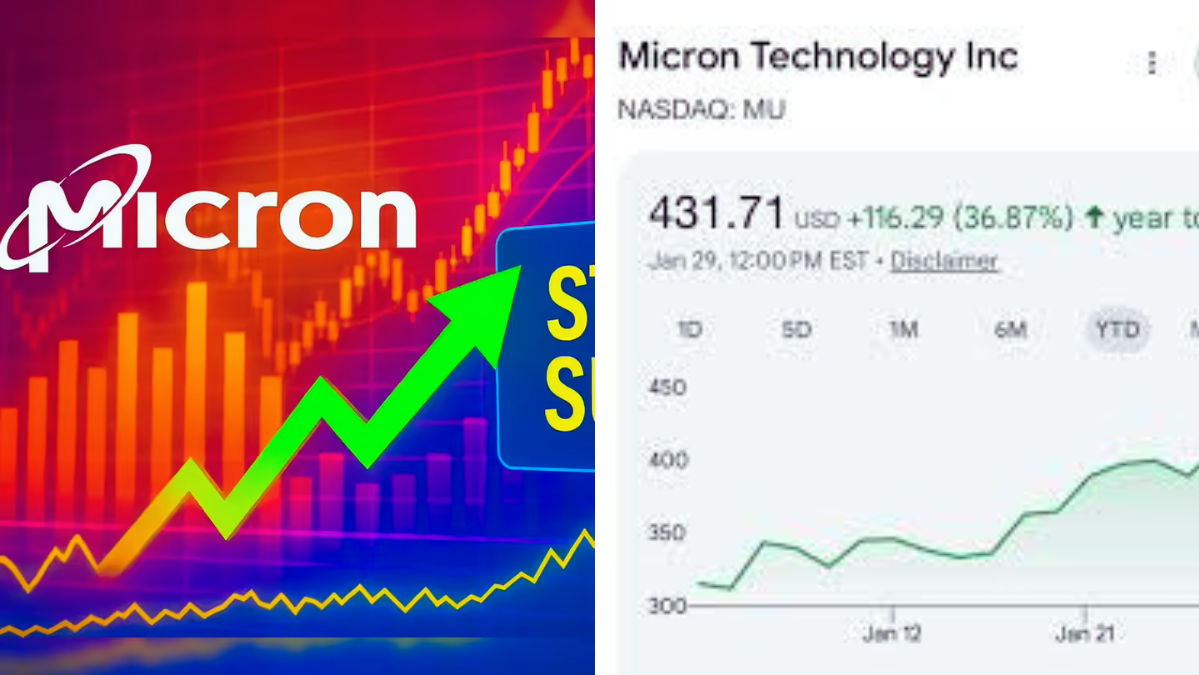
The history of micron stock price reveals how cyclical the semiconductor industry can be. Semiconductor stocks rarely move in straight lines because supply-demand imbalances frequently affect pricing and profitability.
During strong technology spending cycles, memory prices tend to rise sharply. Higher memory pricing usually improves profit margins for manufacturers, which often leads to stronger earnings and positive investor sentiment.
However, the opposite can happen during periods of oversupply. When too many chips enter the market, memory prices can decline rapidly. This often compresses profit margins and creates pressure on semiconductor stocks.
Micron has experienced multiple boom-and-bust cycles throughout its corporate history. Investors who understand these patterns often view downturns differently from casual market participants.
In previous decades, the company faced intense competition and fluctuating profitability. Over time, industry consolidation reduced the number of major global memory manufacturers, improving pricing discipline across the sector.
The semiconductor market also became increasingly tied to broader digital transformation trends. Cloud infrastructure, streaming services, remote work technologies, and AI development created stronger long-term demand drivers.
One of the most important lessons from historical performance is the importance of patience. Technology investors often react emotionally to short-term price movements, but semiconductor cycles frequently reverse faster than expected.
A classic investing quote says, “The stock market transfers wealth from the impatient to the patient.” Few sectors demonstrate this reality more clearly than semiconductors.
Historical stock charts also show how quickly sentiment can change in the technology sector. Optimism surrounding growth opportunities can push valuations upward rapidly, while fears about slowing demand can trigger aggressive selloffs.
Understanding these cycles is essential when evaluating long-term investment opportunities within the memory industry.
Factors That Influence Share Performance
Several key factors influence micron stock price on both short-term and long-term timelines. Semiconductor stocks react strongly to economic conditions, industry trends, earnings reports, and global technology demand.
One of the biggest drivers is memory pricing. Since Micron sells memory products, changes in DRAM and NAND prices directly affect revenue and profit margins.
When demand for memory increases faster than supply, prices typically rise. This often leads to stronger earnings expectations and positive stock performance.
On the other hand, excess supply can pressure pricing. Semiconductor companies occasionally expand production too aggressively during periods of strong demand, creating future oversupply risks.
Another major factor involves artificial intelligence infrastructure spending. AI data centers require advanced memory systems capable of handling large-scale computational tasks.
Cloud computing expansion also plays a critical role. Major cloud providers continue investing heavily in data center infrastructure, increasing demand for high-performance memory and storage products.
Consumer electronics demand remains important as well. Smartphone upgrades, gaming systems, laptops, and enterprise devices all contribute to memory consumption.
Macroeconomic conditions significantly affect investor sentiment toward technology stocks. Rising interest rates sometimes pressure growth-oriented companies because investors become more cautious about future earnings expectations.
Geopolitical developments can also influence semiconductor stocks. Global trade tensions, export restrictions, and supply chain concerns occasionally create uncertainty within the chip industry.
Manufacturing efficiency is another critical variable. Semiconductor fabrication facilities require enormous capital investment, and operational execution directly affects profitability.
Investors also monitor inventory levels closely. High inventory may signal weakening demand, while tightening inventory conditions can indicate improving pricing environments.
Because the semiconductor industry moves in cycles, market participants often attempt to predict turning points before financial results fully reflect changing conditions.
The Role of Artificial Intelligence in Future Growth
Artificial intelligence has become one of the most important themes in modern investing. AI applications require massive computing power, advanced graphics processing, and enormous memory capacity.
This technological shift has increased investor interest in companies connected to the AI infrastructure ecosystem. Micron plays a critical role because AI systems depend heavily on high-bandwidth memory solutions.
Large language models, machine learning systems, and advanced data analytics require fast access to huge volumes of information. Memory technology acts as a foundation for these computational processes.
As AI adoption accelerates across industries, demand for advanced memory products could rise significantly over the coming years.
Data centers supporting AI workloads need powerful storage and memory configurations to maintain processing efficiency. This creates long-term opportunities for memory manufacturers capable of delivering cutting-edge products.
Industry experts frequently emphasize that AI growth is still in relatively early stages. Many businesses are only beginning to integrate AI capabilities into operations.
One insightful quote from the technology world explains, “Data is the new oil.” Memory infrastructure helps companies store, process, and utilize that valuable resource.
The automotive industry also contributes to AI-driven demand growth. Modern vehicles increasingly rely on advanced computing systems for safety features, navigation, autonomous driving, and entertainment.
Smart factories, robotics, edge computing, and healthcare technology further expand the potential market for advanced memory solutions.
Investors evaluating future growth potential often focus heavily on how effectively Micron positions itself within the evolving AI ecosystem.
Semiconductor Industry Trends and Competition
The semiconductor industry remains one of the most competitive sectors in global business. Innovation cycles move quickly, manufacturing costs are enormous, and technological leadership can shift rapidly.
Micron competes with several major global memory manufacturers. Industry competition centers around pricing, manufacturing scale, technological efficiency, and product performance.
One important trend involves increasing demand for higher-capacity memory. As software applications become more sophisticated, devices require larger and faster memory systems.
The transition toward cloud computing continues supporting long-term memory demand. Businesses increasingly store information in cloud environments rather than relying entirely on local infrastructure.
Gaming technology also contributes to memory growth. Modern games require high-performance systems capable of handling detailed graphics, real-time rendering, and online multiplayer experiences.
Enterprise infrastructure spending represents another key trend. Businesses upgrading digital systems often invest heavily in servers, networking equipment, and data storage solutions.
At the same time, competition remains intense. Semiconductor manufacturers constantly invest in process improvements and advanced fabrication technologies.
One meaningful quote often used in business circles states, “Competition breeds innovation.” The semiconductor industry perfectly reflects this principle.
Supply chain resilience has become increasingly important since global disruptions exposed vulnerabilities in semiconductor production networks.
Governments worldwide are also prioritizing domestic chip manufacturing capabilities. Strategic investments in semiconductor infrastructure may reshape the competitive landscape over time.
Companies capable of balancing innovation, manufacturing efficiency, and financial discipline often gain the strongest long-term advantages within this highly demanding industry.
Financial Performance and Revenue Drivers
Financial performance remains one of the most important aspects investors evaluate when analyzing semiconductor companies.
Micron generates revenue primarily through memory and storage product sales. Because memory pricing fluctuates significantly, revenue growth can vary substantially between different market cycles.
Strong earnings periods often occur when memory supply tightens and pricing improves. During these phases, semiconductor companies may experience rapid profit expansion.
Gross margins play a critical role in determining profitability. Efficient manufacturing operations can significantly improve financial performance during favorable market conditions.
Research and development spending is another important factor. Semiconductor innovation requires continuous investment in advanced technologies and manufacturing processes.
Cash flow generation matters heavily in capital-intensive industries. Building and upgrading fabrication facilities requires billions of dollars in long-term investment.
Investors also pay close attention to debt management and balance sheet strength. Financial flexibility helps semiconductor companies survive cyclical downturns more effectively.
The table below highlights several important financial metrics investors commonly evaluate when analyzing semiconductor stocks.
| Financial Metric | Why It Matters | Investor Significance |
|---|---|---|
| Revenue Growth | Indicates demand trends | Reflects business expansion potential |
| Gross Margin | Measures profitability efficiency | Shows pricing power and operational strength |
| Free Cash Flow | Demonstrates cash generation | Supports future investments and stability |
| Research Spending | Supports innovation | Important for long-term competitiveness |
| Inventory Levels | Reflects market balance | Signals supply-demand conditions |
| Earnings Per Share | Measures shareholder profitability | Influences valuation and investor sentiment |
Quarterly earnings reports often create major stock volatility because investors closely compare actual results against expectations.
Guidance for future quarters also matters significantly. Management commentary about demand trends, inventory conditions, and pricing environments frequently influences market reactions.
The semiconductor sector rewards companies capable of maintaining operational discipline during both strong and weak market cycles.
Why Institutional Investors Watch the Stock Closely
Large institutional investors often maintain significant positions in semiconductor companies because technology remains a major driver of global economic growth.
Micron attracts attention from hedge funds, mutual funds, pension managers, and long-term growth investors due to its exposure to memory demand trends.
Analysts also evaluate supply conditions carefully. Since semiconductor markets are cyclical, professional investors attempt to identify turning points before they become obvious to the broader market.
Institutional ownership can contribute to both upward momentum and volatility. Large-scale buying may drive significant rallies, while sector-wide selloffs can pressure share performance sharply.
Another reason institutions monitor the company closely is valuation potential. Semiconductor stocks occasionally trade at attractive earnings multiples during industry downturns.
Value-oriented investors sometimes view cyclical weakness as an opportunity to accumulate shares before future recovery phases.
A famous investing quote explains, “Be fearful when others are greedy and greedy when others are fearful.” Cyclical technology sectors often reward disciplined investors willing to endure volatility.
Exchange-traded funds focused on semiconductors also contribute to institutional demand. As semiconductor ETFs grow in popularity, component companies receive increased investor exposure.
Institutional confidence often reflects broader expectations regarding technology infrastructure growth and digital transformation trends.
Conclusion
The story behind micron stock price reflects far more than daily market fluctuations. It represents the evolution of the semiconductor industry, the rise of artificial intelligence infrastructure, and the growing importance of memory technology in modern digital economies.
Micron Technology operates within one of the most dynamic and strategically important sectors in the global market. The company’s role in supplying DRAM and NAND memory products positions it at the center of cloud computing, AI development, enterprise infrastructure, gaming, and consumer technology trends.
Investors continue monitoring the stock closely because semiconductor cycles create both significant risks and powerful opportunities. Market volatility, pricing fluctuations, and economic uncertainty can produce dramatic share movements over short periods.
At the same time, long-term demand drivers remain compelling. Data generation continues accelerating, cloud infrastructure keeps expanding, and AI applications require increasingly advanced memory systems.
The company’s future success will depend on innovation, operational efficiency, manufacturing discipline, and the ability to adapt to evolving technology trends.
Semiconductor investing requires patience, research, and realistic expectations. Short-term volatility may continue, but the broader digital transformation story still supports strong long-term industry relevance.
For investors seeking exposure to memory technology and the expanding semiconductor ecosystem, Micron remains one of the most closely watched companies in the market.
FAQs
What affects micron stock price the most?
The biggest factors affecting micron stock price include memory pricing trends, artificial intelligence demand, semiconductor supply conditions, earnings reports, and global economic performance. Investor sentiment and technology sector momentum also play major roles.
Is Micron Technology considered a growth stock?
Micron is often viewed as a technology growth company because it operates within expanding markets such as AI infrastructure, cloud computing, and advanced data storage. However, the semiconductor industry’s cyclical nature can create periods of slower growth.
Why is the semiconductor industry so volatile?
Semiconductor markets are heavily influenced by supply-demand cycles. Oversupply can pressure prices and profits, while strong technology demand may create rapid earnings growth. Economic conditions and investor sentiment also contribute to volatility.
Does artificial intelligence impact Micron’s future?
Artificial intelligence is expected to play a major role in future growth because AI systems require advanced memory solutions capable of handling large-scale computational tasks. Increasing AI infrastructure spending could support long-term memory demand.
Is Micron Technology important for cloud computing?
Yes, Micron provides memory and storage products used extensively in data centers and cloud infrastructure. As businesses increasingly rely on cloud services, demand for high-performance memory solutions may continue expanding.
Why do investors monitor memory pricing closely?
Memory pricing directly affects semiconductor profitability. Rising DRAM and NAND prices can improve margins and earnings, while falling prices may reduce profitability. Investors therefore monitor pricing trends carefully.
Can long-term investors benefit from semiconductor cycles?
Many long-term investors attempt to benefit from semiconductor cycles by focusing on industry growth trends rather than short-term volatility. Successful investing in cyclical sectors often requires patience, research, and disciplined decision-making.