
The nationals vs dodgers matchup brings together two National League franchises with very different identities, histories, and recent competitive trajectories. The Los Angeles Dodgers have built one of baseball’s most consistently powerful organizations, while the Washington Nationals have experienced a more dramatic rise-and-rebuild cycle since relocating to Washington. When these teams meet, the contrast between established star power and developing talent makes the games particularly interesting.
The matchup also has more history than a casual glance at the standings might suggest. The franchises have been facing one another since the Nationals’ predecessor organization, the Montreal Expos, entered the National League in 1969. Through the 2026 season, the Dodgers have held a substantial advantage in the regular-season series, winning 307 of 518 meetings compared with 211 victories for the Washington franchise. (Sports Reference)
That long history includes memorable regular-season games, several postseason meetings, dramatic pitching performances, and one particularly important October chapter. The Nationals and Dodgers met in the National League Division Series in both 2016 and 2019, with each series going five games. Washington lost the first meeting but won the second, ultimately using its comeback against Los Angeles as part of its path to the 2019 World Series championship. (Champs or Chumps)
The 2026 season has added another layer to the matchup. Washington and Los Angeles met for three games at Nationals Park in April, and the Dodgers swept that series. They met again in Los Angeles in September, with the Dodgers taking the September 4 opener 5–3 behind six scoreless innings from Blake Snell. (MLB.com)
The result is a matchup that combines history, postseason memories, contrasting roster-building philosophies, and the continuing tension between a perennial contender and a franchise trying to establish its next competitive window.
The Origins of the Nationals and Dodgers Matchup
The history of the nationals vs dodgers series begins before the Washington Nationals existed under their current name. The Washington franchise traces its National League lineage to the Montreal Expos, who began play in 1969. That means the Dodgers and the organization that eventually became Washington’s current MLB club have shared a league for more than half a century.
That historical connection matters because it gives the matchup a deeper statistical record than the modern names suggest. The teams have played hundreds of regular-season games, and the Dodgers have generally controlled the series. Stathead’s historical data lists 518 regular-season meetings through 2026, with Los Angeles holding a .593 winning percentage and Washington at .407. (Sports Reference)
The imbalance is not surprising when the broader history of the two organizations is considered. The Dodgers have enjoyed sustained success across multiple eras, including their years in Brooklyn and their long Los Angeles history. Their organization has repeatedly found ways to remain competitive through changes in players, managers, front-office leadership, and baseball strategy.
Washington’s modern franchise story is much more uneven. The Nationals won the World Series in 2019, but the championship was followed by a major decline and a long rebuilding process. That creates a different context whenever the clubs meet.
For Washington, games against Los Angeles can serve as a measuring stick. For the Dodgers, the matchup often represents another series against an opponent they are expected to beat, particularly when the Dodgers are competing for the top of the National League standings.
That difference in expectations can make the games unpredictable. Baseball does not guarantee that the better team wins a particular night, and Washington has repeatedly demonstrated an ability to create problems for more established opponents.
The Head-to-Head Record Through 2026
The overall head-to-head record gives the clearest statistical picture of the matchup. Through the 2026 season, the Dodgers have won substantially more regular-season games than the Nationals and their predecessor franchise. Stathead lists Los Angeles with 307 wins and Washington with 211 across 518 regular-season meetings. (Sports Reference)
The Dodgers have also held an advantage in run production. Across those regular-season meetings, Los Angeles has scored 2,298 runs compared with 1,875 for Washington. The Dodgers’ historical batting line against the franchise has also been stronger, with a .256 batting average, .322 on-base percentage, and .390 slugging percentage compared with Washington’s .243, .309, and .358 marks. (Sports Reference)
Those numbers reveal a sustained advantage rather than a short-term trend. The Dodgers have generally produced more offense and converted their opportunities into victories more consistently.
Yet head-to-head records can be misleading when used without context. Baseball rosters change constantly, and the players responsible for a franchise’s historical advantage may have retired decades earlier. A game between these teams in 2026 has little direct connection to a matchup from the 1970s beyond the uniform and franchise record book.
The recent numbers tell a somewhat different story. Washington and Los Angeles split their six meetings in 2025, with each club winning three games. (Champs or Chumps)
That result demonstrated that Washington can compete with Los Angeles in individual series even though the long-term record favors the Dodgers.
In 2026, however, the Dodgers have reasserted their recent dominance. They won all three games at Nationals Park in April, then opened the September series at Dodger Stadium with another victory. (MLB.com)
Nationals vs Dodgers 2026 Season Series
The 2026 season has provided a useful snapshot of the current competitive difference between the clubs. The first three games came April 3–5 at Nationals Park, where Los Angeles completed a sweep by scores of 13–6, 10–5, and 8–6. (DailyDodgers.com)
The series finale was especially notable because Washington appeared to be in control early. The Nationals built a five-run lead before Los Angeles staged a dramatic comeback. The Dodgers ultimately won 8–6, turning a 6–1 deficit into a victory with a four-run eighth inning. MLB described it as the Dodgers’ fifth comeback win of at least five runs dating back to 2023. (MLB.com)
That comeback illustrated one of the defining characteristics of the modern Dodgers. Their lineup has enough depth that a game can change quickly even after an opponent builds a substantial advantage.
Dalton Rushing played a major role in the comeback with a two-run homer, while Los Angeles continued applying pressure in the later innings. The Dodgers’ ability to use their bench and continue producing offensively was reflected in Rushing’s postgame assessment that the team had few obvious weaknesses. (MLB.com)
The September series began differently. On September 4, Blake Snell delivered six scoreless innings as Los Angeles defeated Washington 5–3. Snell allowed five hits and two walks while striking out seven. (Reuters)
The Nationals rallied for three runs in the ninth inning, but the late push was not enough.
That game highlighted another important difference between the teams: the Dodgers can win in multiple ways. They can overwhelm opponents offensively, but they can also win low-scoring games when their starting pitching controls the contest.
The April Sweep at Nationals Park
The April meeting was one of the clearest examples of Los Angeles’ ability to turn a series into an offensive showcase. The Dodgers scored 31 runs across three games while Washington managed 17. (DailyDodgers.com)
The opening game ended 13–6, followed by a 10–5 victory. Those results placed Washington under immediate pressure because the Nationals were forced to play from behind in consecutive games.
The third game appeared to offer a chance for Washington to avoid the sweep. The Nationals led 6–1 after four innings, creating the type of advantage that should normally provide a strong path to victory.
Instead, Los Angeles gradually chipped away.
Rushing’s home run narrowed the gap, and the Dodgers eventually produced a decisive four-run eighth inning. That inning changed the entire series finale and completed the sweep. (MLB.com)
The comeback was important beyond the final score because it demonstrated the difference between accumulating runs and creating sustained offensive pressure.
Washington had the advantage early, but Los Angeles continued to generate opportunities. A lineup with depth can make a starting pitcher uncomfortable even after the pitcher has escaped several earlier threats.
For the Nationals, the lesson was equally important. Against an elite lineup, a five-run lead is not necessarily safe.
The series also demonstrated why bullpen management matters so much in modern baseball. Once a game reaches the later innings, the difference between a strong and vulnerable relief corps can determine whether an early lead survives.
The Dodgers ultimately showed greater resilience.
The September Series at Dodger Stadium
The second 2026 meeting between the teams moved to Dodger Stadium in September, giving the Nationals another opportunity to challenge Los Angeles on its home field.
The series opener on September 4 produced a 5–3 Dodgers victory. Blake Snell was the central figure, throwing six scoreless innings after recently returning from elbow surgery. Reuters reported that Snell allowed five hits, walked two, and struck out seven while improving to 3–1. (Reuters)
Washington’s offense had difficulty creating sustained pressure against Snell.
Los Angeles, meanwhile, received timely production rather than needing a massive offensive outburst. Teoscar Hernández delivered a two-run double, Kyle Tucker homered, and Mookie Betts contributed an RBI single. (True Blue LA)
The Dodgers built a 5–0 advantage before Washington finally mounted its late comeback.
The Nationals scored three runs in the ninth, including RBI contributions from Abimelec Ortiz, Jorbit Vivas, and James Wood. But Los Angeles closed the game before Washington could complete the comeback. (Reuters)
The victory was particularly notable because the Dodgers were missing important players. Shohei Ohtani was out of the lineup for a second consecutive game because of right biceps and left knee issues, while Freddie Freeman also received a night off. (Reuters)
That depth is an important feature of Los Angeles’ roster.
Even without some of its biggest names, the Dodgers were able to create enough offense and receive excellent starting pitching.
The 2019 NLDS: The Most Important Modern Chapter
For many baseball fans, the most memorable nationals vs dodgers matchup remains the 2019 National League Division Series.
The Nationals entered the postseason with a roster capable of competing with anyone, but their first-round opponent was a Dodgers team with championship expectations.
Los Angeles had home-field advantage and considerable postseason experience.
The Dodgers won Game 1 by a 6–0 score, immediately putting Washington under pressure. But the Nationals responded in Game 2, winning 4–2 in Los Angeles. (Champs or Chumps)
That victory changed the tone of the series.
Washington returned home and won Game 3 by a 10–4 score. The Nationals then captured Game 4, 6–1, to force a decisive fifth game in Los Angeles. (Champs or Chumps)
The fifth game became one of the defining moments in Nationals history.
Washington fell behind early but eventually forced extra innings.
In the tenth inning, the Nationals broke through with a dramatic rally and won 7–3.
That victory eliminated the Dodgers and sent Washington to the National League Championship Series.
The Nationals went on to defeat the St. Louis Cardinals in the NLCS and then swept the Houston Astros in the World Series, completing one of the most remarkable championship runs in modern baseball.
The Dodgers’ loss was devastating because the organization had entered the postseason with enormous expectations.
For Washington, meanwhile, the comeback became a symbol of the franchise’s resilience.
The 2016 NLDS and a Different Ending
Three years before the 2019 classic, the teams met in another five-game National League Division Series.
The 2016 nationals vs dodgers playoff matchup followed a very different script.
Washington won Games 2 and 3 after Los Angeles took the opener, putting the Nationals one victory away from advancing. But the Dodgers responded by winning Game 4 and then Game 5. (Champs or Chumps)
The decisive Game 5 ended 4–3 in favor of Los Angeles.
That series demonstrated how narrow the margins can be in postseason baseball.
The two clubs combined for several close games, and the series ultimately came down to Los Angeles winning the final two contests after Washington had taken a 2–1 advantage.
The 2016 series also helped establish the foundations for the later 2019 rivalry.
Both organizations had talented rosters and postseason ambitions.
The Dodgers were becoming a perennial National League contender, while Washington was entering one of the strongest periods in franchise history.
The contrast between the two playoff series is fascinating.
In 2016, Los Angeles survived.
In 2019, Washington survived and eventually won the World Series.
Those outcomes make their postseason history much more compelling than the overall regular-season record alone would suggest.
The 1981 NLCS Connection
The history becomes even more interesting when the franchise’s Montreal Expos era is considered.
In 1981, the Expos faced the Dodgers in the National League Championship Series.
That series ended with Los Angeles winning 3–2.
The Dodgers went on to defeat the New York Yankees in the World Series, while Montreal’s postseason run ended one step short of the championship round. (Champs or Chumps)
The 1981 series is an important reminder that the Washington franchise’s postseason history did not begin in 2012 when the Nationals moved into their current era.
The Expos were competitive for stretches and developed some of the most talented players in baseball.
Their meeting with Los Angeles in 1981 represented one of the earliest postseason chapters between the organizations.
The series also illustrates how franchise history can survive relocation.
The Nationals do not share the same city or identity as the Montreal Expos, but MLB statistical records connect the Washington franchise to its Montreal history.
That means modern fans can trace a continuous competitive record through multiple generations of baseball.
It also gives the Dodgers matchup a historical dimension that casual fans may not immediately recognize.
The organizations have been connected through National League competition since the late 1960s.
A Tale of Two Franchise Philosophies
The nationals vs dodgers matchup is also interesting because the organizations have followed different paths to success.
Los Angeles has become one of baseball’s strongest examples of sustained organizational depth.
The Dodgers have invested heavily in player development, analytics, scouting, sports science, and major-league talent. Their ability to remain competitive even after injuries has become a defining characteristic.
Washington has entered a different stage.
After the 2019 championship, the Nationals moved into a rebuilding cycle. Veterans were traded, young players were introduced, and the organization began constructing a new core.
That process can be difficult because rebuilding requires patience.
Young players need time to adjust to major-league pitching and defensive demands. Prospects may also develop at different speeds, meaning an organization cannot assume that every highly regarded player will become an impact major leaguer.
The Dodgers operate with much less patience because their competitive window is effectively continuous.
The expectation in Los Angeles is to contend for the postseason every year.
That creates different roster decisions.
A veteran addition that helps the Dodgers win immediately can make sense even if it blocks a younger player.
For Washington, giving that younger player major-league experience may be more valuable.
The contrast creates an interesting dynamic whenever the teams meet.
The Dodgers’ Star Power
The modern nationals vs dodgers matchup naturally draws attention to Los Angeles’ extraordinary collection of talent.
The Dodgers have built a roster capable of producing elite performance at multiple positions.
Shohei Ohtani is the most obvious example. His unique combination of power and pitching ability has transformed the way fans think about two-way baseball.
Mookie Betts provides another dimension, combining offensive production with defensive versatility.
Freddie Freeman remains one of the game’s most accomplished hitters.
The Dodgers have also assembled a deep pitching staff that has included established stars and emerging talent.
That depth becomes particularly important over a 162-game schedule.
Injuries are unavoidable in baseball, especially across a long season.
A roster built around only a handful of stars can collapse when those players miss time.
Los Angeles has attempted to avoid that problem by building layers of talent.
The September series against Washington illustrated the value of that approach.
With Ohtani unavailable and Freeman receiving a rest day, the Dodgers still received important contributions from other hitters while Blake Snell delivered a dominant start. (Reuters)
Washington’s Emerging Core
The Nationals bring a different kind of excitement to the matchup because of their developing roster.
Washington’s rebuilding strategy has focused on creating a younger core capable of supporting a future contender.
James Wood is one of the most intriguing names in that group.
Wood’s combination of size, power, athleticism, and offensive potential has made him a player worth watching whenever Washington faces elite opposition.
The September opener demonstrated his importance when he contributed to the Nationals’ late rally.
Washington has also continued introducing young players into the major-league lineup.
On September 2, 2026, Yohandy Morales made his MLB debut and immediately produced a single, double, and home run while driving in three runs during a 9–5 victory over Atlanta. (Reuters)
That kind of performance illustrates the potential upside of a developing roster.
Young players can produce inconsistently, but they can also create unexpected momentum.
The Nationals’ challenge is turning individual flashes into sustained team performance.
That process requires improved pitching, defensive consistency, lineup depth, and greater experience.
Games against the Dodgers can help accelerate that learning process because young players face a roster capable of exposing mistakes immediately.
Starting Pitching as the Key Battle
Starting pitching is often the clearest factor in the nationals vs dodgers matchup.
Los Angeles has traditionally built its competitive identity around high-quality pitching.
The September 4 game demonstrated that principle.
Blake Snell’s six scoreless innings gave Los Angeles control of the game from the beginning. His seven strikeouts prevented Washington from creating extended rallies, while his ability to limit damage kept the Dodgers ahead even though the offense was not overwhelming. (Reuters)
Washington has been developing its own pitching talent.
Cade Cavalli, for example, was scheduled to start the second game of the September series after entering the weekend with a 3.12 ERA, according to the series preview. (Federal Baseball)
That represents the kind of young pitching foundation Washington needs.
A rebuilding team can compete with elite opponents if its starting rotation consistently keeps games close.
The difficulty is maintaining that performance across an entire season.
Pitchers need workload management, command, health, and defensive support.
For the Dodgers, the goal is different.
They are trying to assemble a rotation strong enough to survive October.
That means evaluating pitchers not just by regular-season statistics but by durability and postseason effectiveness.
Bullpen Depth and Late-Inning Pressure
The bullpen can change a baseball game faster than almost any other unit.
This was especially obvious in the April series finale.
Washington entered the late innings with a substantial lead but could not prevent Los Angeles from mounting a comeback.
The Dodgers’ four-run eighth inning turned the game around and ultimately completed the sweep. (MLB.com)
That type of collapse is not necessarily an indication that an entire pitching staff is poor.
Bullpens are highly situational.
A reliever may dominate one matchup but struggle against another.
A manager may also need to use a particular pitcher because another reliever is unavailable after throwing on previous days.
The Dodgers’ depth gives them more opportunities to create favorable matchups.
Washington’s younger pitching staff has to learn how to navigate those moments.
The ninth inning of the September opener provided another example.
The Nationals scored three runs and created genuine tension, but Los Angeles eventually secured the save.
That ability to withstand a late rally is essential for a contender.
Offensive Approach and Run Creation
Offensive philosophy is another important part of the matchup.
The Dodgers have enough power to change games with one swing, but their offense is not dependent entirely on home runs.
They can generate runs through walks, singles, doubles, baserunning, and situational hitting.
The September opener showed that variety.
Mookie Betts drove in a run with a single, Teoscar Hernández produced a two-run double, and Kyle Tucker added a solo homer. (True Blue LA)
That distribution makes a lineup difficult to navigate.
A pitcher cannot simply attack one star and expect the danger to disappear.
Washington’s lineup is younger and therefore more volatile.
The Nationals can produce explosive innings, particularly when their developing hitters are seeing the ball well.
The April series finale proved that.
Washington scored six runs through four innings before Los Angeles eventually came back.
The challenge is maintaining that offensive production throughout a full game.
Consistency is often the difference between a promising lineup and a championship lineup.
Home-Field Advantage and Ballpark Factors
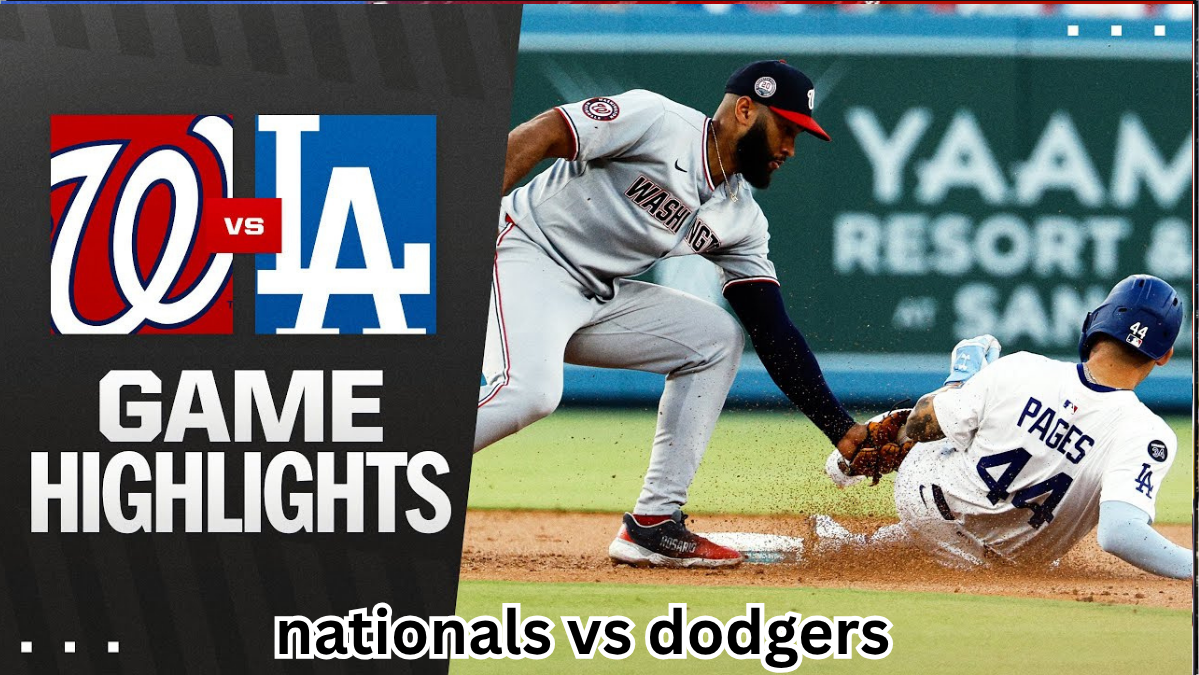
Dodger Stadium and Nationals Park create different environments for these teams.
Dodger Stadium is one of baseball’s most recognizable ballparks and has become synonymous with Los Angeles baseball.
The atmosphere can be intense during important games, particularly when the Dodgers are making a postseason push.
Nationals Park offers a different environment.
Located in Washington, D.C., the ballpark has hosted some of the franchise’s most important modern moments, including the 2019 postseason run.
The April series showed that home field does not guarantee Washington success.
The Dodgers swept all three games at Nationals Park, including a comeback victory in the finale. (Champs or Chumps)
That is an important reminder that experienced contenders can perform well on the road.
For Washington, home games against elite opponents can still be valuable development opportunities.
Young players experience different levels of pressure when facing a national contender.
Those experiences can become useful later in their careers.
What Makes the Matchup Interesting for Baseball Fans
The appeal of nationals vs dodgers comes from more than the final score.
Fans get to watch two organizations operating at different stages of their competitive cycles.
Los Angeles is typically thinking about division titles, playoff seeding, and championship expectations.
Washington is increasingly focused on player development and building a sustainable core.
That contrast creates compelling individual matchups.
A young Nationals hitter facing an established Dodgers starter is more than one plate appearance.
It is an opportunity to see whether emerging talent can handle elite major-league competition.
Likewise, when Washington’s young pitchers face Los Angeles’ stars, the game becomes a test of command, pitch selection, and composure.
The historical component adds another layer.
The franchises have met in three postseason series across different eras, and each has produced a memorable chapter.
The 2016 series went to Los Angeles.
The 2019 series went to Washington.
The 1981 NLCS also went to Los Angeles.
That history means future postseason meetings would carry immediate significance.
Why the 2019 Series Still Matters
The 2019 NLDS remains the defining modern postseason story between these clubs because of what happened afterward.
Washington did not simply defeat Los Angeles.
The Nationals used that victory as the beginning of a championship run.
They won the NLCS, then swept the Astros in the World Series.
That sequence turned the Dodgers series into a foundational moment in franchise history.
For Los Angeles, the defeat became another example of how difficult October baseball can be.
The Dodgers had built a powerful roster and entered the postseason with championship expectations.
Yet a five-game series can turn on a handful of pitches.
Washington’s ability to recover from the Game 1 shutout demonstrated the resilience necessary for a championship team.
The deciding Game 5 remains particularly memorable because Washington eventually won in extra innings.
Those moments are part of what makes baseball history so compelling.
A team’s regular-season record can establish expectations, but postseason games create mythology.
The Nationals’ 2019 victory over Los Angeles became one of the most important examples.
Recent Momentum and the 2026 Competitive Picture
The 2026 season has reinforced the broader difference between the organizations.
The Dodgers entered September as one of the National League’s leading teams, while Washington was operating from a much less favorable postseason position.
Reuters reported in early September that Los Angeles was pursuing another strong finish despite injuries, while Washington entered the Dodgers series with only slim playoff hopes. (Federal Baseball)
That difference affects strategy.
The Dodgers are trying to optimize their roster for October.
Managers may rest veterans, protect pitchers, and monitor workloads with postseason health in mind.
Washington can take a longer view.
The Nationals are trying to evaluate young players and determine which pieces belong in the next competitive roster.
That does not mean Washington is simply playing out the schedule.
Teams outside the playoff race can still play spoiler.
Every win against a contender can affect division standings, playoff seeding, and the final weeks of a pennant race.
The Dodgers therefore cannot afford to treat Washington casually.
The April sweep showed what happens when Los Angeles applies pressure.
The September opener reinforced that lesson.
Key Statistical Snapshot
The historical and recent data provides a useful framework for understanding these teams.
| Category | Dodgers | Nationals |
|---|---|---|
| Historical regular-season wins | 307 | 211 |
| Historical regular-season losses | 211 | 307 |
| Historical winning percentage | .593 | .407 |
| Regular-season meetings through 2026 | 518 | 518 |
| Historical runs scored | 2,298 | 1,875 |
| Historical batting average | .256 | .243 |
| Historical OBP | .322 | .309 |
| Historical SLG | .390 | .358 |
| 2025 head-to-head record | 3–3 | 3–3 |
| 2026 April series | 3–0 Dodgers | 0–3 Nationals |
| 2026 September 4 result | 5–3 Dodgers | 3–5 Nationals |
| Modern postseason series wins | 2 | 1 |
The historical numbers come from Stathead and head-to-head records, while the 2025 and 2026 results reflect recent series data. (Sports Reference)
The table illustrates an important point: historical dominance does not guarantee future success.
The Dodgers have a substantial advantage over the full history of the matchup, but Washington has won a postseason series against them and can compete in individual regular-season games.
That distinction matters because baseball is unusually sensitive to short-term variance.
A three-game series can produce a completely different result from what long-term statistics would predict.
A hot hitter, dominant starter, unexpected defensive play, or bullpen collapse can change everything.
The Role of Young Players in Future Meetings
Future games will likely depend heavily on Washington’s young talent.
The Nationals need their developing players to transition from flashes of potential into dependable major-league performance.
James Wood is one example.
Yohandy Morales is another.
The September debut of Morales showed the immediate excitement that a young player can generate. His three-hit performance, including a home run, helped Washington defeat Atlanta just before the Dodgers series. (Reuters)
But development is rarely linear.
A player may produce three hits one night and struggle for a week afterward.
That is normal for young major leaguers.
The key is identifying whether those players are improving in plate discipline, pitch recognition, defense, baserunning, and situational decision-making.
The Dodgers represent a difficult test because their pitching depth can expose weaknesses quickly.
If Washington’s young hitters can consistently compete against that level of opposition, it would provide encouraging evidence for the franchise’s future.
The Importance of Player Development
Player development may ultimately determine whether Washington can close the competitive gap with Los Angeles.
The Dodgers have built an organization capable of continually introducing productive players.
Washington needs to develop a similar pipeline.
That does not mean copying Los Angeles exactly.
Every franchise needs a system suited to its resources, personnel, philosophy, and competitive timeline.
For Washington, the most important task is identifying a core that can remain together long enough to develop chemistry.
Young players also need veteran support.
The presence of experienced major leaguers can help prospects understand the daily demands of a 162-game season.
The Nationals’ rebuilding phase provides opportunities to discover which young players can handle those demands.
Games against the Dodgers are particularly valuable because they expose a roster to a championship-caliber standard.
The lessons may not always appear in the box score.
A young pitcher might learn how aggressively an elite lineup attacks certain counts.
A young hitter might discover how quickly a top starter adjusts after seeing him twice.
Those lessons can influence development long after the game ends.
The Dodgers’ Championship Expectations
For Los Angeles, the standard is much higher.
The organization is not simply trying to become competitive.
The expectation is to win the National League West, secure a strong playoff position, and compete for another World Series.
That expectation changes how every regular-season game is evaluated.
A win against Washington is valuable because it contributes to the standings.
But the Dodgers are also thinking about the bigger picture.
They need to keep players healthy, evaluate pitching depth, manage workloads, and determine the optimal postseason roster.
That is why injuries to players such as Ohtani and Freeman become important.
The Dodgers have enough depth to survive absences, but the longer the postseason approaches, the more important full health becomes. (Reuters)
Their ability to continue winning without every star in the lineup is one of the clearest indicators of organizational strength.
The Nationals are therefore facing a team that is not dependent on one player.
That makes each series particularly demanding.
A Matchup That Can Change Quickly
One of the defining characteristics of the nationals vs dodgers series is how quickly games can change.
The April finale is the perfect example.
Washington led 6–1, yet Los Angeles eventually won 8–6.
That means a five-run advantage was not enough.
The September opener offered a different version of the same lesson.
Los Angeles built a 5–0 lead, but Washington scored three runs in the ninth and created late pressure before the Dodgers closed the game. (Reuters)
These games demonstrate why baseball remains unpredictable.
Unlike some sports, a team cannot simply run out the clock after building a lead.
Every inning provides another opportunity.
Every batter can extend a rally.
Every pitcher can lose command.
One home run can change the atmosphere of an entire ballpark.
That unpredictability is part of the reason fans continue to follow these teams even when their competitive situations are very different.
What to Watch in Future Nationals-Dodgers Games
Future meetings between these clubs should continue to revolve around pitching depth, lineup health, young-player development, and late-inning execution.
For Los Angeles, the biggest questions involve maintaining health and preparing for the postseason.
The Dodgers’ lineup is deep enough to withstand individual absences, but October requires the best possible version of the roster.
For Washington, the focus is on identifying which young players can become long-term building blocks.
Every series against an elite opponent provides additional information.
The Nationals will want their young hitters to handle high-quality pitching, while their pitchers need to demonstrate that they can attack star-heavy lineups without losing command.
The bullpen will also remain important.
If Washington can consistently protect leads late in games, its overall record should improve.
The Dodgers, meanwhile, will continue looking for ways to turn close games into victories.
Their comeback in April demonstrated that they can create offensive pressure late.
Their September win showed that they can also rely on starting pitching to control a game.
That versatility makes them difficult to defeat.
The Broader Meaning of the Rivalry
The word “rivalry” can sometimes be overused in professional sports.
The Nationals and Dodgers do not have the same geographic history as classic MLB rivalries such as Dodgers-Giants or Yankees-Red Sox.
But that does not make the matchup unimportant.
Their postseason history gives the series genuine competitive significance.
The 2016 and 2019 NLDS meetings were both five-game battles.
The 1981 Expos-Dodgers NLCS provides another historical postseason connection.
Those games have created a shared history that extends beyond ordinary interleague-style encounters.
The organizations also represent contrasting baseball cultures.
Los Angeles operates as a perennial contender.
Washington is building toward another competitive era.
When those paths intersect, the result can be revealing.
A rebuilding team can measure its progress against one of baseball’s strongest organizations.
A championship contender can test its depth against a younger roster that has nothing to lose.
That dynamic is valuable for both sides.
Why Fans Continue to Follow the Series
The nationals vs dodgers matchup remains attractive because it combines recognizable stars, young talent, historical context, and meaningful competitive contrasts.
Dodgers fans have obvious reasons to watch.
They want to see their team maintain its position in the National League and prepare for another postseason run.
Nationals fans have a different but equally important reason.
They want to know whether the young roster is developing into something capable of challenging elite teams in future seasons.
Neutral baseball fans can watch the series as a test of two different organizational models.
One team is trying to win now.
The other is building for what comes next.
The games also offer individual stories.
A young Washington hitter may face one of Los Angeles’ best pitchers.
A Dodgers prospect may receive an opportunity because of an injury.
A veteran starter may deliver a dominant outing.
A late-inning rally can transform an apparently comfortable game into a dramatic finish.
Those possibilities are what make regular-season baseball worth following.
Conclusion: A Matchup With History and a Changing Future
The nationals vs dodgers matchup is much more than a routine National League series.
Its history stretches back to 1969, when the Montreal Expos joined the National League and began a competitive relationship with the Dodgers that would eventually become part of Washington’s franchise history.
The Dodgers have controlled the overall regular-season record, winning 307 of 518 meetings through 2026. They have also produced more runs and stronger aggregate offensive numbers across the history of the series. (Sports Reference)
But Washington has created its own moments.
The 2016 NLDS showed the Nationals coming within one victory of eliminating Los Angeles before the Dodgers survived.
The 2019 NLDS delivered the opposite result, with Washington winning a dramatic five-game series before completing one of the greatest championship runs in franchise history. (Champs or Chumps)
The 2026 season has returned the competitive advantage to Los Angeles.
The Dodgers swept Washington at Nationals Park in April, including an extraordinary comeback from a five-run deficit. They then opened the September series at Dodger Stadium with a 5–3 victory behind six scoreless innings from Blake Snell. (MLB.com)
Yet the larger story is about what happens next.
The Dodgers remain built to compete for championships.
The Nationals are developing a new generation of players who could eventually bring the franchise back into postseason contention.
That makes every future meeting meaningful in its own way.
For Los Angeles, these games are opportunities to collect wins and maintain momentum.
For Washington, they are opportunities to measure progress.
And for baseball fans, they offer something even more valuable: a matchup where long-term history and future potential meet on the same field.
Frequently Asked Questions
What is the all-time record between the Nationals and Dodgers?
The Dodgers hold a substantial advantage in the all-time regular-season series. Through the 2026 season, Los Angeles has won 307 of 518 regular-season meetings, while the Washington franchise has won 211. The historical record includes games from the Montreal Expos era because the Nationals franchise inherited that lineage. (Sports Reference)
Have the Nationals and Dodgers played each other in the playoffs?
Yes. The franchises have met in the postseason three times in the modern historical record: the 1981 NLCS, the 2016 NLDS, and the 2019 NLDS. Los Angeles won the 1981 and 2016 series, while Washington won the 2019 Division Series in five games. (Champs or Chumps)
When did the Nationals last beat the Dodgers in a playoff series?
The Nationals last defeated the Dodgers in the 2019 NLDS. Washington won the decisive fifth game in Los Angeles in extra innings, completing a 3–2 series victory. The Nationals then advanced through the NLCS and won the World Series. (Champs or Chumps)
Who won the 2026 April series between the Nationals and Dodgers?
The Dodgers swept the three-game April series at Nationals Park. Los Angeles won 13–6, 10–5, and 8–6. The final game was particularly dramatic because Washington led 6–1 before Los Angeles rallied for the victory. (MLB.com)
Who won the September 4, 2026 game between the Nationals and Dodgers?
The Dodgers defeated the Nationals 5–3 at Dodger Stadium on September 4, 2026. Blake Snell pitched six scoreless innings with seven strikeouts, while Los Angeles received key offensive contributions from Teoscar Hernández and Kyle Tucker. (Reuters)
Why was the 2019 Nationals-Dodgers series so important?
The 2019 series was important because it launched Washington into a championship run. After eliminating Los Angeles in five games, the Nationals defeated the Cardinals in the NLCS and then swept the Astros in the World Series. The victory over the Dodgers became one of the defining moments in franchise history.
Are the Nationals considered a major rival of the Dodgers?
The Nationals are not generally considered one of the Dodgers’ traditional geographic rivals. Los Angeles has much deeper historic rivalries with teams such as the San Francisco Giants. However, the Nationals-Dodgers matchup has gained postseason significance because the teams have faced each other in three playoff series, including the memorable 2019 NLDS.
Who has the better offense historically?
The Dodgers have the stronger historical offensive numbers in the matchup. Through 2026, Los Angeles has scored 2,298 regular-season runs against the Washington franchise, compared with 1,875 for Washington. The Dodgers also hold the advantage in historical batting average, on-base percentage, and slugging percentage. (Sports Reference)
Why is the Dodgers lineup difficult for the Nationals to handle?
The Dodgers’ lineup is difficult because it combines star-level talent with considerable depth. Los Angeles can produce runs through home runs, extra-base hits, singles, walks, and situational hitting. The September 2026 victory over Washington illustrated that balance when Mookie Betts, Teoscar Hernández, and Kyle Tucker each contributed in different ways. (True Blue LA)
What should Nationals fans watch for in future games?
Nationals fans should pay particular attention to the development of Washington’s young hitters and pitchers. Emerging players such as James Wood and recent debutant Yohandy Morales represent the kind of young talent the organization hopes can form the foundation of its next competitive roster. Morales’ three-hit debut against Atlanta in September 2026 showed the upside of that developing group. (Reuters)
Why do the Dodgers remain difficult to beat even when stars are absent?
The Dodgers’ organizational depth allows them to remain competitive when individual stars are unavailable. During the September 2026 series, Shohei Ohtani missed a second consecutive game because of injury concerns, while Freddie Freeman also received a rest day. Los Angeles still defeated Washington behind strong pitching and contributions from other hitters. (Reuters)